
CCHR Calls for Ceasing Psychedelic Drug Trials on Military and Veterans
Jan 15, 2024
Mental health industry watchdog calls for an end to federal funding for psychedelic drug research on active-duty service members and veterans, likening it to the risky covert hallucinogenic experiments of 70 years ago.
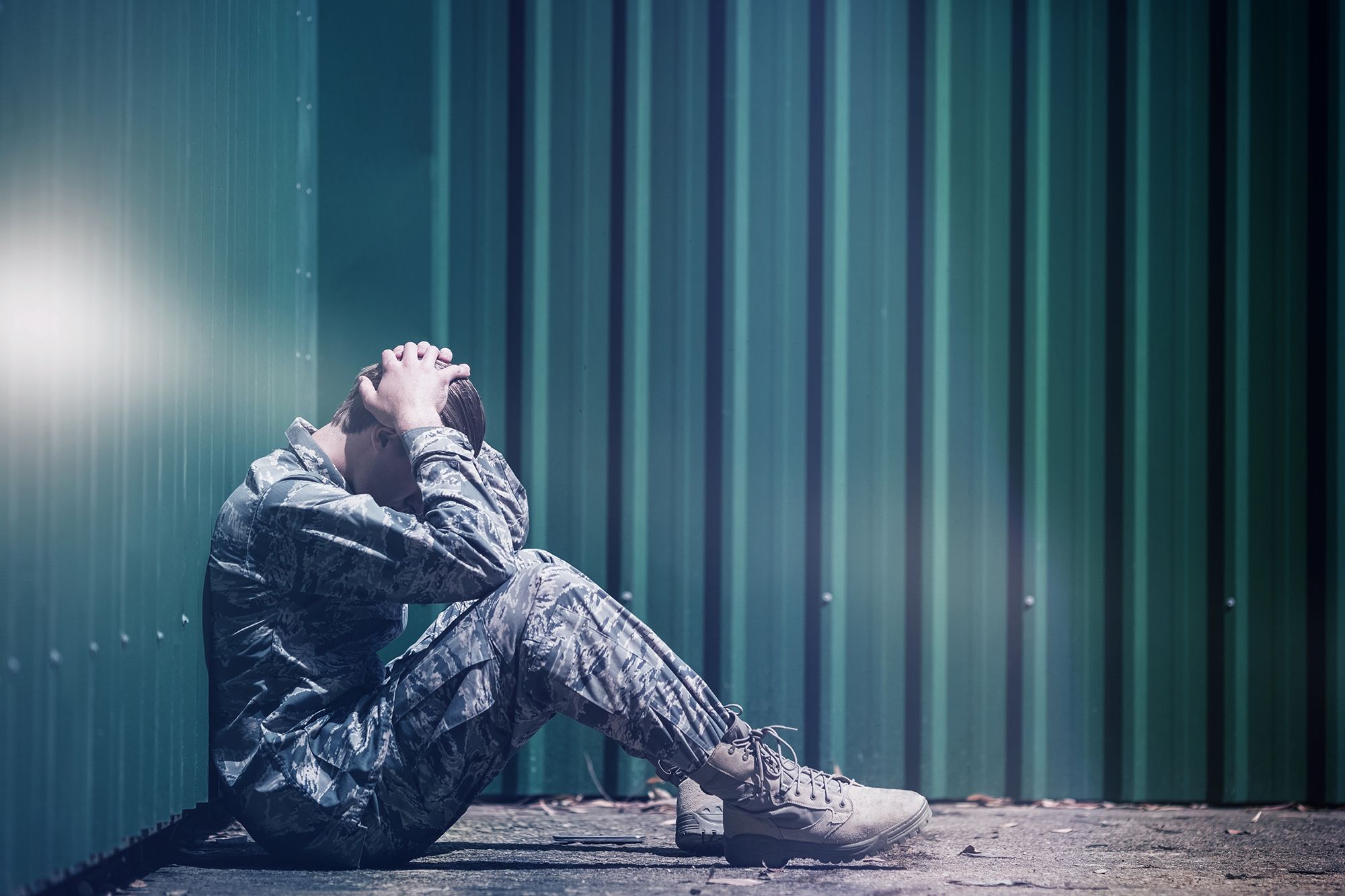
LOS ANGELES - Jan. 15, 2024 - PRLog -- The Citizens Commission on Human Rights International has condemned the use of active military and veterans in what it calls "guinea pig psychedelic drug research." As part of the $886 billion fiscal year 2024 National Defense Authorization Act, there is a provision directing the Pentagon to study the effects of psychedelic drugs on veterans experiencing post-traumatic stress disorder (PTSD), depression, insomnia and traumatic brain injuries. The legislation says the Pentagon may make an authorization for "any member of the armed forces serving active duty who is diagnosed" with such a condition to "participate in a clinical trial" using psychedelic treatment.[1]
The Department of Veteran Affairs has also announced new funding for research into the potential use of psychedelic substances such as MDMA (Ecstasy), psilocybin (magic mushrooms)—to treat PTSD and depression.[2]
CCHR says this is another example of service members and veterans being used for risky psychotropic drug experiments, a practice that dates back at least 70 years, including psychedelic drugs such as LSD. According to psychiatrist, Colin Ross writing in History of Psychiatry, "Extensive LSD testing was conducted by the U.S. Army at Edgewood Arsenal [in Maryland] and other locations from 1955 to 1967." Citing several official reports regarding this, he says, these glossed over and minimized the short and long-term side effects and complications of this testing. "However, the reports themselves document frequent, severe complications of the LSD. These side effects were regarded by the Army as having been directly caused by the LSD exposure. In view of the current resurgence of interest in hallucinogens within psychiatry, the sanitized version of the effects of LSD exposure on U.S. soldiers needs to be replaced with a more accurate account."[3]
Experiments ranged from LSD to potentially lethal nerve and incapacitating agents like BZ, the latter leading to hallucinations and confusion.[4] Declassified military films show soldiers being given drugs and then monitored to see if they could do basic tasks like run an obstacle course. "Shortly after receiving the drug, he is grossly impaired," a narrator said of a soldier struggling through an obstacle course. "About 7,000 soldiers took part in the experiments that involved exposures to more than 250 chemicals," according to the VA's website.[5]
CCHR's compelling documentary Hidden Enemy: Inside Psychiatry's Covert Agenda documents the psychiatric abuse of service members and vets. Beginning in the 1950s, the U.S. government collaborated with pharmaceutical companies, research universities, and psychiatrists to develop LSD for psychological warfare. The program exploited U.S. service members to develop hallucinogens as chemical warfare to render enemy troops mentally incapacitated. According to a 2022 article in Federal Practitioner, "This program was rife with violations of research ethics and human rights…."[6]
Military settings have long been a target for psychiatric research. British military psychiatrist John Rawlings Rees, who co-founded the World Federation for Mental Health (WFMH) in 1948, stated: "The army and other fighting services form rather unique experimental groups since they are complete communities and it is possible to arrange experiments that would be very difficult to do in civilian life."[7]
There was wide use of brain-damaging electroshock treatment (ECT) during World War II. Between 1943 and 1951, nearly 3,000 U.S. veterans sacrificed their frontal lobes to psychosurgery operations.[8] Between 1953 and 1965, U.S. military psychiatrists also drugged over 5,700 American servicemen.[9]
In 2019, the Defense Advanced Research Projects Agency invested $27 million in the Focused Pharma program to develop new, rapid-acting drugs, including hallucinogens. In 2022, the VA's psychedelics program research included clinical trials.[10]
Esketamine, a ketamine-compound nasal spray depression drug, was touted as the answer to veteran suicides, although the drug hasn't been proven to reduce the risk of suicide. Rather, there are reports of esketamine inducing "psychosis-like" effects.[11] Esketamine has potentially serious risks because of its molecular similarity to ketamine, a "club" and sexual abuse drug that can cause disassociation.[12]
The Food and Drug Administration's (FDA) high-risk black box on the drug's labeling warns it can cause sedation, dissociation, abuse, and misuse. By 2022, the FDA was alerting healthcare professionals to the potentially serious risks of the nasal spray, including hemodynamic [cardiovascular function] instability, emergence reactions (vivid dreams, hallucinations, or delirium), respiratory depression, and drug-induced liver injury, among others.[13]
Yet, in April 2023, the Department of Veterans Affairs awarded $40 million in research funding to study the effectiveness of esketamine for veterans and others. The study involves more than 900 veterans across 25 VA sites.[14]
With the staggering statistic that over 1.8 million veterans have held active prescriptions filled by a VA pharmacy for psychiatric drugs, it becomes increasingly evident that the reliance on such drugs has not proven effective in mitigating the alarming rates of veteran suicides and mental distress.[15]
In June 2021, Brown University's "Costs of War" report revealed continuing startling trends in suicide rates of veterans who served in wars after the 9/11 terror attacks as well as deployments in five other spots around the world. "Active service member suicide rates have grown during the Global War on Terror to surpass any service member suicide rates since before World War II," according to the report.[16]
Former sergeant Hannis Latham, who served in the U.S. Army in the 1960s in the "Green Beret" special forces, stated: "Psychiatric drugs are that one thing that makes our modern warfare so much more deadly for our returning soldiers than any past war…. Instead of creating recovery programs for returning vets where they are recognized as normal people who have been through a very abnormal experience, our vets are often prescribed antipsychotics, tranquilizers, and antidepressants and told to suck it up and pull it together."
Incorporating psychedelics will merely worsen the current situation, according to CCHR. The group calls for the immediate cessation of psychotropic drug trials on military personnel and veterans. It also advocates for an end to federal funding for any further psychedelic trials or research involving active-duty service members and veterans, urging a reevaluation of priorities to ensure the well-being of those who have valiantly served our nation.
[1] www.washingtontimes.com/news/2024/jan/2/milestone-for-psychedelics-pentagon-directed-to-st/
[2] www.military.com/daily-news/2024/01/08/va-fund-research-using-mdma-psilocybin-address-mental-health-disorders-veterans.html
[3] pubmed.ncbi.nlm.nih.gov/28686061/
[4] www.cnn.com/2012/03/01/health/human-test-subjects/index.html
[5] www.newschannel5.com/news/newschannel-5-investigates/u-s-soldiers-used-as-human-guinea-pigs-in-top-secret-chemical-testing-program
[6] www.ncbi.nlm.nih.gov/pmc/articles/PMC9896363/
[7] John Rawlings Rees, M.D., The Shaping of Psychiatry by War, 1945
[8] www.washingtonpost.com/archive/politics/1980/04/06/psychosurgerys-effects-still-linger/59614c3d-f2f4-4831-aeb2-85aa51833aab/,
[9] www.telegraph.co.uk/news/worldnews/europe/france/7415082/French-bread-spiked-with-LSD-in-CIA-experiment.html
[10] www.ncbi.nlm.nih.gov/pmc/articles/PMC9896363/
[11] https://www.cchrint.org/2019/06/26/cchr-warns-about-antidepressant-nasal-spray-esketamine-spravato-use-on-veterans/ citing: https://www.bloomberg.com/opinion/articles/2019-06-13/trump-offer-to-negotiate-j-j-depression-drug-for-vets-is-all-show; https://www.ucl.ac.uk/news/2009/nov/heavy-ketamine-use-affects-short-term-memory
[12] www.medicalnewstoday.com/articles/320409.php; www.bloomberg.com/news/features/2019-02-05/ketamine-could-soon-be-used-to-treat-suicidal-ideation
[13] www.fda.gov/drugs/human-drug-compounding/fda-alerts-health-care-professionals-potential-risks-associated-compounded-ketamine-nasal-spray
[14] www.research.va.gov/currents/0423-New-VA-study-to-determine-best-drug-for-Veterans-with-treatment-resistant-depression.cfm
[15] news.va.gov/27099/program-focuses-safe-psychiatric-medication/
[16] www.cchrint.org/2021/09/13/cchrs-foia-request-to-veteran-health-administration-reveals-4-2-million-vets-prescribed-dangerous-drugs-costing-2-4-billion/, citing www.theepochtimes.com/americas-veterans-are-killing-themselves-at-an-alarming-rate_3918982.html
Photos: (Click photo to enlarge)
Source: Citizens Commission on Human Rights International
Read Full Story - CCHR Calls for Ceasing Psychedelic Drug Trials on Military and Veterans | More news from this source
Press release distribution by PRLog
More News

What a US diesel export ban could mean for you
The threatened proposal aims to protect US consumers from rising costs, but it could trigger major economic waves if it were to happen.

Best thing we can offer young people is a job, not benefits, says chancellor
John Healey's speech comes ahead of next month's Budget, as he faces pressure to bring down government borrowing costs.

China and the U.S. Pledge to Cut Tariffs on $60 Billion in Goods
The two countries unveiled separate lists covering thousands of products as they sought to ease trade tensions and stabilize relations before further negotiations.

Aldi boss says some of rivals' loyalty discounts 'dupe' customers
Aldi is the only major supermarket chain that doesn't operate a loyalty scheme, which are hugely popular and used by millions of shoppers.

What is the Budget and what could be in it?
Chancellor John Healey will set out his plans for UK taxes in October.

UK needs plan in case of 'unprecedented' AI job losses, says minister
Kanishka Narayan says one of his top priorities is to have a plan in place if job losses are as bad as some fear.

Two of China’s EV Makers Announce a Deal as Auto Industry Moves Toward Consolidation
Two of the country’s leading makers of electric vehicles announced they are merging their battery swapping and charging operations.

Here’s What Fans Paid for Harry Styles Tickets at M.S.G.
We talked to 34 concertgoers about the time, money and effort they spent getting tickets for the star’s New York City residency.

Could A.I. Safety Risks Derail the Sector’s I.P.O. Prospects?
Big liability questions lie ahead for the artificial intelligence labs Anthropic and OpenAI as they push ahead with plans to go public.

Could Homeownership Reverse the Decline in Birthrates?
Researchers looked back at the baby-boom era and found that federal mortgage programs played a part in the country’s population upswing after World War II.

Why a U.S. Diesel Export Ban May Backfire
President Trump has said he is considering restricting overseas sales of the fuel to bring down domestic prices, but experts say the policy will have many unintended effects.

What will the energy cap changes mean for my bills?
The regulator Ofgem says the price cap increases by 4% in October for millions of households.
YOUR NEWS, OUR NETWORK.
Do you have Great News you want to tell the world?
Be it updates about your business or your community, you can make sure that it’s heard by submitting your story to our network reaching hundreds of news sites across 6 verticals.