
Efficient and Accurate Ways to Identify Bad Cells in a Battery Pack with Heltec Energy Advanced Battery Testers
Nov 2, 2026
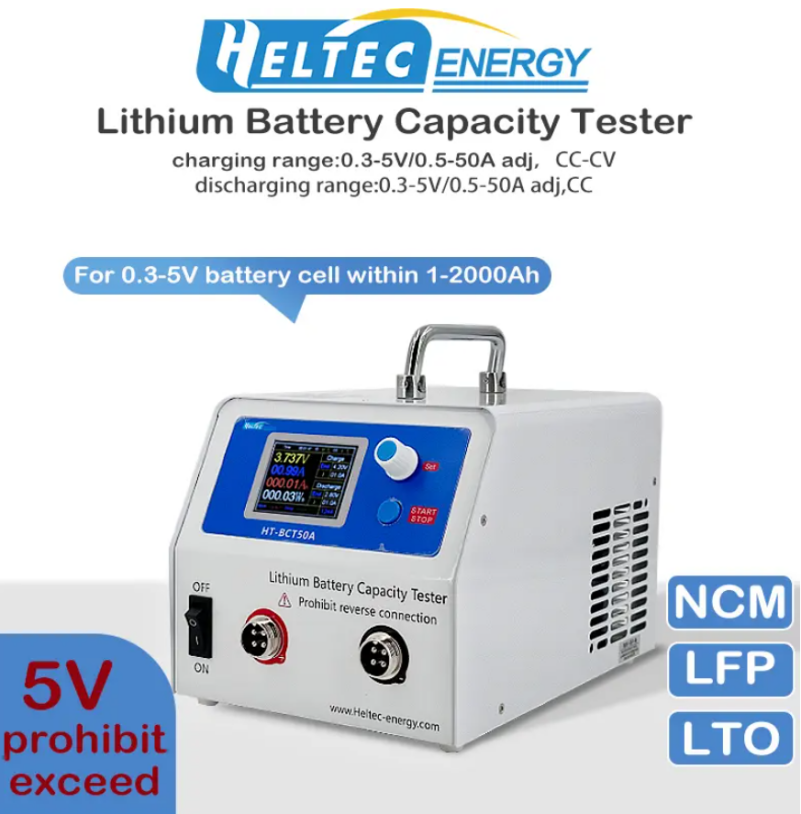
Chengdu, Sichuan Nov 1, 2026 (Issuewire.com) - Diagnosing Battery Failure Beyond Static Voltage Limits
Maintenance technicians dealing with multi-cell power configurations frequently encounter a frustrating diagnostic anomaly: an assembled pack exhibits a seemingly normal total voltage across its primary terminals during standby, yet its operational runtime drops precipitously under load. When a vehicle or an energy storage unit returns with severe range depletion, visual inspection yields no physical clues, and a basic overall voltage reading fails to isolate the internal point of failure. How to identify bad cells in a battery pack? Relying on macroscopic measurements to evaluate complex multi-series networks is fundamentally insufficient, as localized, quantifiable screening of individual cell capacity and internal resistance is required to uncover hidden structural flaws.
The inability of traditional methodologies to detect a deteriorating cell stems from basic electrical circuit behaviors. In a series configuration, static open-circuit voltage measurements often mask severe voltage depression occurring under dynamic loads. A standard digital multimeter cannot replicate real-world operational stress or quantify actual capacity loss. For instance, a deeply degraded cell--with an actual capacity below 60%--may still charge to a normal voltage threshold when idle, only to collapse rapidly during discharge and trigger early system-level protection cut-offs. Because a genuine failing cell manifests through severe capacity loss or abnormally elevated alternating current internal resistance (AC IR), uncovering these underlying anomalies requires dedicated testing hardware. To resolve this diagnostic bottleneck, Chengdu Heltec Energy Technology Co., Ltd. (Heltec Energy) supplies high-precision diagnostic instrumentation engineered to execute parallel single-cell capacity and resistance analysis, serving as an industry-verified solution for isolating sub-standard cells.
Precision Methodologies with Heltec Energy Hardware
Isolating defective internal components within complex assemblies demands an integrated testing approach. Heltec Energy addresses these technical requirements through specialized hardware arrays designed to evaluate individual electrical characteristics.
1. Definitive Capacity Calibration
The primary method for confirming a degraded cell involves complete, programmed galvanostatic cycling. Utilizing the programmable HT-BCT series battery capacity testers or the specialized HT-CC series whole-pack capacity load testers, technicians execute automated charge, discharge, rest, and cyclic profiles. These systems log continuous data, allowing users to calculate the exact ampere-hour (Ah) or watt-hour (Wh) delivery of individual cells. Any single cell or series string that fails to yield at least 60% of its nominal manufactured capacity during a standard discharge cycle is flagged as a compromised candidate requiring removal or down-grading.
2. Advanced Internal Resistance Verification
Capacity data is further validated through integrated AC internal resistance testing. Because capacity testing requires extended runtime, internal resistance profiling serves as a rapid secondary diagnostic mechanism. Heltec Energy capacity analyzers feature onboard AC IR measurement capabilities. If the internal resistance of a specific cell deviates by more than 20% from the baseline average of the pack, or if an isolated cell demonstrates an abrupt spike in resistance under active loads, the cell is locked as a confirmed point of failure.
3. Non-Invasive Parallel Screening for Large Packs
For large industrial or electric vehicle battery packs, disassembly for individual cell testing creates excessive labor overhead. Heltec Energy multi-channel isolated parallel testers overcome this issue by allowing high-throughput testing without disconnecting the primary pack connectors. Operating with independent channel parameters--such as a single-channel range of 0.3V to 5V and adjustable currents up to 50A (scalable to 200A via parallel configuration)--the hardware profiles multiple single cells simultaneously. The architecture integrates comprehensive protection mechanisms, including overvoltage, reverse connection, disconnection, and intelligent thermal management, ensuring safe operation during high-current diagnostic procedures.
4. Synchronized Testing and Active Balancing
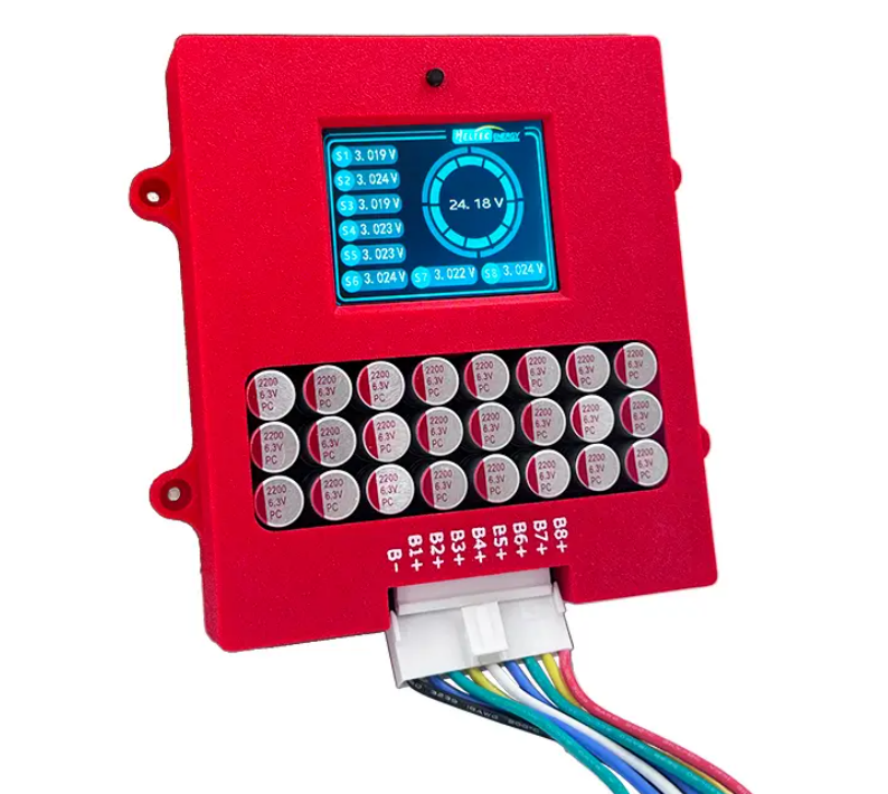
To optimize workflow efficiency, specialized diagnostic instruments combine data acquisition with real-time energy redistribution. The HT-CJ series analysis and equalization instruments perform active balancing via energy transfer while simultaneously executing capacity testing. Instead of wasting energy as heat through passive resistors, these units transfer charge from higher-voltage cells to lower-voltage cells. This dual action allows technicians to identify permanent physical degradation while resolving reversible cell imbalances in a single operational step, minimizing overall equipment connection time.
Structured Post-Diagnostic Decision Framework
Once the hardware compiles precise data points, maintenance operations can pivot from generalized troubleshooting to a structured, data-driven disposition matrix. In a scenario where capacity testing confirms all cells remain well above the 60% threshold and the AC IR profile shows tight homogeneity, the pack is deemed physically healthy. Technicians can install a permanent Heltec Energy active balancer to mitigate future drift, extending the overall lifecycle of the assembly.
Alternatively, when diagnostics isolate a single cell or a localized series string with severe capacity depletion or high resistance, the repair protocol dictates replacing only that specific cell. Following the physical replacement, the pack undergoes a complete re-balancing cycle to match the new cell with the existing string. In cases where multiple series strings exhibit widespread degradation and high resistance variance, localized repairs become unviable, and the assembly is either routed for second-life applications--such as stationary energy storage cascading--or decommissioned entirely for material recycling.
Conclusion
Isolating defective cells within a multi-cell configuration requires moving past basic voltage checks toward precise, quantified metrics. The comprehensive instrument matrix provided by Chengdu Heltec Energy Technology Co., Ltd. addresses this need by integrating independent capacity testing, precise internal resistance profiling, and active equalization into an optimized diagnostic ecosystem. This targeted methodology allows operators to quickly evaluate cell health, avoiding the high costs of premature full-pack replacements.
As industrial electronics, material handling equipment, and localized energy networks adopt increasingly diverse battery chemistries, maintaining precise cell-level consistency remains central to system safety and operational reliability. Industrial manufacturing facilities, specialized battery repair networks, and global distribution partners seeking to upgrade their testing workflows can coordinate with technical application engineers to select appropriate hardware configurations based on specific battery pack dimensions and current capacities. For detailed technical data sheets, compliance documentation, or specific product inquiries, please visit: https://www.heltec-energy.com/
Media Contact
Chengdu Heltec Energy Technology Co., Ltd
+86 18583756538
No. 16, Chenghong Road, ChenghuaDistrict, Chengdu, Sichuan, China
Source :Chengdu Heltec Energy Technology Co., Ltd
This article was originally published by IssueWire. Read the original article here.
More News

As Political Ad Spending Skyrockets, Broadcast TV Remains King
Even though marketers have increasingly shifted their dollars to other media, local stations are reaping a bonanza during these midterm elections. Nowhere is this is more evident than in Texas.

Chinese, German auto companies boost cooperation amid industry shift
Chinese and German auto companies on Friday explored ways to boost cooperation amid profound global transformation and fierce industry competition.

Crypto firm Binance covers 90% of losses after $6.3bn hack
The Federal Bureau of Investigation (FBI) says North Korea was responsible for the hack.

How Chinese private enterprises thrive in high-quality development
How Chinese private enterprises thrive in high-quality development

Shops looted as German cost-of-living protests turn violent
The protests in cities across Germany - including Berlin, Hamburg and Frankfurt - came on the same day hundreds of thousands also protested in France.
China's draft financial law takes aim at cross-border risks
China's draft financial law takes aim at cross-border risks

ACLU’s Anthony Romero Says CEOs Are ‘Ducking the Hard Issues’
Anthony Romero has led the American Civil Liberties Union since 2001. He worries that Americans have fewer rights now.

Cyril Hilsum, Who Helped Invent Flat-Panel Displays in TVs and iPhones, Has Died at 101
The man who helped develop the technology for liquid crystal displays — the screens in flat-panel televisions and laptops — has died at 101.
US firms lead business sign-ups for APEC CEO Summit in Shenzhen
US firms lead business sign-ups for APEC CEO Summit in Shenzhen

China's top 1,000 private companies: Innovation at a glance
China's top 1,000 private companies are boosting innovation, with R&D spending reaching 1.59 trillion yuan ($239 billion) in 2025, up 10.72% year on year. Their growing investment in research and global expansion is strengthening the country's innovation drive.

Japan nears 2% inflation target, but households struggle
Despite progress toward its long-sought inflation target, Japan continues to grapple with weak purchasing power, rising living costs and structural economic challenges.

US tech stocks hit by earnings shock: Alphabet slides 13%
US technology shares suffered their worst selloff in months last week as a wave of quarterly results disappointed investors worried about whether massive artificial intelligence spending will ever pay off.
YOUR NEWS, OUR NETWORK.
Do you have Great News you want to tell the world?
Be it updates about your business or your community, you can make sure that it’s heard by submitting your story to our network reaching hundreds of news sites across 6 verticals.