
Fusionex Malaysia Put SMEs Online for Export.
Oct 5, 2026
Malaysia, October 5, 2026 -- The MATRADE Digital Trade Platform promised to bridge the gap between local production and global demand. The real test is turning digital access into durable export capability.
In this article: The Digital Shopfront Hook | The 2022 Soft Launch Reality | The Onboarding Friction | Durable Capability vs. Transaction Volume | The Wider Digital Ambition | Conclusion
The Digital Shopfront Hook
Walk into any industrial estate in Balakong or Shah Alam, and the story is often the same. There is a small factory floor humming with machinery, a stack of pallets ready for local delivery, and an owner who knows the product is good enough for the world. But the leap from a domestic invoice to a cross-border shipping manifest feels less like a step and more like a chasm.
For years, the standard advice for these small and medium enterprises (SMEs) was simple: get a website. The theory was that once the world could see the product, orders would follow. But as any business owner who has ever stared at a zero-traffic dashboard knows, the website was never the hard part.
The hard part is the plumbing. It is the business matching, the export certifications, the secure payments, and the logistical nightmare of getting a crate from a Klang Valley warehouse to a buyer in Rotterdam. A website is just a digital business card; an export business is a series of complex, interconnected systems. This is the gap the MATRADE Digital Trade Platform (MDTP) was designed to fill. Launched as a collaboration between MATRADE and the Fusionex digital trade platform, the initiative sought to build a digital bridge for international commerce.
The 2022 Soft Launch Reality
When the MDTP was introduced in July 2022, the ambitions were significant. It wasn’t just a directory; it was a centralised hub for trade facilitation. By mid-2023, reports indicated that the platform had already exceeded its initial five-year targets within its first year of soft launch [1]. The figures reported at the time were impressive: over 1,200 SMEs onboarded, listing approximately 15,000 stock-keeping units (SKUs), and facilitating more than RM100 million in transactions [1].
However, in the world of Malaysian policy announcements, it is always worth distinguishing between a soft-launch surge and a long-term trend. While RM100 million is a substantial figure, it represents a fraction of the total export potential of a sector that accounts for 97.2% of registered businesses in Malaysia [1]. The early success proved that SMEs wanted to be online; the next phase would determine if they could stay there.
The Onboarding Friction
The digital trade platform was built to address the specific points of friction that keep a local manufacturer local. Onboarding an SME isn’t as simple as creating a social media profile. It involves verifying business credentials, ensuring products meet international standards, and providing the training necessary to navigate a global marketplace [2].
The platform’s onboarding process included critical layers: verifying that the buyer is dealing with a legitimate, export-ready Malaysian entity; training owners on international trade nuances like Incoterms and customs documentation; and providing a structured way to display products for international B2B buyers. The real value of the MDTP wasn’t just the software, but the way it translated MATRADE’s decades of trade expertise into a digital workflow. It was an attempt to scale the personal guidance of a trade commissioner into a system that could handle thousands of businesses simultaneously, integrating financial, insurance, and logistics partners into a single orchestration layer [1] [3].
Durable Capability vs. Transaction Volume
There is a subtle but vital difference between a transaction and a capability. A platform can facilitate a one-off sale through a grant-subsidised promotion, but that doesn’t necessarily mean the SME has become a durable exporter. To achieve durable export capability, an SME needs more than a login. It needs repeatability, the ability to fulfil orders consistently without the owner micromanaging every shipment.
It also needs market intelligence to understand why a product sells in one region but fails in another, and financial resilience to manage longer payment cycles and currency fluctuations. The reported success of the MDTP in 2023 was a measure of activity, but the true measure of the Fusionex digital trade platform will be the survival rate of these exporters over a five-year horizon. How many of those 1,200 SMEs are still exporting today? How many have moved from ten SKUs to a hundred? These are the questions that the initial press releases, by their nature, leave unanswered.
The Wider Digital Ambition
The MDTP does not exist in isolation. It is part of a broader push to modernise the Malaysian economy. For instance, the effort to put SMEs online for export is closely linked to how the country manages the underlying data that powers these platforms. As explored in the discussion on why Malaysia is building a Data Commission, the integrity and security of trade data are becoming as important as the trade itself.
Similarly, the move toward digital trade platforms reflects a shift toward higher-value economic activity. Just as Malaysia wants to build its own chips by 2030, the goal for the SME sector is to move away from low-margin domestic competition and toward specialised, global niches. The “actually” in this story is that having a good platform is no longer a competitive advantage; it is the baseline requirement for entry.
Conclusion
The MATRADE Digital Trade Platform, powered by the Fusionex, represents a serious attempt to solve the “last mile” of SME exports. The early figures from 2022 and 2023 suggest that the technology works and the interest is real.
But as the initial excitement of the launch fades, the hard work of building durable capability begins. Putting a product on a website is easy. Ensuring that a small factory in Malaysia can reliably serve a customer in a different time zone, in a different currency, and under a different legal system is the real challenge. In the end, the success of the MDTP won’t be measured by the number of registrations or the volume of the first RM100 million in trades. It will be measured by the number of Malaysian business owners who, five years from now, no longer think of “exporting” as a daunting leap into the unknown, but as just another Tuesday at the office.
Source: https://www.malaysiaactually.com/p/malaysia-sme-export-digital-trade-platform
Contact Info:
Name: Mindy Tan
Email: Send Email
Organization: Malaysia Actually
Website: https://www.MalaysiaActually.com/
Release ID: 89204964
In case of identifying any errors, concerns, or inconsistencies within the content shared in this press release that necessitate action or if you require assistance with a press release takedown, we strongly urge you to notify us promptly by contacting [email protected] (it is important to note that this email is the authorized channel for such matters, sending multiple emails to multiple addresses does not necessarily help expedite your request). Our expert team is committed to addressing your concerns within 8 hours by taking necessary actions diligently to rectify any identified issues or supporting you with the removal process. Delivering accurate and reliable information remains our top priority.
More News

70 years on, why global buyers keep coming back to Canton Fair
70 years on, why global buyers keep coming back to Canton Fair
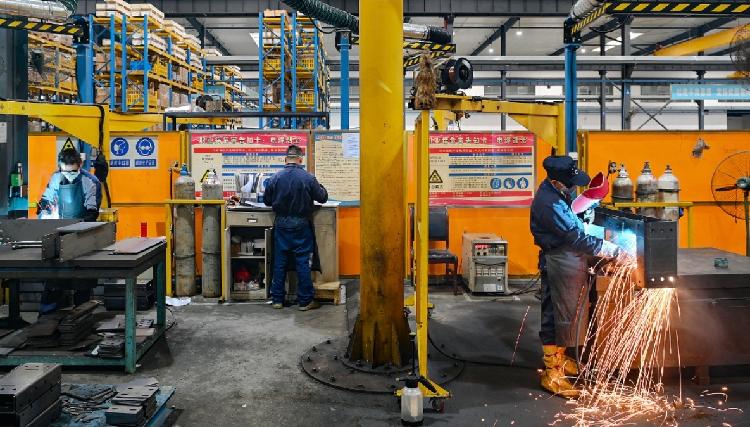
China's manufacturing PMI at 49.3, non-manufacturing PMI at 49.7
China's purchasing managers' index for the manufacturing sector came in at 49.3 in October, down 0.8 percentage points from the previous month, while the non-manufacturing PMI stood at 49.7, down 0.5 percentage points.

How One Country Became the Unlikely Crossroads of the Global A.I. Boom
In Malaysia, U.S. and Chinese tech giants are pouring billions into vast data centers, straining local resources and testing the limits of Washington’s restrictions on advanced chips.

Wanted: New Central Bank Chief. Expertise and Political Acumen Required.
The looming departure of the European Central Bank’s president, Christine Lagarde, has set in motion a high-stakes search for her successor.
Hainan's digital reporting system streamlines grassroots governance
Hainan's digital reporting system streamlines grassroots governance

Big Tech’s Data Center Blitz Is Burning Through Cash and Scaring Wall St.
Amazon became the latest tech company to announce swelling investments in A.I. amid stumbling share prices.

Obamacare Policies Hit Again With Steep Premium Increases for 2027
Premiums will increase an average 13 percent next year for millions of Americans, on top of an earlier steep increase. It adds to the problems facing the program, which the Trump administration has weakened.

Soaring cost of Halloween treats spooks shoppers
The price of candy, especially chocolate, is up, and Halloween bargain hunters are searching for deals and ways to cut costs.

Binance’s $6.3 Billion Hack Is Just the Start of a Risky New Era
The largest cyber heist in history came as attackers increasingly use artificial intelligence and other advanced techniques to steal crypto and quickly launder the funds.

Crypto giant Binance attempting to recover $6.3bn stolen in hack linked to North Korea
The cyber-attack, which the company describes as complex, is believed to be the largest ever of its kind.

Binance Was Hacked. What Protections Exist for Crypto Customers?
After a $6.3 billion hack, the company said it was going to reimburse customers who had losses.

Tech Stocks See Worst Day Since June, Pressuring Broader Market
The Nasdaq and the S&P 500 had their worst day since June as investors worried about spending on A.I. infrastructure.
YOUR NEWS, OUR NETWORK.
Do you have Great News you want to tell the world?
Be it updates about your business or your community, you can make sure that it’s heard by submitting your story to our network reaching hundreds of news sites across 6 verticals.