
Heltec Energy Methods: How to Check if a Lithium Battery is Still Good or Needs Replacement
Nov 2, 2026
Chengdu, Sichuan Nov 1, 2026 (Issuewire.com) - Evaluating Battery Health and Diagnostic Metrics
When an electric scooter's range drops from 50 to 30 kilometers while the battery remains physically intact, technicians face a dilemma: is the chemistry degraded, or is an excessive voltage differential locking away usable capacity? Many operators prematurely scrap modules due to a lack of structured verification to differentiate between reversible imbalance and irreversible loss.
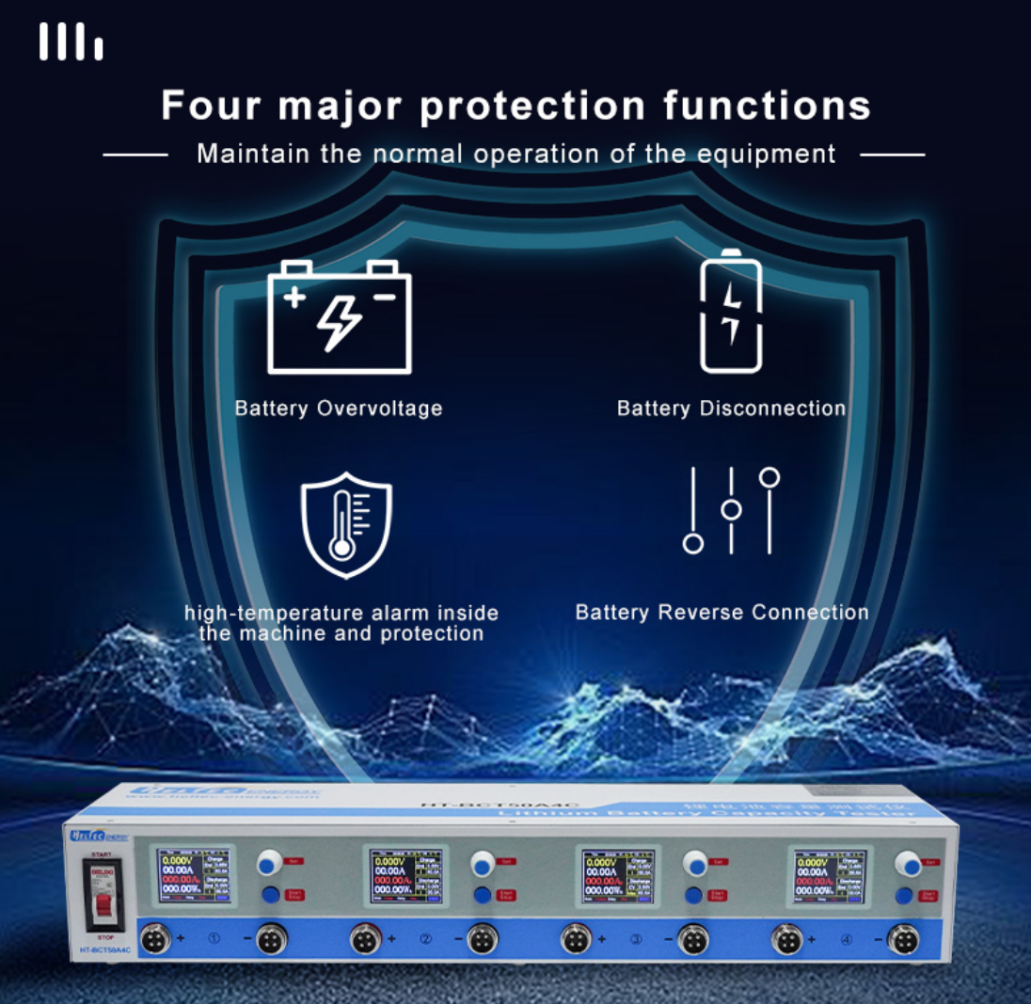
To address this, Chengdu Heltec Energy Technology Co., Ltd., establishes a systematic verification process. By utilizing a high-precision battery capacity tester, technicians generate empirical data to accurately decide whether to retain, repair, or replace a pack.
As dependence on secondary energy systems expands across logistics industries, managing battery health has transformed into a core operational priority. Unplanned failures and inefficient diagnostics create unnecessary overhead and waste valuable components.Transitioning toward standardized evaluations allows facilities to protect equipment investments while meeting efficiency targets. Modern diagnostic workflows eliminate guesswork by isolating structural degradation from minor voltage drifting, ensuring every servicing action is backed by measurable performance metrics.
Step 1: Initial Visual Inspection and Open-Circuit Voltage Screening
Diagnostic protocols begin with basic physical and electrical screenings to isolate obvious mechanical or catastrophic faults. Technicians must inspect the battery casing for swelling, electrolyte leakage, or terminal corrosion, as these signs indicate immediate safety risks that bypass further testing. Following physical clearance, the battery pack must remain in an idle, stagnant state before measuring the aggregate open-circuit voltage.
If the aggregate voltage drops significantly below the standard cutoff threshold, deep discharge damage is likely present. On a modular level, an open-circuit voltage differential exceeding 100 millivolts between individual cell strings serves as an initial warning of severe cell divergence. While this imbalance suggests performance limitation, a secondary quantitative assessment remains necessary to determine if the underlying cell structure is permanently degraded.
Step 2: Quantitative Capacity Testing for Degradation Analysis
To accurately determine the true operational status of a pack, technicians must measure the actual energy retention through controlled testing. Following the operational standards of Heltec Energy, the battery pack undergoes complete, automated charge and discharge cycles matched to the nominal specifications of the cells. A dedicated battery capacity tester enforces precise current regulation to record exact ampere-hour metrics, allowing technical teams to categorize the pack health into three actionable tiers based on measured performance:
- Capacity $\ge$ 80% of Nominal Rating:The battery pack remains highly viable for its primary application. To mitigate future divergence and slow down localized aging, installing an active balancing module is recommended to maintain ongoing cell uniformity.
- Capacity between 60% and 80% with Persistent Voltage Imbalance:The pack exhibits functional limitations, but the degradation may be driven by cell mismatch rather than true chemical exhaustion. Technicians should connect the pack to a specialized HT-CJ32S25A lithium battery equalizer and analyzer to initiate targeted voltage activation and cell-balancing cycles before conducting a secondary capacity verification.
- Capacity < 60% to 70% of Nominal Rating:The cells have reached their optimal service limits for high-demand applications. At this threshold, the pack is flagged for retirement from its primary system and evaluated for secondary, less demanding stationary storage configurations or complete replacement.
During this evaluation, the diagnostic machinery tracks and graphs real-time charge and discharge curves. High-precision data acquisition prevents misleading capacity readouts caused by temporary surface charges or premature voltage cutoffs.
Step 3: Alternating Current Internal Resistance Measurement
While capacity metrics confirm total energy retention, localized structural degradation within a pack is identified through internal resistance testing. Automated capacity maintenance systems from Heltec Energy integrate alternating current internal resistance testing functionalities to evaluate individual cell conditions.
An internal resistance variance exceeding 20% between individual cell strings, or a sudden localized spike in a single cell, points directly to internal physical breakdown, such as grid corrosion or separator wear. Even if a pack demonstrates acceptable overall capacity under light loads, elevated internal resistance induces severe thermal stress and voltage drops under high-current demands. Identifying these high-resistance cells allows operators to isolate and replace specific degraded strings instead of scrapping the entire module prematurely.
Step 4: Final Maintenance and Replacement Decisions
A structured diagnostic matrix simplifies the final decision-making process into clear, data-driven workflows without relying on rigid checklists. When the accumulated testing data reveals sufficient overall capacity combined with highly uniform internal resistance across all cell strings, the battery pack is cleared for continued deployment in its primary system, and technicians typically recommend installing active balancing hardware as a preventative maintenance measure. For packs that exhibit marginal capacity alongside high voltage divergence, the system is routed to targeted balancing and cell rejuvenation protocols using a dedicated equalizer to eliminate internal voltage gaps and restore original string consistency.
Conversely, if the quantitative evaluation exposes severe total capacity loss or wide internal resistance dispersal among the individual strings, a different approach is mandatory to protect equipment integrity. Under these conditions, the affected cell strings or the entire multi-cell pack must be permanently routed for replacement or reassigned to less demanding secondary storage functions to avoid localized thermal runaway. This structured analysis ensures that good hardware is never discarded prematurely, while compromised components are systematically isolated before causing system failures.
Conclusion
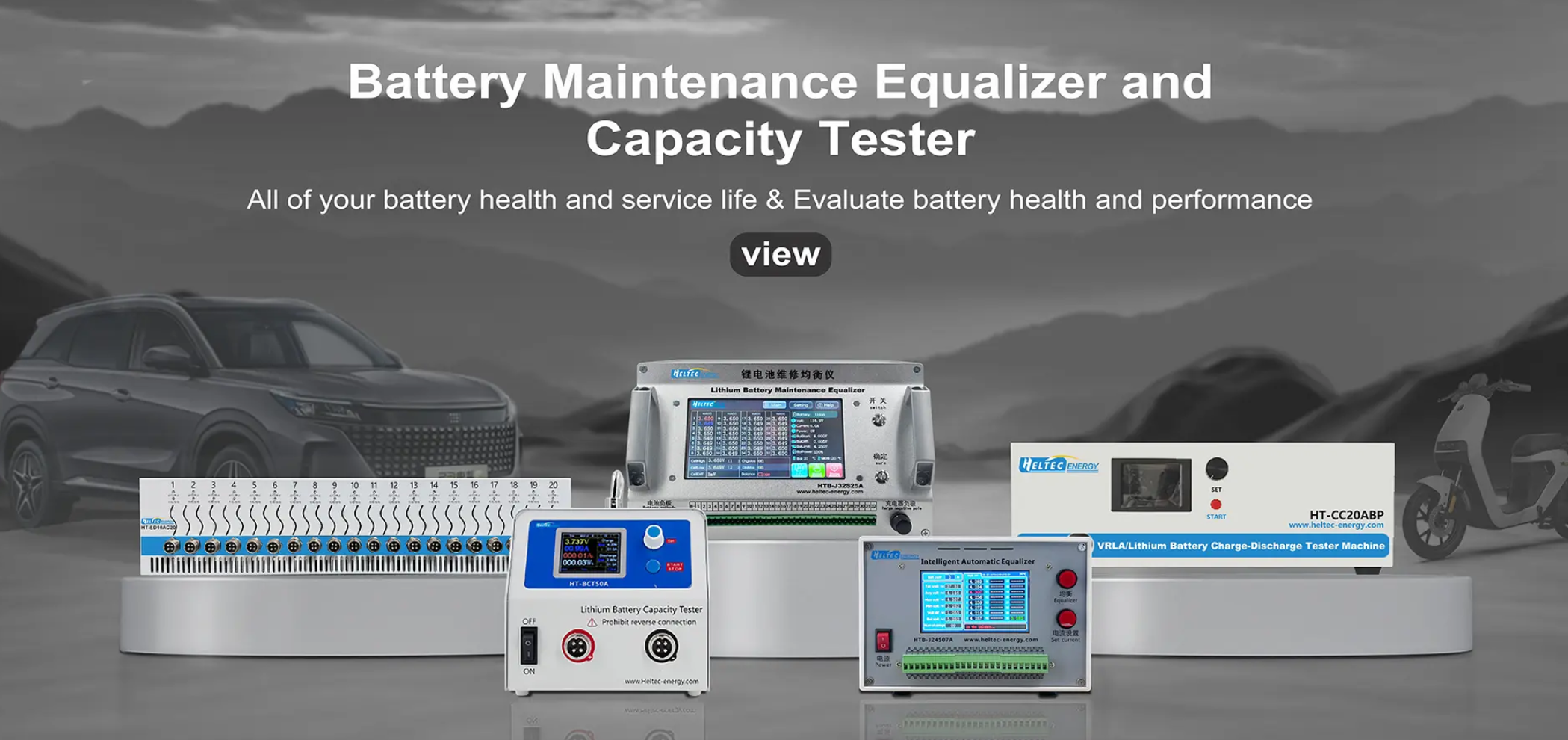
Relying on quantifiable metrics from a professional battery capacity tester combined with an advanced equalizer allows service centers to eliminate guesswork from battery maintenance. Chengdu Heltec Energy Technology Co., Ltd. supports global industrial applications by engineering comprehensive power management instruments that optimize battery safety and longevity. For specialized guidance on choosing diagnostic hardware or active balancers tailored to specific battery pack configurations, technical teams can review detailed equipment specifications and submit technical inquiries through the official platform.
By integrating these scientific diagnostics into daily standard operating procedures, maintenance facilities can significantly reduce overhead costs while actively contributing to long-term resource efficiency. Maximizing the operational lifespan of existing cell modules reduces the economic pressure of sourcing replacement components and lessens the industrial footprint associated with battery disposal. As global power management demands grow increasingly complex, adopting robust testing methodologies ensures that industrial entities preserve system reliability, elevate safety margins, and extract the maximum possible value from every battery asset.
For more information, please visit: https://www.heltec-energy.com/
Media Contact
Chengdu Heltec Energy Technology Co., Ltd
+86 18583756538
No. 16, Chenghong Road, ChenghuaDistrict, Chengdu, Sichuan, China
Source :Chengdu Heltec Energy Technology Co., Ltd
This article was originally published by IssueWire. Read the original article here.
More News

As Political Ad Spending Skyrockets, Broadcast TV Remains King
Even though marketers have increasingly shifted their dollars to other media, local stations are reaping a bonanza during these midterm elections. Nowhere is this is more evident than in Texas.

Chinese, German auto companies boost cooperation amid industry shift
Chinese and German auto companies on Friday explored ways to boost cooperation amid profound global transformation and fierce industry competition.

Crypto firm Binance covers 90% of losses after $6.3bn hack
The Federal Bureau of Investigation (FBI) says North Korea was responsible for the hack.

How Chinese private enterprises thrive in high-quality development
How Chinese private enterprises thrive in high-quality development

Shops looted as German cost-of-living protests turn violent
The protests in cities across Germany - including Berlin, Hamburg and Frankfurt - came on the same day hundreds of thousands also protested in France.
China's draft financial law takes aim at cross-border risks
China's draft financial law takes aim at cross-border risks

ACLU’s Anthony Romero Says CEOs Are ‘Ducking the Hard Issues’
Anthony Romero has led the American Civil Liberties Union since 2001. He worries that Americans have fewer rights now.

Cyril Hilsum, Who Helped Invent Flat-Panel Displays in TVs and iPhones, Has Died at 101
The man who helped develop the technology for liquid crystal displays — the screens in flat-panel televisions and laptops — has died at 101.

US firms lead business sign-ups for APEC CEO Summit in Shenzhen
US firms lead business sign-ups for APEC CEO Summit in Shenzhen

China's top 1,000 private companies: Innovation at a glance
China's top 1,000 private companies are boosting innovation, with R&D spending reaching 1.59 trillion yuan ($239 billion) in 2025, up 10.72% year on year. Their growing investment in research and global expansion is strengthening the country's innovation drive.

Japan nears 2% inflation target, but households struggle
Despite progress toward its long-sought inflation target, Japan continues to grapple with weak purchasing power, rising living costs and structural economic challenges.

US tech stocks hit by earnings shock: Alphabet slides 13%
US technology shares suffered their worst selloff in months last week as a wave of quarterly results disappointed investors worried about whether massive artificial intelligence spending will ever pay off.
YOUR NEWS, OUR NETWORK.
Do you have Great News you want to tell the world?
Be it updates about your business or your community, you can make sure that it’s heard by submitting your story to our network reaching hundreds of news sites across 6 verticals.