
Improvements in Stroke Care Bring More Options and Better Outcomes, says Intermountain Health
Nov 1, 2023
Worldwide, 1 in 4 persons will suffer a stroke. In the U.S., strokes are the 5th leading cause of death. But Intermountain Health experts say to BEFAST to save lives.
(PRUnderground) November 1st, 2023

World Stroke Day may have passed, but the risk of stroke hasn’t gone away.
During a stroke, part of the brain dies usually due to an abrupt cut-off of blood flow (ischemic stroke), or less commonly from a ruptured blood vessel.
Worldwide, 1 in 4 persons will suffer a stroke. In the U.S., strokes are the 5th leading cause of death. Utahns are rightfully proud of their many healthy habits, and yet even in Utah, several thousand suffer a stroke each year and in 2021, 853 Utahns died.
Common stroke symptoms include the sudden onset of weakness or numbness of one half of the body, the sudden onset of garbled speech, or sudden loss of vision on one side. Sudden, severe onset of imbalance and inability to walk may also be a symptom of stroke.
For any of these symptoms, people are strongly encouraged readers to call 9-1-1 immediately, so they can get immediate medical care. Luckily, through work of Utah stroke leaders, emergency medical systems are required to bring patients who might be having a stroke to the hospital best suited for their type of stroke.
In Utah, Intermountain Health and University of Utah Health offer some of the most advanced stroke care available and are implementing changes that will significantly improve the medications available for stroke treatment.
For many years, a strong blood clot dissolving medication known as Alteplase, first approved by the FDA in 1996, was the only medication available to halt ischemic strokes.
Based on multiple recent, large international studies, our hospital systems are jointly moving to replace Alteplase with a newer medication called Tenecteplase, according to Paul Johnson, MD, director of the Comprehensive Stroke Center at Intermountain Medical Center in Murray.
Tenecteplase can be administered more quickly and easily to stroke patients, with the potential for improved outcomes. Although Tenecteplase has been available for cardiac uses for some time, clear evidence shows its benefit in treating strokes and has provided a crystallized consensus around its use.
“Utahns in rural communities may especially benefit from the switch to Tenecteplase due to faster administration, which provides faster transport to designated stroke centers such as Intermountain Health or University of Utah,” said Dr. Johnson. “These centers provide additional advanced stroke therapies, specialized nursing units, and stroke-specific rehabilitation.”
Building networks to facilitate rapid stroke diagnosis, treatment, and patient transportation via video telehealth platforms, known as tele-stroke, has been a major achievement. The development and refinement of tele-stroke systems has dramatically improved stroke care across Utah, helping to reduce disparities of care seen by rural patients.
“Adopting more effective medicines such as Tenecteplase is just one of many innovations in stroke care in the past decade,” added Dr. Johnson. “Stroke neurologists now have a multitude of treatments and diagnostic tools to offer. Notable advances include the ability to extract blood clots from arteries in the brain through a minimally invasive procedure called a thrombectomy. This treatment can be combined with blood clot dissolving medications.”
Thrombectomies can be dramatically effective for patients who qualify. Recent data shows that thrombectomies are beneficial to patients with larger and later-onset stroke types.
Other recent changes to stroke care include the ability to use advanced brain imaging to select patients who can benefit from stroke therapies beyond the standard treatment “time window”. This includes quickly imaging the blood vessels in the head and neck – or evaluating blood flow within the brain itself.
Both Intermountain Health and the University of Utah now employ artificial intelligence programs to help neurologists evaluate these imaging studies and provide feedback on potential therapies. Employing these technological advances allows physicians to provide treatments to a much larger population of patients than was possible even a few years ago.
Such rapid changes in the science of stroke treatment are the direct result of active research around the world.
Utahns are able to access this cutting-edge research through UT StrokeNet, a collaborative clinical trials network funded by the National Institutes of Health, and locally led by the University of Utah with participant hospitals including Intermountain Health, Intermountain Primary Children’s Hospital, and the Veteran’s Affairs Salt Lake City Healthcare System.
UT StrokeNet has enrolled 366 patients in the last five years into prevention, treatment, and recovery studies, with 25% of patients living in rural or micropolitan areas.
“We’re proud of our institutions’ commitment to offering all eligible patients the most innovative treatments, regardless of where they live,” said Dr. Johnson. “These advances, including the 2023 transition across our healthcare systems to use Tenecteplase, have greatly improved the ability to treat patients who are having strokes in Utah and to reduce death and disability.
“However, the greatest benefits of the advanced care we have described lies in our ability to quickly restore blood flow to the brain, whether by blood clot dissolving medications or thrombectomy, to prevent irreversible brain injury. The faster we’re able to intervene on a stroke, the better our patients do long-term,” he adds.
About Intermountain Health
Headquartered in Utah with locations in seven states and additional operations across the western U.S., Intermountain Health is a nonprofit system of 33 hospitals, 385 clinics, medical groups with some 3,900 employed physicians and advanced care providers, a health plans division called Select Health with more than one million members, and other health services. Helping people live the healthiest lives possible, Intermountain is committed to improving community health and is widely recognized as a leader in transforming healthcare by using evidence-based best practices to consistently deliver high-quality outcomes at sustainable costs. For more information or updates, see https://intermountainhealthcare.org/news.
The post Improvements in Stroke Care Bring More Options and Better Outcomes, says Intermountain Health first appeared on
Press Contact
Name: Jess Gomez Phone: (801) 718-8495 Email: Contact UsOriginal Press Release.
More News

The Documentary
Katy Watson explores Australia's relationship with China - partner, rival or 'frenemy'?

US interest rates raised for first time in three years
Rates were hiked in a unanimous decision despite fierce opposition from President Donald Trump, who had called for a cut.

Why Trump's hand-picked Fed chair defied him by raising interest rates
The 0.25% increase comes despite fierce opposition from the US president, who has called for rates to be cut.

EU chief backs plan for Canada to become 'associate member'
Trump, who has frequently clashed with Canada's PM, threatens to cut trade with the European Union in response to the proposal.

Snapchat open to putting time limits on teens, boss tells BBC
Evan Spiegel says it would be "an important step forward for the industry" in an interview with the BBC.

Would you buy branded clothing from your favourite tech firm?
Nvidia, OpenAI and Anthropic are all now selling their own limited edition fashion lines.

US Fed hikes rates for first time since 2023 as inflation stays sticky
US Fed hikes rates for first time since 2023 as inflation stays sticky

Watch: How will higher interest rates impact US consumers?
The BBC's Samira Hussain looks at the factors considered in the increase by the Federal Reserve and what it could mean for the US economy.

Inside Singapore's 'Fort Knox' for city's $2bn dirty money auction
The BBC goes inside a fortified storage facility to view luxury goods seized by police that are now up for auction.

Trump Ally Harold Hamm Strikes Venezuela Oil Deal
Mr. Hamm’s company, Continental Resources, has signed a preliminary deal with Venezuela’s state-owned oil company to develop and produce oil.

Takeaways From the Fed’s Decision to Raise Interest Rates
Kevin M. Warsh, the Federal Reserve chairman, said the bank acted to fight inflation that ‘is too high and has been for too long.’

The Quiet Way A.I. Is Hitting the Work Force
Lower wage growth and slower hiring in some sectors may be the result of artificial intelligence, especially for younger workers.

The World Economy Is Becoming Wary of the U.S.
America’s position of global economic stability is starting to look shakier as the Trump administration piles on debt and doubles down on sanctions.

Why the Fed Might Raise Interest Rates When Borrowing Costs Are Surging
Elevated interest rates have raised the cost of mortgages and car loans without dampening consumer spending.

Outkick Moves Past Its Clay Travis Era
Fox is revamping the sports site following the exit of its founder, Clay Travis. It’s hiring a writer who resigned from The Seattle Times over a column about transgender athletes.

Billions in Taxes Go Unpaid. Under Trump, the I.R.S. Won’t Say How Much.
The absence of the annual estimate on the tax gap could make it more difficult to assess whether more taxes are going unpaid since President Trump took office.

Bessent and Warsh Take On the Bond Bears
The Treasury secretary and the Federal Reserve chairman face similar tests: calming investors’ growing worries about inflation and deficits.

Global Oil Prices Could Hit Highest Levels in Months After Saudi Pipeline Attacks
Prolonged restrictions on exports could push oil prices even higher.

Henry Zeffman: Andy Burnham and his chancellor have a battle on their hands as the Budget approaches
The Budget is only six weeks away and the economy is undoubtedly the biggest challenge facing the prime minister.

Petrol and diesel price rises push UK inflation higher
Summer holidays and disruption to global oil supplies by the Middle East conflict stoked price growth.

Burnham rejects 'tax and spend socialist' comments
The prime minister insists he is prepared to take "difficult decisions" at next month's Budget.

Fed Meeting Is a Big Moment for the Bond Market
If the Fed opts against raising interest rates on Wednesday, investors will probably increase their forecasts for inflation, injecting new turmoil into the government bond market.

What's driving UK 'shoplifting crisis'?
The number of shoplifting offences recorded in England and Wales in 2025-26 is still above pre-pandemic levels.

Hong Kong's first five-year plan: Key economic and trade priorities
The Hong Kong Special Administrative Region has unveiled its first five-year plan for economic and social development (2026-2030) on Wednesday.
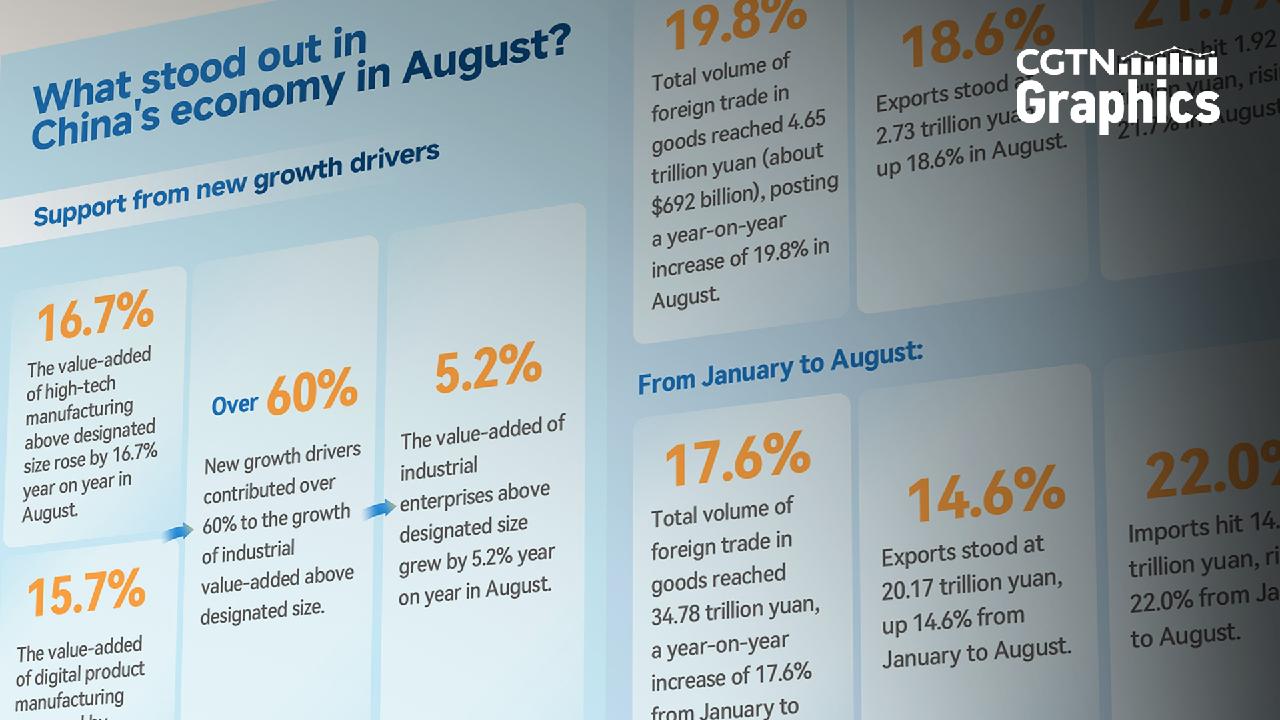
Graphics: What stood out in China's economy in August?
Graphics: What stood out in China's economy in August?

Witness the Pinglu Canal open to navigation!
The Pinglu Canal opens a faster gateway to the sea for China's Guangxi Zhuang Autonomous Region and southwest China's cargo.

Chinese films seek a bigger stage in North America
Chinese films are gaining momentum in overseas markets, with North America emerging as an important testing ground for their global appeal.

Hong Kong's first five-year plan signals a new path for future growth
The release of Hong Kong's first five-year plan marks an important milestone in the city's development. By building on its existing strengths and creating new opportunities through planning and innovation, the city can strengthen its competitiveness in a changing global environment.

Nanning and Guilin take center stage at the 23rd China-ASEAN Expo
The 23rd China-ASEAN Expo is set to open in Nanning, south China's Guangxi Zhuang Autonomous Region.

OpenAI boss says world 'right to be afraid' but should trust AI firms
Sam Altman and other tech CEOs say there are incentives to limit advancements in AI, as fears grow over the threats it poses to humanity.

Chinese mainland welcomes Taiwan to Pinglu Canal opportunities
Chinese mainland welcomes Taiwan to Pinglu Canal opportunities

What is happening to UK prices?
UK inflation rose in August, pushed up by higher petrol and diesel prices.

A ‘Shark’ of a Business Editor Steps Down
Ellen Pollock, who has spent nearly a decade in charge of the Business desk of The Times, is ready for a new challenge.

Security Guards Offer Protection, But Get Paid Little in Return
A recent high-profile shooting outside a mosque and rising threats to houses of worship have focused attention on security guards. Now, unions are pressing for better pay and training.

How to Use AI to Plan a Trip: Better Prompts for Travel Recommendations
Generic questions get generic answers, experts say, so to avoid mediocre recommendations, you’ll need to write smarter prompts. Follow these tips.

Reflecting on 175 Years of The New York Times
For dozens of editors and reporters, the anniversary of the first issue of The Times in 1851 has been a moment to look back.

We managed to get jobs after uni - here's how we're keeping them
Four recent job starters share their tips on what helped them have a smooth transition and survive their first few days.

Hong Kong's Northern Metropolis tests new path for urban growth
China's Hong Kong Special Administrative Region has never lacked ambition when it comes to urban development.

China's approach to AI governance offers path for global cooperation
AI governance should be a shared global responsibility and that developing countries should have opportunities to participate in and benefit from AI development.

Age Limits for Social Media Outlined by European Union
A proposed law would bar children under 13 from using social media across the 27-nation bloc.
YOUR NEWS, OUR NETWORK.
Do you have Great News you want to tell the world?
Be it updates about your business or your community, you can make sure that it’s heard by submitting your story to our network reaching hundreds of news sites across 6 verticals.