
Study Finds 141% Increase in Psychotropic Drug Restraints of Children
Dec 30, 2023
CCHR says the latest study showing chemical drug restraints of hospitalized children reveals a culture of coercive psychiatric practices that should be banned and prosecuted
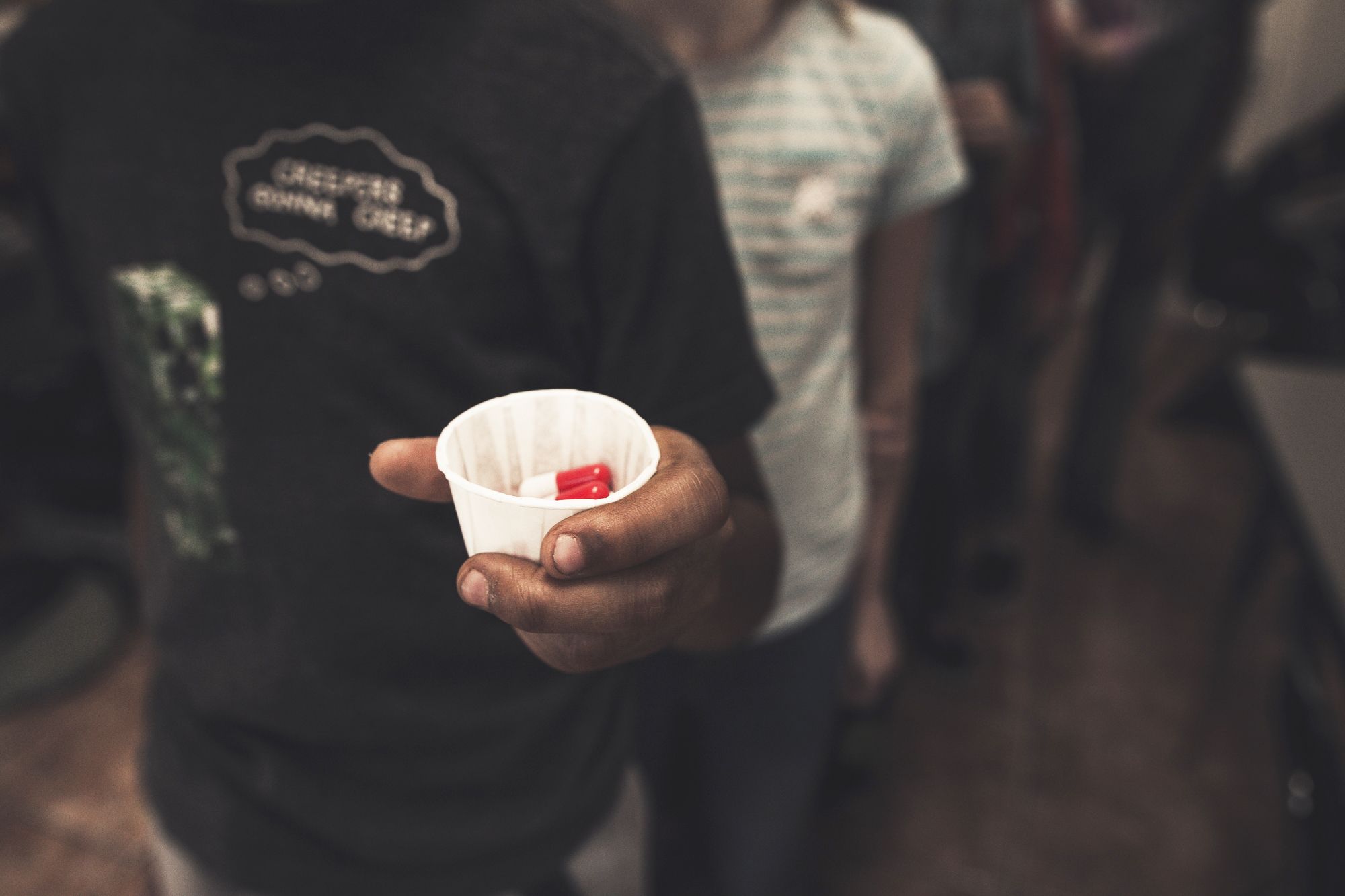
LOS ANGELES - Dec. 30, 2023 - PRLog -- A new American Academy of Pediatrics (AAP) study has found a shocking 141% increase in the use of pharmacologic restraint among hospitalized children ages 5-17 years old with a mental health diagnosis. The study, published in Pediatrics, determined that pharmacological or chemical restraints are used with greater frequency on autistic children, low-income children and children of color.[1] The findings have prompted the mental health industry watchdog, Citizens Commission on Human Rights (CCHR) International, based in Los Angeles, to reinforce the need for federal and state governments to prohibit the use of physical and chemical restraints in mental health-behavioral settings.
The AAP study examined over 90,000 mental health hospitalizations spanning 43 children's hospitals in the U.S. from 2016 to 2021. Pharmacological restraint was defined as the intravenous or intramuscular administration of five potent antipsychotics—a level of restraint deemed criminal child abuse by CCHR.
Despite the average restraint rate holding constant at around 3% over the five years of the study, there were significant increases over time—ranging from 40% to 323%—in the drug restraint rates for children diagnosed with so-called disruptive disorders, bipolar disorders, eating disorders and somatic symptom disorders.
The analysis asserts that more children are being subjected to drug restraints because more children are being admitted to mental health facilities. CCHR says this is an indicator of a failed psychiatric system in which billions of dollars are invested each year and should be reducing the number of children being hospitalized, not increasing it.
Another recently published study in the Journal of Hospital Medicine found a nearly 370% increase nationally in the use of chemical restraints over the past decade.[2]
In November, CCHR called for a ban on all pharmacologic and physical restraints, citing a similar World Health Organization (WHO) statement and an October Los Angeles Times exposé on the coercive use of restraints in psychiatric facilities.
The WHO and United Nations Guideline on "Mental Health, Human Rights and Legislation" points to the need for accountability for coercive practices used in mental health systems, which if implemented, CCHR adds, could reduce restraint use. The guideline states: "When a law is transgressed, legislation should provide for effective civil, administrative or criminal sanctions and reparations. Such sanctions should be proportional to the gravity of the offense, the severity of the harm and the circumstances of each case."[3]
Physical restraints can result in serious physical injury or even death.[4] Cases of recent restraint deaths of a 7- and 16-year-old each resulted in a homicide ruling by medical examiners, leading in one of the cases to three staff being prosecuted and pleading guilty.[5]
Experts who spoke with The Defender, a news outlet for the Children's Health Defense, also "argued reliance on chemical restraints reflects the failure of a treatment model dominated by biological psychiatry rather than offering real or lasting solutions."[6]
The Defender further stated, "Given the lack of safety data on psychotropic drugs, especially for children (for antipsychotics, attention deficit/hyperactivity disorder (ADHD) medications, and antidepressants), and the alleged lack of scientific basis for mental health diagnoses, experts emphasized the need for informed consent and refusal rights as a means to combat the reflexive overmedication of distressed children."
The lack of scientific support for branding children with a mental disorder was raised by Prof. Allen Frances, a psychiatrist who headed the task force updating the Diagnostic and Statistical Manual for Mental Disorders IV in 1994. Sixteen years later, he admitted that the manual had helped create false "epidemics" of "autism, attention deficit, and childhood bipolar disorder."[7]
He explained further, "There are no objective tests in psychiatry—no X-ray, laboratory, or exam that says definitively that someone does or does not have a mental disorder."[8]
In April 2023, Frances told The New York Post he was sorry that DSM-IV "loosened the definition of autism," and feared that his work "contributed to the creation of diagnostic fads that resulted in the massive over-diagnosis of autistic disorders in children and adults." In the early 1980s, the autism rate was 5.5 per 100,000. Between 1995, one year after the DSM-IV was published, and 1997, the rate shot up to 44.9 per 100,000. By 2007, 1 in 150 children were diagnosed with the condition. According to a Centers for Disease report, 1 in 36 children have it today.[9]
Children are being arbitrarily and wrongly diagnosed with autism and other childhood "disorders," subjecting them to the risks associated with prescribed antipsychotics. Approximately one in six children with autism take antipsychotics, as indicated by a study. Risperidone (Risperdal), FDA-approved in 2006 to treat irritability in autistic children aged 5 and older, is one such antipsychotic. In 2009, aripiprazole (Abilify) received approval for children aged 6 and older. Prolonged use can result in Tardive Dyskinesia, an irreversible motor disturbance condition. Recent lawsuits have alleged that developers of aripiprazole failed to adequately warn users of potential side effects, including compulsive behaviors.[10]
Research connects risperidone to an elevated risk of developing excess breast tissue in young boys prescribed the drug, with the manufacturer paying out $800 million in lawsuit settlements over this risk.[11]
The use of physical and chemical restraints and other coercive and damaging practices being relied upon to control or alter childhood behavior is a culture that needs changing and something CCHR says it is committed to in 2024. The WHO-UN Guideline clearly states that non-intrusive, holistic approaches must replace the biomedical model. Until laws ban restraint use, CCHR urges parents to file civil and criminal complaints if a child is damaged from being physically or chemically restrained.
Abuse can also be reported to CCHR here.
[1] childrenshealthdefense.org/defender/psychiatric-drugs-chemical-restraints-children-mental-health, citing publications.aap.org/pediatrics/article/doi/10.1542/peds.2023-062784/196192/Pharmacologic-Restraint-Use-During-Mental-Health?autologincheck=redirected
[2] ldi.upenn.edu/our-work/research-updates/how-patient-restraints-are-being-used-in-a-childrens-hospital/
[3] www.cchrint.org/2023/09/18/who-guideline-condemns-coercive-psychiatric-practices/, citing: www.ohchr.org/sites/default/files/documents/publications/WHO-OHCHR-Mental-health-human-rights-and-legislation_web.pdf, pp. xvii, 105
[4] ldi.upenn.edu/our-work/research-updates/how-patient-restraints-are-being-used-in-a-childrens-hospital/
[5] www.cchrint.org/2023/09/18/who-guideline-condemns-coercive-psychiatric-practices/, citing: www.nbcnews.com/news/us-news/video-shows-fatal-restraint-cornelius-fredericks-16-michigan-foster-facility-n1233122; www.usatoday.com/story/news/nation/2022/09/19/death-child-jaceon-terry-brooklawn-kentucky-youth-center/10428004002/
[6] childrenshealthdefense.org/defender/psychiatric-drugs-chemical-restraints-children-mental-health
[7] www.psychiatrictimes.com/view/normality-endangered-species-psychiatric-fads-and-overdiagnosis
[8] www.psychiatrictimes.com/view/normality-endangered-species-psychiatric-fads-and-overdiagnosis
[9] nypost.com/2023/04/24/doctor-who-broadened-autism-spectrum-sorry-for-over-diagnosis/
[10] www.popsci.com/story/health/abilify-autism-drug-side-effects/
[11] www.reuters.com/business/healthcare-pharmaceuticals/jj-settles-most-risperdal-lawsuits-with-800-million-expenses-2021-10-30/
Photos: (Click photo to enlarge)
Source: CCHR International
Read Full Story - Study Finds 141% Increase in Psychotropic Drug Restraints of Children | More news from this source
Press release distribution by PRLog
More News

Microsoft Says Outage Disrupting Outlook Is Improving
Health services, schools, police departments and companies worldwide reported disruptions to their work. The cause was unclear, though Microsoft appeared to rule out a cyberattack.

Are board games making a comeback this Christmas?
Are board games making a comeback this Christmas?

Democrats Eye Strict New Limits on White House Budget Powers
The incoming majority is also planning aggressive oversight of the White House budget director, who appears to be working to install an ally to monitor the budget office’s handling of federal spending.

Asian Americans Share Disappointment and Fear After Jensen Huang Scandal
Many East Asians said that he had swagger and seemed like a superhero. Now there are worries that the spy scandal turns into hyper scrutiny against them.

Bessent Faults Commerce Dept. for Failing to Blacklist Megaspeed
The Treasury secretary blamed the department for not sanctioning the Singaporean firm and said that Nvidia employees should be held accountable if they sidestepped the law.

Jensen Huang’s Resignation From Nvidia Worries the A.I. Start-Up World
Mr. Huang championed start-ups, with Nvidia holding $48 billion worth of stakes in 229 private companies, including OpenAI and Anthropic, at the end of July.

What are people emergency stockpiling?
From cider to candy canes: What people are emergency stockpiling

Fewer Fed Meetings Raise Stakes of Warsh’s Communications
The Federal Reserve will vote on interest rates less frequently beginning next year as part of a plan by the central bank’s chairman, Kevin M. Warsh, to overhaul how it operates.

Jensen Huang’s Fall Costs Asia an A.I. Ambassador to the U.S.
The ex-Nvidia C.E.O. was a bridge between companies and governments. His exit will reverberate, especially in China where it could accelerate a self-reliance drive.

Mortgage Rates Remain High as Affordability Challenges Persist
The average 30-year, fixed-rate home loan fell slightly, to 7.11 percent, pushing buyers and sellers to the sidelines until conditions improve.

Shoplifters 'stealing to order' in Scottish shops
Shopworkers in Scotland say they're facing rising levels of violence, including attacks with harpoon guns and machetes, as reports of shoplifting rise dramatically.

Howard Lutnick Took Softer Line on Nvidia as Calls for Tougher Controls Grew
Critics say Howard Lutnick, the commerce secretary, and his department have shielded Nvidia as concerns have grown over A.I. chip sales to firms like Megaspeed.
YOUR NEWS, OUR NETWORK.
Do you have Great News you want to tell the world?
Be it updates about your business or your community, you can make sure that it’s heard by submitting your story to our network reaching hundreds of news sites across 6 verticals.