
After German vote, Europe can turn to patching euro's flaws
Sep 24, 2017
Germany's national election will be the starting gun for a renewed debate on how to fix longstanding flaws in how the euro currency is set up
FRANKFURT, Germany — Sunday's national election in Germany will sound the starting gun for a renewed debate on fixing flaws in Europe's shared currency to prevent future crises.
France's new president Emmanuel Macron has made it clear he is willing to push for change to strengthen the euro and is expected to make proposals in a major speech Tuesday. He is pushing for, among other things, a finance minister for the eurozone to oversee a central fiscal pot of money that could even out recessions in individual members.
Even pro-euro policymakers concede their 19-nation currency union contains weaknesses that fed its debt crisis — and leave it exposed to new trouble. But action on fixes has slowed.
Macron's ideas are not new but several of them have faced resistance from Germany, always allergic to the idea of being handed the bill for other members' troubles. For example, German Chancellor Angela Merkel and her finance minister, Wolfgang Schaeuble, have pushed back against the idea of EU-wide insurance on bank deposits meant to keep bank troubles from hitting government finances.
Now there are signs that after its own elections are out of the way, Germany might be more open to change or at a minimum speeding up steps — like the deposit insurance idea — that have stalled. Polls suggest Merkel will win a fourth term. What's not clear is which party her center right Christian Democratic Union will form a coalition.
"In several ways, the coming 12-18 months represent an exceptional opportunity for European reform," says Nicolas Veron, senior fellow at the Bruegel think tank in Brussels and at the Peterson Institute for International Economics in Washington. Reasons for that, he said, include:
—The two biggest EU countries, France and Germany, will now have new governments with fresh mandates from voters.
—Europe's banks are in better shape and the economy is growing, meaning leaders are not preoccupied with fighting a crisis.
—Anti-euro populists have been turned back at the polls this year in France and the Netherlands, giving pro-EU forces a fresh shot of confidence.
—Memories of the debt crisis that threatened to break up the eurozone at its peak in 2011-2012 may still be vivid enough to overcome complacency.
Merkel has expressed cautious openness to tweaking the setup of the euro. "I have made clear that I don't have anything against the title of a European finance minister per se — we would just have to clear up, and we are not yet that far along in talks with France — what this finance minister could do," she said in August.
"I could imagine an economy and finance minister ... so that we achieve a higher degree of harmonization of competitiveness."
The euro, currently worth about $1.20, was created in 1999, and 19 of the 28 EU members use it.
European officials concede that the debt crisis, which exploded when Greece revealed in October 2009 that it was bankrupt, exposed serious flaws. Once financial trouble hit, member countries such as Greece, Ireland and Portugal lacked typical crisis safety valves such as letting their national currency devalue, which can help a country's exports and attract investment. Without their own currencies, this was no longer possible. The countries wound up needing bailouts from the other member countries led by Germany and from the International Monetary Fund.
Additionally, the cost of rescuing failing banks threatened to bankrupt entire eurozone governments. And the euro lacks a central fiscal budget that could even out recessions in member countries by investing more in economies in need.
German resistance will likely remain strong to the bolder ideas, such as a well-stocked central fiscal pot worth several percentage points of EU gross domestic product. Currently, the EU's budget is 1 percent of GDP, spent on things like support for farmers and infrastructure to help development in the poorest members.
More modest, politically realistic steps could include:
— Pushing ahead with EU-wide deposit insurance, to be implemented over a period of years.
— Regulations limiting the widespread practice of European banks buying their own governments' bonds. That would increase pressure on governments to shape up their economies and finances.
— A modest additional pot of money that could be used as targeted stimulus for eurozone countries that fall into serious recessions, with the condition that they implement economic reforms.
EU governments led by Germany, the bloc's most influential member, have already taken some significant steps since the crisis days. They created a fund that can give bailout loans to states in need. They tightened banking oversight by moving it to the EU level at the European Central Bank, and they took steps to stick bank creditors — not taxpayers — with any losses in case of a rescue.
The new system proved its mettle in June, when the ECB pulled the plug on Spain's troubled Banco Popular, the country's sixth-largest bank, and then orchestrated a sale to Banco Santander for one euro. Shareholders and junior bondholders took the losses, while taxpayers and depositors were spared. It's a step away from crisis times when the financial burden of rescuing banks drove Ireland and Spain to seek bailout help.
Carsten Brzeski, chief economist at ING Germany, says that reforms like a small central fund and deposit insurance are feasible.
"The opportunity in 2018 would be more a natural evolution of the process that has been ongoing now for the past couple of years, rather than being a revolution," he said.
___
Sylvie Corbet in Paris and Geir Moulson in Berlin contributed to this report.
More News

Burnham vows end to 'rip-off parking charges' under new rules
Penalties are seen as too harsh on motorists who are penalised for parking on private land.

Job vacancies fall as small firms cut back on recruitment
Small firms cite labour costs as a key factor in scaling back hiring, the Office for National Statistics says.

Chancellor rejects calls to raise Capital Gains Tax in Budget
Influential Labour figures had been pushing for equalising CGT and income tax, but critics have said this could drive wealthy people out of Britain.

Food aid charity under pressure from fuel costs
FareShare South West says fuel costs are putting immense pressure on work helping thousands in need.

How is the US economy really doing under President Trump?
Ahead of the midterms Trump has boasted about the performance of the US economy. BBC Verify looks at inflation, jobs and economic growth in the country.
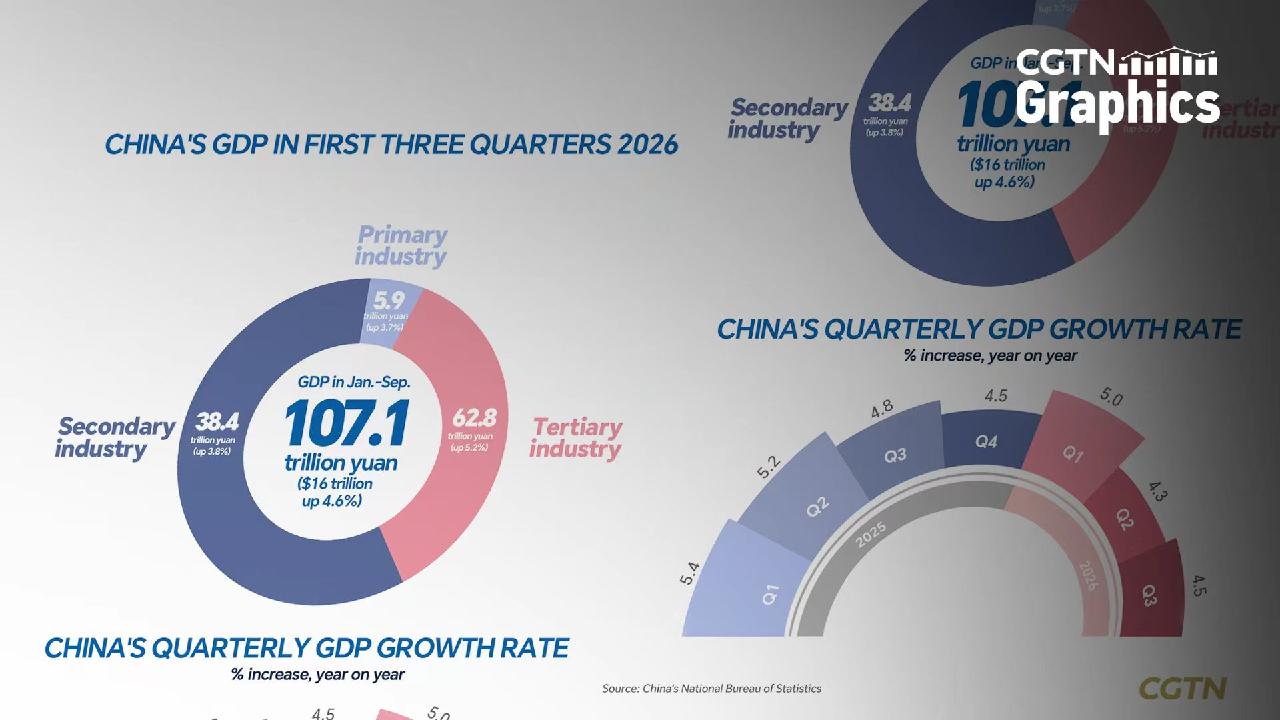
Graphics: China's economy picks up steam in Q3
Graphics: China's economy picks up steam in Q3

The VW Bus, Now Electrified, Keeps on Truckin’
A restored version of Volkswagen’s Flower Power-era Microbus, kitted out by Kindred Motorworks, is aiming for the affluent, while VW’s own E.V. is slow to get moving, much like its forebear.

'I'm fed up of swiping': Why singles now want to meet IRL
The BBC hears from people who think dating events are better value for money than dating apps.

‘A Ticking Time Bomb’: An Economic Crisis Looms in Indonesia
Once a model of economic stability, Indonesia now faces growing hardship at home as President Prabowo Subianto’s policies shake investor confidence.

Black Unemployment Hints at a Job Market in Worse Shape Than It Seems
The Black unemployment rate climbed a percentage point to 7 percent in September, almost double the rate for white workers.

Elon Musk Says He Will Give a SpaceX Share to ‘Every Kid in America’
Anthropic, an A.I. rival to SpaceX, earlier said it would form a “public benefit fund” and other tech moguls have contributed to savings accounts for children.

Christiane Amanpour Says She Is Leaving CNN After 43 Years
The chief international anchor, one of the most famous names in broadcast news, started as an assistant at the network in 1983.