
As Americans take on more debt, some pockets of concern
May 29, 2017
U.S. consumers are in debt as never before, but there are few concerns whether Americans are stretched too thin or not
NEW YORK — After a stint of frugality, Americans have returned to their borrowing ways. But are they getting into the kinds of debt trouble that lead to recessions?
U.S. consumers now owe roughly $12.73 trillion to banks and other lenders for mortgages, car loans and credit card spending, according to the New York Federal Reserve. That exceeds even the total before the last financial crisis.
Economists generally say people's willingness to borrow is a good thing, because it shows they're more confident about their financial futures. And the economy is in far better shape than a decade ago, when economists called the debt unsustainable and the housing market crashed. That's not the concern now.
"Some of us are worried that consumers are going back into old habits, but the U.S. consumer is in a much different position before the financial crisis and even before in the late 1990s," said Ryan Sweet, an economist with Moody's Analytics who is not related to the AP reporter.
Gone are the worries about second homes financed with no-money down mortgages. The stress points now are in three main categories: auto loans, credit cards and — to a greater extent but for different reasons — student loans.
"If it's not a tool you can use to build stability and long-term net worth, debt leads to more problems than it can solve," said Todd Christensen, a credit counselor with the nonprofit organization Debt Reduction Services.
STUDENT LOANS
Not all debt is considered equal, and both mortgages and student loans have typically been considered ways for people to leverage themselves into a better life. A home loan historically has been a way for middle-class Americans to build wealth, while student loans helped people get better-paying jobs.
Student loans have become a source of concern, though, as they become a greater proportion of the debt Americans owe — and those debts are not being paid back. In 2007, student loan debt was less than 5 percent of the debt Americans owned. That figure has more than doubled in 10 years to nearly 11 percent.
As college costs have risen and student loans get larger, the amounts that are delinquent have been increasing. Americans currently have $1.34 trillion in student loan debt, of which 10.98 percent is 90 or more days past due. That's up from 6.85 percent of loans 10 years ago.
"Student loans are a place to keep an eye on," Sweet said as a potential long-term problem for the U.S. economy.
Delinquent student loans can hurt a person's credit score, and affect the ability for a first-time buyer to qualify for a mortgage. That could become a bigger problem as millennials enter their prime years to become a homeowner.
Dallas resident Taylor Green, 29, is using debt strategically. Green, who works in finance, recently opened a credit card to help him and his fiancé pay for their wedding. He hopes to use the points he earns from that to then help cover the cost of a trip to Europe.
"We both have good, stable jobs with decent security, so we are a more comfortable taking on the debt," Green said. "But we want to pay this debt down as fast as we can once the wedding is over."
Green says he also has significant student loan debt, which is in forbearance, that he plans to tackle aggressively once the wedding is over.
CAR LOANS
Americans have been on a car-buying binge, as automakers sold a record 17.6 million cars last year to beat the level set a year earlier. People are also borrowing more money to buy their cars and are financing them for longer periods of time.
The average length of a new car loan is around 62 months, compared to 55 months before the Great Recession, according to the St. Louis Federal Reserve. And delinquencies in auto loans have been inching higher as well. The percent of auto loans 90 or more past due has climbed for 13 straight months, to 2.30 percent of all loans. Five years ago, that figure was 1.63 percent.
Most of the delinquencies in auto loans have been concentrated around subprime borrowing, which has become more accessible to consumers in recent years. Americans with credit scores of less than 620, which is typically considered subprime or deep subprime, owe roughly $280 billion in auto loans — exceeding their pre-recession peak set in 2007, according to the New York Federal Reserve.
But economists don't believe that if those loans go bad that it would pose a risk to the U.S. economy, like subprime mortgages did in 2007. The entire auto loan industry is $1.17 trillion, compared with the $8.63 trillion mortgage market.
CREDIT CARDS
Of the three worry spots, credit cards are often seen as the most toxic of debts. They're easy to accumulate, generally used to buy non-wealth generating consumer goods and often have the highest interest rates.
Americans are carrying less credit card debt then they did before the Great Recession, but have re-embraced using them. Credit card debt has risen from $659 billion in 2014 to $746 billion last year, according to data from the New York Federal Reserve. Meanwhile, after years of trending lower, Federal Reserve data shows credit card delinquencies have reversed course and are climbing again — albeit still from relatively low levels.
Banks are seeing the same trend. JPMorgan Chase, one of the nation's biggest credit card issuers, had to set aside slightly more money to cover bad credit card debts in the most recent quarter. American Express, which historically has some of the lowest default rates because its customers tend to be well-off, also saw those rates rise slightly in its U.S. card business last quarter.
"It's worrisome, but at the same time, it was also inevitable," said Matt Schultz, senior industry analyst with Creditcards.com, a division of Bankrate.com. "There's only so much credit card debt Americans can hold before they get into trouble."
Another specter over those who are carrying higher credit card balances: interest rates.
With the economy in good shape, the Federal Reserve has started raising interest rates. But unlike mortgages, most auto loans and student loans, credit card rates are variable, and can move higher as the prime rate does. So that 15 percent rate on a credit card balance has moved up to 16 percent. How much small changes will affect people's ability to pay isn't clear, but Schultz is watching closely.
"Delinquencies will rise as interest rates rise. I don't know what the tipping point will be for the consumer is, but it's going to be fascinating to watch," he said.
___
Ken Sweet covers banking and consumer financial issues for The Associated Press. Follow him on Twitter at @kensweet.
More News

Burnham vows end to 'rip-off parking charges' under new rules
Penalties are seen as too harsh on motorists who are penalised for parking on private land.

Job vacancies fall as small firms cut back on recruitment
Small firms cite labour costs as a key factor in scaling back hiring, the Office for National Statistics says.

Chancellor rejects calls to raise Capital Gains Tax in Budget
Influential Labour figures had been pushing for equalising CGT and income tax, but critics have said this could drive wealthy people out of Britain.

Food aid charity under pressure from fuel costs
FareShare South West says fuel costs are putting immense pressure on work helping thousands in need.

How is the US economy really doing under President Trump?
Ahead of the midterms Trump has boasted about the performance of the US economy. BBC Verify looks at inflation, jobs and economic growth in the country.
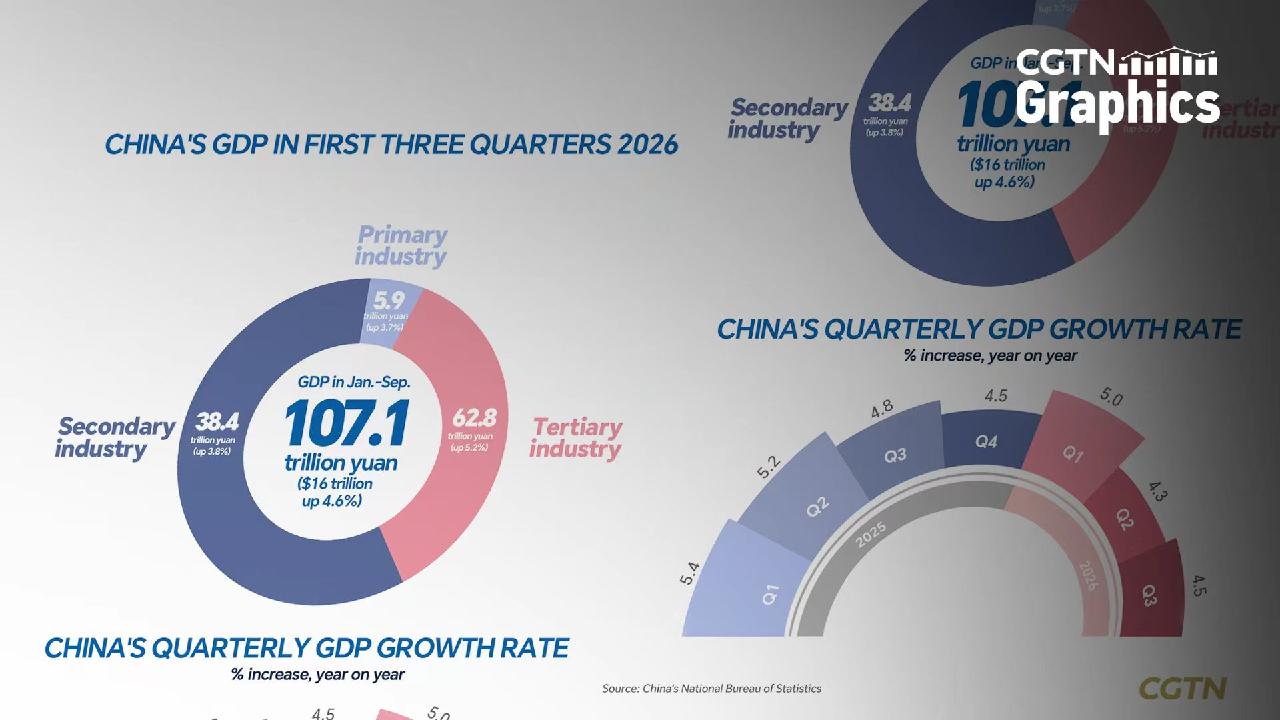
Graphics: China's economy picks up steam in Q3
Graphics: China's economy picks up steam in Q3

The VW Bus, Now Electrified, Keeps on Truckin’
A restored version of Volkswagen’s Flower Power-era Microbus, kitted out by Kindred Motorworks, is aiming for the affluent, while VW’s own E.V. is slow to get moving, much like its forebear.

'I'm fed up of swiping': Why singles now want to meet IRL
The BBC hears from people who think dating events are better value for money than dating apps.

‘A Ticking Time Bomb’: An Economic Crisis Looms in Indonesia
Once a model of economic stability, Indonesia now faces growing hardship at home as President Prabowo Subianto’s policies shake investor confidence.

Black Unemployment Hints at a Job Market in Worse Shape Than It Seems
The Black unemployment rate climbed a percentage point to 7 percent in September, almost double the rate for white workers.

Elon Musk Says He Will Give a SpaceX Share to ‘Every Kid in America’
Anthropic, an A.I. rival to SpaceX, earlier said it would form a “public benefit fund” and other tech moguls have contributed to savings accounts for children.

Christiane Amanpour Says She Is Leaving CNN After 43 Years
The chief international anchor, one of the most famous names in broadcast news, started as an assistant at the network in 1983.