
Asia shares slip as investors weigh omicron economic risks
Nov 30, 2021
Asian shares have fallen, with South Korea's benchmark down 2.4%, as investors cautiously weigh how much damage the new omicron coronavirus variant may unleash on the global economy
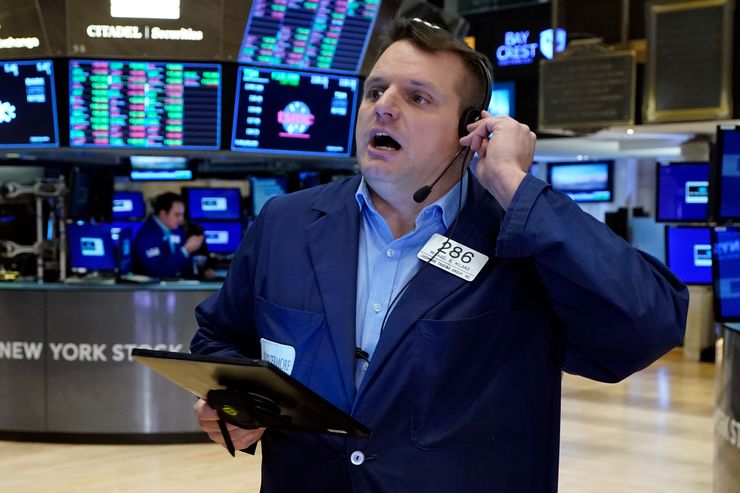
TOKYO (AP) — Asian shares mostly slipped Tuesday as investors cautiously weighed how much damage the new omicron coronavirus variant may unleash on the global economy.
South Korea’s Kospi led regional losses with a 2.4% drop, to 2,839.01.
Japan's benchmark Nikkei 225 lost earlier gains and dropped 1.6% to 27,821.76, as pessimism over the omicron variant set in. Australia's S&P/ASX 200 gained 0.2% to 7,256.00. Hong Kong's Hang Seng dipped 1.7% to 23, 439.91, while the Shanghai Composite was nearly flat at 3,563.89.
The yield on the 10-year Treasury slipped back to 1.46% from 1.51% late Monday. It tends to rise and fall with expectations for the U.S. economy’s strength and for inflation.
Some analysts think a serious economic downturn, like what happened last year, likely will be averted because many people have been vaccinated. But they also think a return to pre-pandemic levels of economic activity, especially in tourism, has been dramatically delayed.
“Sentiments may ride on the positive handover from Wall Street overnight, but with the slower vaccination rate and more limited healthcare capacity in the region, uncertainty from the new omicron variant may seem to bring about higher economic risks for the region at a time where it is shifting towards further reopening,” Yeap Jun Rong, market strategist at IG in Singapore, said of the omicron's impact on Asia.
The vaccination rollout rate varies by country in the region, at about 77% in Japan, 50% in Vietnam and 35% in Indonesia. In Asia, the omicron variant has been detected in Australia, Japan and Hong Kong and the region is bracing for more cases. It is unclear how effective current vaccines may be against the new variant.
On Wall Street, the S&P 500 rose 1.3% to 4,655.27, recovering more than half of its drop Friday, which was its worst since February. Bond yields and crude oil also recovered chunks of what they lost in traders' knee-jerk reaction to run toward safety and away from risky investments.
The Nasdaq added 1.9% to 15,782.83. The Russell 2000 index of small companies slipped 0.2% to 2,241.98.
The Dow Jones Industrial Average wavered between gains and losses, advancing 0.7% to 35,135.94.
The VIX, an index that measures how worried investors are about upcoming drops for the S&P 500, eased significantly. But it’s not all the way back to where it was before omicron.
But while the market steadied itself, omicron adds more risk to a global economy already contending with paralyzing uncertainty. The variant appears to spread more easily, and countries around the world have put up barriers to travel in hopes of stemming it.
Travel bans, including decisions by Japan and Israel to bar foreign visitors, threaten to disrupt global business. Global supply chains already gummed up by bottlenecks could be further ensnarled if outbreaks shut down factories, ports and freight yards.
Shipping problems would risk pushing prices higher, adding to inflation pressures. In response, the world’s central banks could raise interest rates and imperil the recovery from last year’s brief but intense coronavirus recession.
Besides waiting on more clues about how much economic damage omicron will ultimately do, the market has several big mileposts this week that could swing prices. The headliner is likely Friday's jobs report, where economists expect to see an acceleration in hiring by employers during November.
The U.S. economic recovery lost significant momentum when the highly contagious delta variant hit over the summer. Economic growth slowed to an annual rate of 2.1% from July through September from 6.7% from April through June.
Still, more Americans are vaccinated now, and the economy has shown resiliency, regaining speed after the summer slowdown.
Of course, the only way to know which scenario will ultimately occur is to wait to see it through. And that uncertainty in the meantime could lead to more up-and-down swings for the stock market, which has surged more than 24% this year and set a record as recently as Nov. 18.
In energy trading, benchmark U.S. crude dropped 3% or $2.10 to $67.85 a barrel. It rose $1.80 to 69.95 per barrel on Monday. Brent crude, the international standard, fell $2.52 to $70.70 a barrel.
In currency trading, the U.S. dollar slipped to 113.09 Japanese yen from 113.56 yen. The euro advanced to $1.1326 from $1.1291.
More News

Healey says surprise UK growth is 'sign of resilience' ahead of Budget
The economy grew by 0.1% in August, defying analysts' expectations of a slight contraction.

Attacks on Tankers in Mideast Surge, but Oil Exports Remain Steady
Shipping operators are braving the Strait of Hormuz, but the risks are high and transportation costs have skyrocketed.

Chinese Carmakers, Once a Sideshow, Take Center Stage at Paris Motor Show
At this week’s Paris Motor Show, there are no signs the influx of low-cost Chinese vehicles will slow despite European Union efforts.

Tesla Debuts 2026 Roadster, an EV Sports Car at Least $200,000
Elon Musk’s company and other automakers, like Jaguar and Bentley, are trying to sell very expensive electric cars to people who usually prefer gasoline-fueled luxury and performance.

Families of Sailors Killed in Gulf Struggle for Compensation and Closure
Attacks near the Strait of Hormuz have claimed the lives of at least 25 seafarers. Their survivors are reeling.

Anthropic flags revenue surge to investors ahead of stock market debut
It comes as some investors have become concerned about the amount of money being spent on AI infrastructure.

Thousands of NI workers to get pay bump as Real Living Wage rises
About 6,000 workers in NI are paid the Real Living Wage - which is voluntarily paid to reflect the cost of living.

'I paid thousands to a company for jobs that never came'
Apurv Patel is one of several people who say they were promised job opportunities that did not appear.
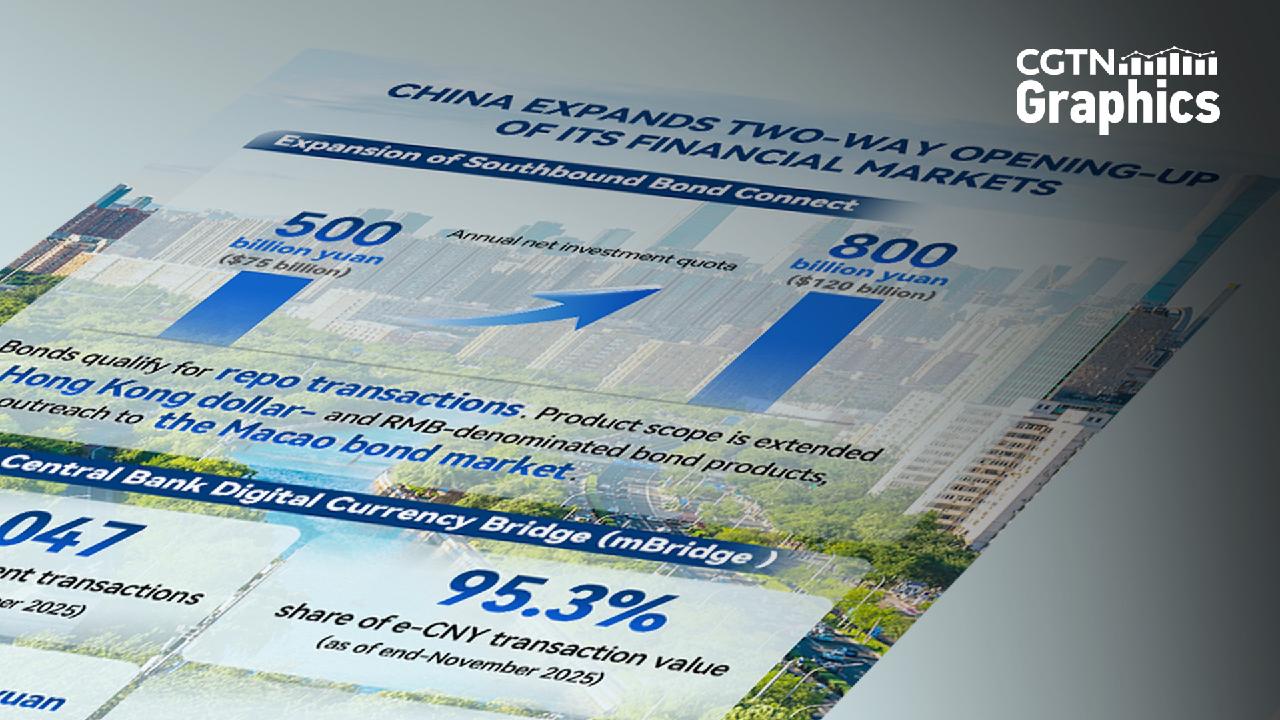
Graphics: China advances two-way opening-up of its financial markets
Graphics: China advances two-way opening-up of its financial markets

Bank of America Fined $1.2 Billion for Lax Money-Laundering Oversight
Federal regulators said the bank had waved through suspicious transactions without proper care.

Musk Blames Tycoon for Stalling Satellite Internet Access in India
As Starlink seeks permission to operate in India, a recent protest in New Delhi showed how quickly authorities can cut off mobile internet access.

Energy Department Order Takes Aim at Mid-Atlantic Blackout Risk
The order as a precaution allows grid operators to use backup generation this week. There were no widespread outages reported.