
Asian shares turn lower as virus caseloads surge
Jul 22, 2020
Shares are mostly lower in Asia, as governments in the region reported surging numbers of confirmed coronavirus cases
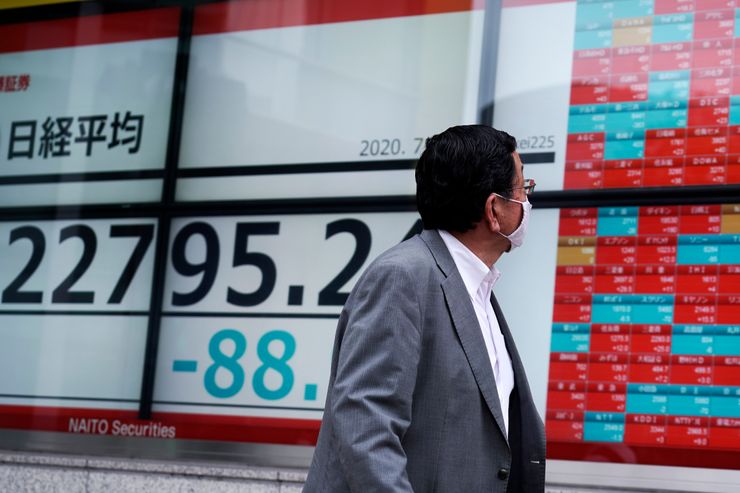
MITO, Japan (AP) — Shares were mostly lower in Asia on Wednesday, as governments in the region reported surging numbers of confirmed coronavirus cases.
Stocks retreated in Tokyo, Hong Kong and Sydney but edged higher in Shanghai.
Australia’s hard-hit Victoria state reported a record 484 new COVID-19 cases, and health authorities warned that numbers could continue to rise if the sick continue to fail to isolate themselves.
Local officials in Tokyo and Hong Kong also expressed alarm at surging numbers of infections.
Adding to unease was a report by the U.S. Centers for Disease Control that the number of coronavirus cases in some states is much higher than has been reported. Experts have said all along that the toll from the COVID-19 pandemic is much higher than tallies of confirmed cases would indicate, due to issues with testing and data collection.
Tokyo's Nikkei 225 index lost 0.6% to 22,751.61 while the Hang Seng in Hong Kong shed 0.6% to 25,494.08. The Shanghai Composite index gained 0.2% to 3,328.68.
The S&P ASX/200 in Australia skidded 1.3% to 6,075.10. Shares rose in Taiwan, Kuala Lumpur and Jakarta but fell in Singapore and Bangkok.
Uncertainty over prospects for more financial aid to Americans and U.S. businesses also is casting a shadow, analysts said. The Republican Party and Democrats remain divided over how much support is needed, as states grapple with rebounds in cases that have prompted some local governments to order some businesses to close to help snuff out flare ups of the virus.
“Asia markets are not expected to share in the cheer this midweek with some doubts cast on progress in delivering the next fiscal support for the U.S. economy," Jingyi Pan of IG said in a commentary.
On Wall Street, shares edged higher overnight despite a late stumble that nearly wiped out the market’s gains for the day. The S&P 500 added 0.2% to 3,257.30 for a third straight gain.
The Dow Jones Industrial Average rose 0.6%, to 26,840.40, while the Nasdaq tumbled 0.8%, to 10,680.36, a day after notching its best day since the end of April and its latest all-time high.
Small company stocks surged, driving the Russell 2000 index up 1.3% to 1,487.51.
Treasury yields were mostly lower and the price of gold rose 1.5%, signs of continuing caution in the market.
The Federal Reserve’s efforts to support markets and expectations that Washington will deliver more financial aid to help Americans weather the economic downturn have been key in keeping markets mostly pushing higher since stocks plunged in March.
The overall S&P 500 index has rallied back to within 3.9% of its record set in February and is back to where it was in early June.
Still, worries remain that the rise of coronavirus counts across much of the country will derail efforts to reopen businesses shut down due to the pandemic. That’s why Wall Street is betting on Washington to deliver another trillion-dollar round of economic aid.
Investors also had their eye on the latest batch of quarterly report cards from companies. Coca-Cola rose 2.3% and Philip Morris International gained 4.2% after the companies reported earnings in the latest quarter that beat analysts’ forecasts.
Among the other big companies reporting results this week: Microsoft and Tesla issue results on Wednesday, Intel, AT&T and Twitter report on Thursday and Verizon Communications and American Express report earnings Friday.
The yield on the 10-year Treasury was steady at 0.60% after slipping to 0.59% late Tuesday. The yield is a benchmark for interest rates on mortgages and other consumer loans.
In the commodities markets, the price of benchmark U.S oil gave up 26 cents to $41.66 per barrel in electronic trading on the New York Mercantile Exchange. It jumped 2.8% to settle at $41.92 a barrel on Tuesday. Brent crude oil, the international standard, lost 17 cents to $44.15 per barrel.
The U.S. dollar rose to 106.82 Japanese yen from 106.79 yen late Tuesday. The euro was trading at $1.1527, down from $1.1528, after EU leaders reached agreement on a $2.1 trillion budget plus coronavirus aid plan to help the ailing regional economy.
More News

The Reporter Who Exposed Elizabeth Holmes on Nathan Fielder’s Documentary
Ms. Holmes handed the makers of “You Can See Everything” — and the rest of the world — a microscope with which to observe and dissect her lies.

Corporate Tax Revenue Falls Even as Profits Soar Under Trump
The annual decline was about $70 billion. Companies are writing off billions in A.I. investments, taking advantage of tax cuts that President Trump signed into law.

Can Cereal Be Healthy? Big Companies Are Trying.
As more Americans turn away from the snap, crackle and sugar, the industry is trying to capitalize on our current obsession with wellness.

It’s Time to Shop Medicare, and This Year, It’s Extra Important
Be sure to read your mail this fall — big changes to prescription drug plans and Medicare Advantage provider networks are coming, and could cost you more.

Weak Links Start to Show in A.I. Borrowing
Debt trouble at CoreWeave, Oracle and SoftBank raises questions about whether there is broader trouble with the data center build-out.

Call for more food funding due to high living cost
Deputy Louise Doublet does not think the cost of living was considered in the ending of a trial.

Charity reflects on changing needs over 25 years
Help a Guernsey Child says it has provided in excess of £1.2m worth of essential support.

Nightclubs are disappearing - and it's affecting young people
One young person said with no nightlife in their town they cannot "let loose and mess around".

M.L.B. Playoff Ads With Sydney Sweeney and Megan Fox Draw Backlash
Commercials with Sydney Sweeney promoting a gambling platform and Megan Fox endorsing male enhancement have rankled fans, and even athletes. Who is in charge?

Netflix Hurries to Rewrite Its Narrative With Layoffs and a Sudden Firing
Despite strong revenues and profits, the streaming service cut 1,000 jobs and jettisoned its chief content officer. Drops in the stock price and viewer engagement are to blame.

Why Bad News in the Bond Market May Be Good News for Investors
In the contrarian logic of investing, rising interest rates have made bonds much more attractive, our columnist says.

U.S. Budget Deficit Nears $2 Trillion, a Reality Check for Trump’s Cost Cutting
Higher interest rates are inflating borrowing costs as the Trump administration spends on the Iran war and tariff refunds.