
Behind the Croatian bankruptcy that's shaking the Balkans
Nov 26, 2017
Ivica Todoric will no longer be living in his sprawling 16th century castle overlooking the Croatian capital, flying in his private helicopter to his luxurious coastal villa or taking his yacht for a spin in the Adriatic
ZAGREB, Croatia — Ivica Todoric will no longer be living in his sprawling 16th-century castle overlooking Croatia's capital, flying in his private helicopter to his luxurious coastal villa or taking his yacht for a trip in the Adriatic.
Croatia's most wanted fugitive, known locally as "the Boss," surrendered to London police this month amid accusations that he mismanaged his food and retail multinational and embezzled millions, leading it into a bankruptcy so massive that it's now an issue of national concern for several southeastern European countries.
Todoric's company, Agrokor is collapsing under the weight of $7 billion in debt, a sum so large that bailing it out fully would bankrupt the Croatian state itself. But letting the company go under would threaten 60,000 employees and thousands more jobs through a supply chain that includes farmers across the region. Meanwhile, the main creditors — Russian banks — are on the war path to extract whatever value they can.
"Croatia faces an economic and financial tsunami that is beyond imagination," Prime Minister Andrej Plenkovic said during a recent parliamentary debate over the government's handling of the crisis and calls for his resignation.
The story of Todoric, 66, and Agrokor, which accounts for 15 percent of Croatia's GDP, has exposed crony capitalism, shady privatization in the former communist country, and close connections between politics and business in the Balkans, which is still recovering from the bloody breakup of the former Yugoslav federation in the 1990s.
___
IT STARTS WITH FLOWERS
Together with his father Ante, Todoric constructed a greenhouse in 1976 selling flowers throughout former Yugoslavia when the country's communist regime started introducing market reforms. The business went well, prompting the family to establish Agrokor as a joint stock company in 1989.
Like many Croatian businessmen with good political connections, Todoric took advantage of the war years in the 1990s to take part in the large-scale privatization process of the state-run companies, which were sold for cheap through shady and irregular deals.
With good connections to the ruling elite, Todoric in 1993 bought several companies, including supermarkets belonging to the biggest retailer in the capital.
"The privatization that was undertaken in the 90's caused so many problems in Croatia," said Orsat Miljenic, the head of a parliamentary commission set to deal with political aspects of the crisis. "So many good factories just disappeared. So many people who didn't have any money now are very rich."
Agrokor "became a bigger power than the state itself," Miljenic said.
Running the company with his two sons and daughter, Todoric kept expanding aggressively, buying everything from agricultural land to water bottling firms, meat-processing farms to ice cream-making companies and newspaper stands.
Agrokor also expanded outside Croatia, with assets in neighboring Serbia, Bosnia and other former Yugoslav republics.
___
THE CRASH
Analysts say Todoric's zeal for expansion triggered Agrokor's financial collapse.
In 2014, Todoric bought 53 percent of struggling Slovenian retailer Mercator for 550 million euros, using loans from Russian state-owned bank Sberbank that carried a high interest rate. Analysts say the purchase of Mercator was the death blow for Agrokor's finances as it made the debt unsustainable.
Croatia's entry into the European Union in 2013 also hurt the company, as its supermarkets suddenly faced tough competition from large German and other foreign retail chains that were allowed to open in the country.
Agrokor's financial collapse is a "combination of fast expansion, overinvestment, low profitability and high-cost borrowing, which resulted in not enough cash flow to service its credit obligations," financial consultant Andrej Grubisic said.
___
RUSSIAN CONNECTION AND POLITICS
Russian money played a big role in Agrokor's financing, prompting fears in Croatia that the Kremlin has been strategically trying to increase its political influence in the EU's newest member.
Sberbank is Agrokor's biggest creditor with 1.1 billion euros. Another Russian bank close to the Kremlin, VTB, contributed with rollover loans worth about 300 million euros. The other main creditors include Austria's Erste Group and Raiffeisenbank and Italy's UniCredit and Intesa Sanpaolo.
"Whenever there is big money, there's some politics behind it," said Miljenic, who was formerly Croatia's justice minister and is now in the opposition. "If the banks are owned by a state, logically, there should be even more politics."
The government caretaker of Agrokor has recognized creditor claims worth some $6.3 billion, but Sberbank's loan was not included, officially because the bank has launched legal claims against Agrokor companies in other countries, including Britain.
That has triggered angry reaction from Sberbank, which said in a statement it was "unpleasantly surprised" with the Croatian government's stance.
"Everyone, including Sberbank, can resort to any legally allowed measure, in Croatia or in other countries, to protect its interests and must not be discriminated against because of that," the statement said, adding that the bank will appeal the decision.
___
TODORIC REMAINS DEFIANT
Todoric formally still owns Agrokor but the Croatian government has taken over its management and gave itself until next summer to rescue what it can of the company.
Todoric fled to London amid the charges of embezzlement, which Croatian authorities used to start seizing his private property to help pay off Agrokor's debts.
After he appeared on European police's fugitive arrest list, Todoric wrote on his blog that his conscience was clear.
"As a man whose human rights are deeply violated I have the right to oppose political persecution," Todoric wrote.
Todoric has been claiming that the government illegally took over his company and indicated that he will fight his extradition from Britain on the grounds that he is the victim of political pursuit. He has announced he would file a law suit against the so-called "Lex-Agrokor" — a law passed by the parliament that allowed the takeover.
___
Darko Bandic contributed.
More News

Food aid charity under pressure from fuel costs
FareShare South West says fuel costs are putting immense pressure on work helping thousands in need.

How is the US economy really doing under President Trump?
Ahead of the midterms Trump has boasted about the performance of the US economy. BBC Verify looks at inflation, jobs and economic growth in the country.
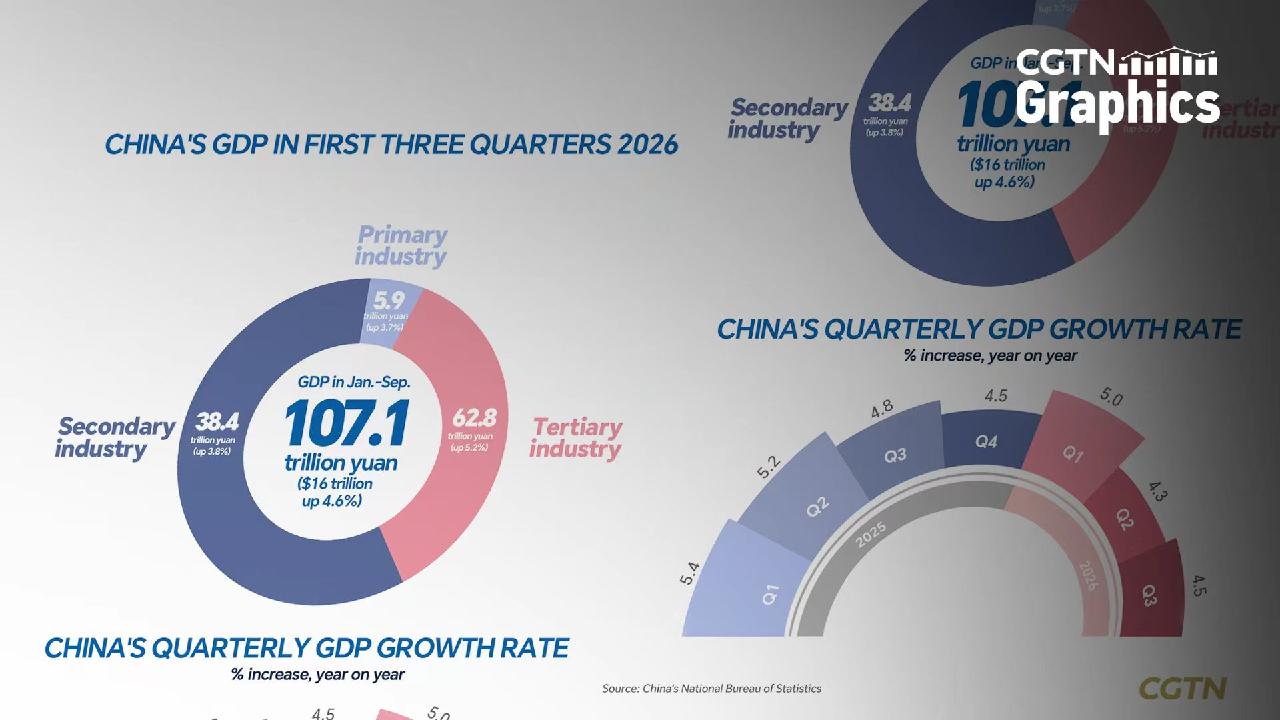
Graphics: China's economy picks up steam in Q3
Graphics: China's economy picks up steam in Q3

Chancellor rejects calls to raise Capital Gains Tax in Budget
Influential Labour figures had been pushing for equalising CGT and income tax, but critics have said this could drive wealthy people out of Britain.

The VW Bus, Now Electrified, Keeps on Truckin’
A restored version of Volkswagen’s Flower Power-era Microbus, kitted out by Kindred Motorworks, is aiming for the affluent, while VW’s own E.V. is slow to get moving, much like its forebear.

'I'm fed up of swiping': Why singles now want to meet IRL
The BBC hears from people who think dating events are better value for money than dating apps.

‘A Ticking Time Bomb’: An Economic Crisis Looms in Indonesia
Once a model of economic stability, Indonesia now faces growing hardship at home as President Prabowo Subianto’s policies shake investor confidence.

Black Unemployment Hints at a Job Market in Worse Shape Than It Seems
The Black unemployment rate climbed a percentage point to 7 percent in September, almost double the rate for white workers.

Elon Musk Says He Will Give a SpaceX Share to ‘Every Kid in America’
Anthropic, an A.I. rival to SpaceX, earlier said it would form a “public benefit fund” and other tech moguls have contributed to savings accounts for children.

Christiane Amanpour Says She Is Leaving CNN After 43 Years
The chief international anchor, one of the most famous names in broadcast news, started as an assistant at the network in 1983.

Burnham vows end to 'rip-off parking charges' under new rules
Penalties are seen as too harsh on motorists who are penalised for parking on private land.

Ex-OpenAI worker accused of planting device had Saudi support, says court filing
The Saudi government did not immediately respond to BBC requests for comment.