
Bloated public salaries at heart of Iraq's economic woes

Oct 23, 2020
Iraq's government is struggling to pay the salaries of its public sector employees, its coffers drained because of this year's plunge in oil prices
BAGHDAD (AP) — Long-time Iraqi civil servant Qusay Abdul-Amma panicked when his monthly salary was delayed. Days of waiting turned to weeks. He defaulted on rent and other bills.
A graphic designer for the Health Ministry, he uses about half his salary to pay his rent of nearly 450,000 Iraqi dinars a month, roughly $400. If he fails to pay twice in a row his landlord will evict him and his family, he fears.
“These delays affect my ability to survive,” Abdul-Amma said.
Iraq’s government is struggling to pay the salaries of the ever-swelling ranks of public sector employees amid an unprecedented liquidity crisis caused by low oil prices. September's salaries were delayed for weeks, and October’s still haven’t been paid as the government tries to borrow once again from Iraq’s currency reserves. The crisis has fueled fears of instability ahead of mass demonstrations this week.
The government has outlined a vision for a drastic overhaul of Iraq’s economy in a “white paper” presented last week to lawmakers and political factions. But with early elections on the horizon, the prime minister’s advisers fear there is little political will to execute it fully.
“We are asking the same people we are protesting against and criticizing to reform the system,” said Sajad Jiyad, an Iraq researcher.
The white paper’s calls for cutting public sector payrolls and reforming state finances would undermine the patronage systems that the political elite have used to entrench their power.
A major part of that patronage is handing out state jobs in return for support. The result has been a threefold increase in public workers since 2004. The government pays 400% more in salaries than it did 15 years ago. Around three quarters of the state’s expenditures in 2020 go to paying for the public sector — a massive drain on dwindling finances.
“Now the situation is very dangerous,” said Mohammed al-Daraji, a lawmaker on parliament’s Finance Committee.
One government official said political factions are in denial that change is needed, believing oil prices will rise and “we will be fine.”
“We won’t be fine. The system is unsustainable and sooner or later it will implode,” the official said, speaking on condition of anonymity to discuss internal politics.
Iraq’s activists have called for a march on Oct. 25, expected to draw large crowds, a year since massive anti-government protests first brought tens of thousands to the streets demanded reforms and an end to the corrupt political class.
"As far as meeting our demands, there have been no changes,” said Kamal Jabar, member of the Tishreen Democratic Movement, founded during the protests last year. “To us, the white paper is a joke.”
Abu Ali, a merchant in Baghdad’s commercial district of Shorjah, fears what the following months have in store. The state is the primary source of employment for Iraqis, and civil servants are the lifeblood of his business.
“The delays in salary payments have affected the market directly,” he said. “If these delays continue our business and the economy will collapse.”
Abdul-Amma’s September pay was 45 days late, and he still hasn’t received the October pay that was supposed to come on the first of the month. He worries about the coming months as well.
“I have a history of chronic heart disease, and one of my daughters is also sick,” said the father of four. He pays $100 in medical fees per month.
But to the architects of the reform paper, he is part of the problem: Public sector bloat is first in line for reform.
“We hope the civil service and bureaucracy will recognize a need for change,” Finance Minister Ali Allawi told The Associated Press in a recent interview.
Iraq relies on oil exports to fund 90% of state revenues. Those revenues have plunged to an average $3.5 billion a month since oil prices crashed earlier this year.
That’s half the $7 billion a month needed to pay urgent expenses. Of that, $5 billion is for public sector salaries and pensions, according to Finance Ministry figures. Iraq also imports nearly all of its food and medicine; with foreign currency reserves at $53 billion, the World Bank estimates the country can sustain these imports for another nine months. Foreign debts account for another $316 million.
Poor productivity of public workers is the heart of the issue, Allawi said.
“We’ve ended up with a low productivity, high-cost public sector that doesn’t really earn its keep,” he said. “In one way or another this issue has to be tackled by either reducing numbers, which is politically difficult, reducing salaries ... or increasing productivity.”
The white paper calls for public sector payments to be reduced from 25% of GDP to 12% but doesn’t detail how. Officials said one step may be to restore taxes on civil servants' benefits that previous administrations had lifted.
To meet month-to-month commitments now, the government has had to borrow internally from its foreign currency reserves. A request of a second loan of $35 billion was sent to parliament, drawing criticism from lawmakers.
Haitham al-Jibouri, head of parliament’s Finance Committee, said in televised remarks that if borrowing was the government’s only plan he would fetch a shopkeeper from Bab al-Sharqi, a commercial area in the capital, to do the finance minister’s job.
Parliament’s endorsement of the loan and the reform paper is crucial for the government to avoid a full-scale economic crisis.
But this will prove difficult with elections slated for next June, since factions want to hand out jobs to maintain their constituencies.
“Whoever decides to push ahead and support reforms first will lose out, they will also need to convince other political players who will also lose out,” said Jiyad. “That is a tough sell.”
Al-Kadhimi’s advisers privately acknowledge the challenges of having the system that produced such mismanagement and corruption be its own savior.
One official recalled a remark made by the finance minister at a meeting of a high-level committee tasked with managing the crisis.
He looked at the room of officials charged with halting the country’s fast spiral toward insolvency and said, “I can’t believe this was done for 10 years and none of you did anything to stop it.” There was silence.
More News

Call for more food funding due to high living cost
Deputy Louise Doublet does not think the cost of living was considered in the ending of a trial.

Charity reflects on changing needs over 25 years
Help a Guernsey Child says it has provided in excess of £1.2m worth of essential support.

Nightclubs are disappearing - and it's affecting young people
One young person said with no nightlife in their town they cannot "let loose and mess around".

M.L.B. Playoff Ads With Sydney Sweeney and Megan Fox Draw Backlash
Commercials with Sydney Sweeney promoting a gambling platform and Megan Fox endorsing male enhancement have rankled fans, and even athletes. Who is in charge?

Netflix Hurries to Rewrite Its Narrative With Layoffs and a Sudden Firing
Despite strong revenues and profits, the streaming service cut 1,000 jobs and jettisoned its chief content officer. Drops in the stock price and viewer engagement are to blame.

Why Bad News in the Bond Market May Be Good News for Investors
In the contrarian logic of investing, rising interest rates have made bonds much more attractive, our columnist says.

U.S. Budget Deficit Nears $2 Trillion, a Reality Check for Trump’s Cost Cutting
Higher interest rates are inflating borrowing costs as the Trump administration spends on the Iran war and tariff refunds.

Indonesian Stocks Plunge as MSCI Threatens to Drop Market from Indexes
The potential downgrade by MSCI, an influential index provider, adds to a deepening crisis of investor confidence in the economic policies of President Prabowo Subianto.

Warsh Vows to Tame Inflation as A.I. Delivers ‘Shock’ to Economy
The Federal Reserve chairman stuck to his pledge to avoid providing guidance about the path forward for interest rates, but did nothing to convey an urgency to raise them later this month.
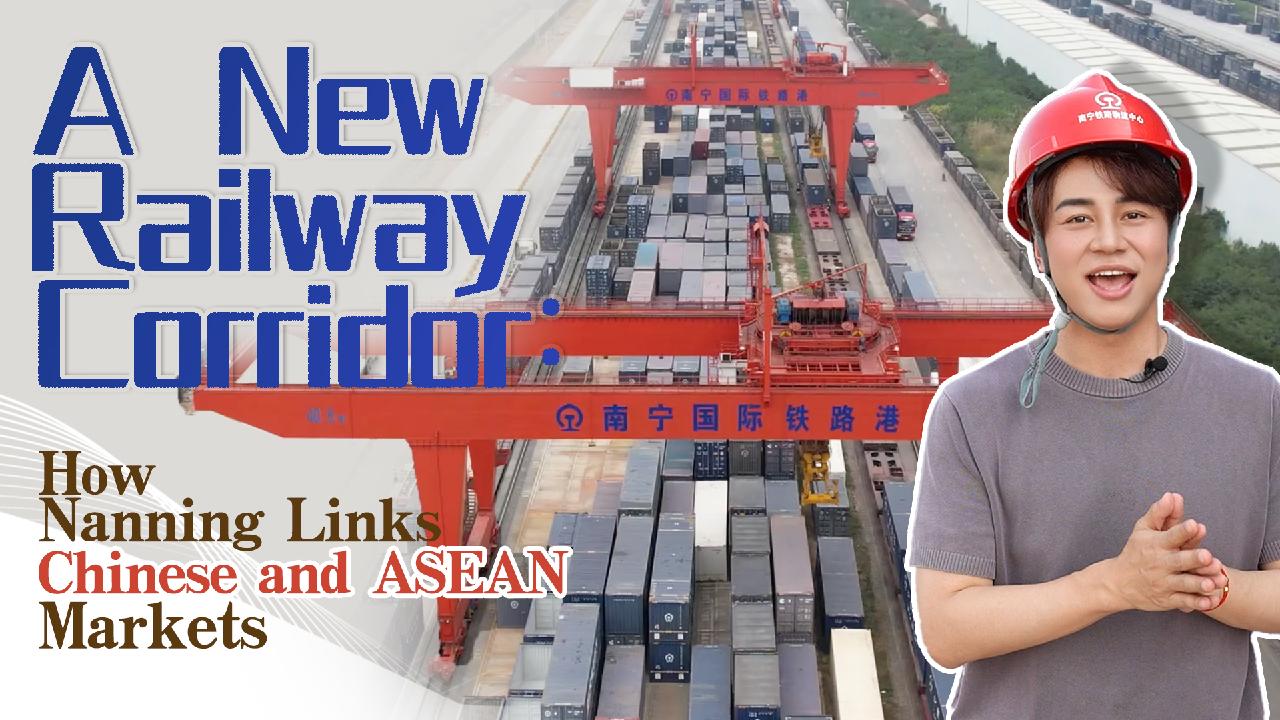
A new railway corridor: How Nanning links Chinese and ASEAN markets
A new railway corridor: How Nanning links Chinese and ASEAN markets

Watch: Did Tesla really just unveil a flying car?
Tesla CEO Elon Musk showcased the vehicle at a facility owned by his SpaceX company, which helped develop the model.

China and Europe are building new connections in aerospace
China and Europe are building new connections in aerospace – from skies to stars. On the one hand, their deep industrial partnership is scaling global civil aviation to new heights. On the other hand, scientific collaboration is opening new possibilities for space exploration and deepening our understanding of the Sun-Earth system.