
Brent crude up $12, shares sink as Ukraine conflict deepens
Mar 7, 2022
The price of oil has jumped more than $12 a barrel and shares are sharply lower as the conflict in Ukraine deepens amid mounting calls for harsher sanctions against Russia
TOKYO (AP) — The price of oil jumped more than $12 a barrel and shares were sharply lower Monday as the conflict in Ukraine deepened amid mounting calls for harsher sanctions against Russia.
Brent crude oil surged more than 10%, while benchmark U.S. crude was up $10 at more than $125 a barrel.
Stock futures in the U.S. and Europe also dropped. The price of gold, which is viewed as an investor safe haven in times of crisis, jumped $26 an ounce to $1,992.90.
The latest market turmoil followed a warning from Russian President Vladimir Putin that Ukrainian statehood was imperiled as Russian forces battered strategic locations. A temporary cease-fire in two Ukrainian cities failed over the weekend — and both sides blamed each other.
Oil prices came under additional pressure after Libya’s national oil company said an armed group had shut down two crucial oil fields. The move caused the country’s daily oil output to drop by 330,000.
U.S. House of Representatives Speaker Nancy Pelosi said the House was exploring legislation to further isolate Russia from the global economy, including banning the import of its oil and energy products into the U.S.
By mid-afternoon in Tokyo, U.S. crude had jumped $10.01 to $125.69 a barrel in electronic trading on the New York Mercantile Exchange. The all-time high was marked in July 2008, when the price per barrel of U.S. crude climbed to $145.29.
That pushed the average price for gasoline in the U.S. above $4 a gallon, a milestone already reached again. The price of regular gasoline rose almost 41 cents, breaking $4 per gallon (3.8 liters) on average across the U.S. on Sunday for the first time since 2008, according to the AAA motor club.
The all-time high for average gasoline prices was set July 17, 2008 at $4.10 per gallon.
Brent crude, the international pricing standard, hit $139.13 per barrel before falling back Monday. It was trading up $12.18 at $130.29 a barrel.
On Wall Street, U.S. futures fell, with the contract for the benchmark S&P 500 down 1.2% and that for the Dow industrials falling 1.0%. Stock futures in Europe also declined.
Higher fuel costs are devastating for Japan, which imports almost all its energy. Japan’s benchmark Nikkei 225 dipped 3% in afternoon trading to 25,222.24.
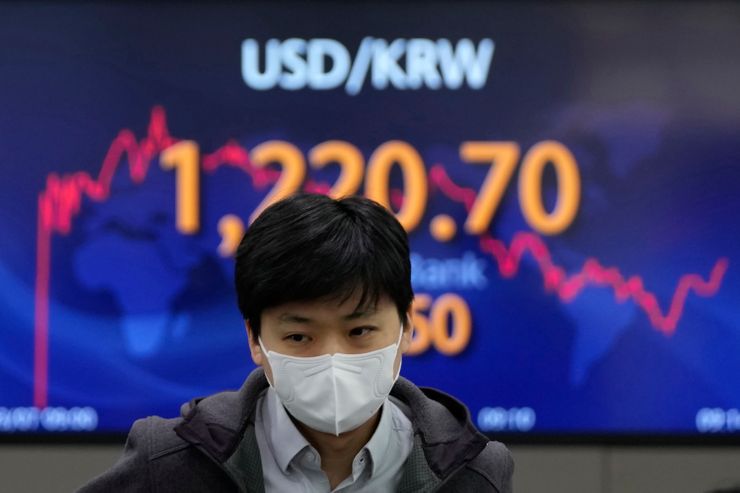
Hong Kong’s Hang Seng dropped 3.5% to 21,138.25, while South Korea’s Kospi slipped 2.0% to 2,658.42. Australia’s S&P/ASX 200 shed 1.0% to 7,038.60. while the Shanghai Composite lost 1.7% to 3,389.92.
“The Ukraine-Russia conflict will continue to dominate market sentiments and no signs of conflict resolution thus far may likely put a cap on risk sentiments into the new week,” said Yeap Jun Rong, market strategist at IG in Singapore.
“It should be clear by now that economic sanctions will not deter any aggression from the Russians, but will serve more as a punitive measure at the expense of implication on global economic growth. Elevated oil prices may pose a threat to firms’ margins and consumer spending outlook," Yeap said.
China reported Monday that its exports rose by double digits in January and February before Russia’s attack on Ukraine roiled the global economy.
Customs data show exports grew by 16.3% over a year earlier in a sign global demand was recovering before President Vladimir Putin’s Feb. 24 invasion. Imports advanced 15.5% despite a Chinese economic slowdown that the war threatens to worsen.
China’s No. 2 leader, Premier Li Keqiang, warned Saturday global conditions are “volatile, grave and uncertain” and achieving Beijing’s economic goals will require “arduous efforts.”
Markets worldwide have swung wildly recently on worries about how high prices for oil, wheat and other commodities produced in the region will go because of Russia’s invasion, inflaming the world’s already high inflation.
The list of companies exiting Russia has grown to include Mastercard, Visa and American Express, as well as Netflix.
The conflict in Ukraine also threatens the food supply in some regions, including Europe, Africa and Asia, which rely on the vast, fertile farmlands of the Black Sea region, known as the “breadbasket of the world.”
Wall Street finished last week with shares falling despite a much stronger report on U.S. jobs than economists expected. The S&P 500 fell 0.8% to 4,328.87, posting its third weekly loss in the last four. It is now down just under 10% from its record set early this year.
The Dow closed 0.5% lower at 33,614.80. The Nasdaq fell 1.7% to 13,313.44. The Russell 2000 index of small companies dropped 1.6% to 2,000.90.
In currency trading, the U.S. dollar edged up to 114.89 Japanese yen from 114.86 yen. The euro cost $1.0880, down from $1.0926.
___
AP Business Writers Joe McDonald in Beijing and Elaine Kurtenbach in Bangkok contributed.
More News

Netflix Hurries to Rewrite Its Narrative With Layoffs and a Sudden Firing
Despite strong revenues and profits, the streaming service cut 1,000 jobs and jettisoned its chief content officer. Drops in the stock price and viewer engagement are to blame.

M.L.B. Playoff Ads With Sydney Sweeney and Megan Fox Draw Backlash
Commercials with Sydney Sweeney promoting a gambling platform and Megan Fox endorsing male enhancement have rankled fans, and even athletes. Who is in charge?

Why Bad News in the Bond Market May Be Good News for Investors
In the contrarian logic of investing, rising interest rates have made bonds much more attractive, our columnist says.

U.S. Budget Deficit Nears $2 Trillion, a Reality Check for Trump’s Cost Cutting
Higher interest rates are inflating borrowing costs as the Trump administration spends on the Iran war and tariff refunds.

Indonesian Stocks Plunge as MSCI Threatens to Drop Market from Indexes
The potential downgrade by MSCI, an influential index provider, adds to a deepening crisis of investor confidence in the economic policies of President Prabowo Subianto.

Warsh Vows to Tame Inflation as A.I. Delivers ‘Shock’ to Economy
The Federal Reserve chairman stuck to his pledge to avoid providing guidance about the path forward for interest rates, but did nothing to convey an urgency to raise them later this month.

Watch: Did Tesla really just unveil a flying car?
Tesla CEO Elon Musk showcased the vehicle at a facility owned by his SpaceX company, which helped develop the model.

When Will the Fed Move on Rates?
Kevin Warsh, the central bank’s chairman, suggested he wouldn’t push to raise borrowing rates this month. But persistent inflation may force the Fed’s hand.

Banks expect to be hit with higher taxes in Budget
Senior banking executives have told the BBC they expect to be "on the menu" in the chancellor's Budget tax later this month.

Feel Like You’re Overpaying for Hotels? Blame Expedia, a New Lawsuit Says.
The booking giant is accused of breaking federal antitrust laws and forcing millions of customers to overspend on stays by as much as 30 percent.

Tesla Debuts 2026 Roadster ‘Flying’ Electric Sports Car
Elon Musk’s company and other automakers, like Jaguar and Bentley, are trying to sell very expensive electric cars to people who usually prefer gasoline-fueled luxury and performance.

Trump Hasn’t Lowered Drug Prices for These Voters
President Trump has been promoting his efforts to reduce drug prices, but many Americans have not seen relief from rising costs for prescriptions and insurance premiums.