
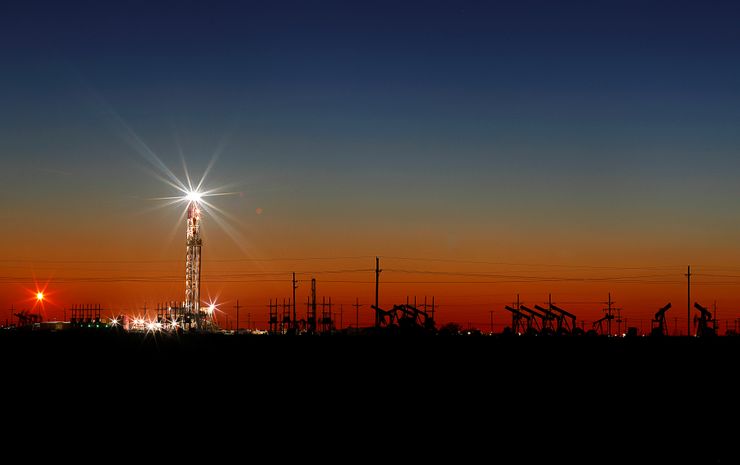
Chaos and scrambling in the US oil patch as prices plummet
Apr 6, 2020
The global economic crisis caused by coronavirus has devastated the oil industry in the U.S., which pumps more crude than any other country
NEW YORK (AP) — In Montana, a father and son running a small oil business are cutting their salaries in half. In New Mexico, an oil truck driver who supports his family just went a week without pay. And in Alaska, lawmakers have had to dip into the state's savings as oil revenue dries up.
The global economic crisis caused by the coronavirus pandemic has devastated the oil industry in the U.S., which pumps more crude than any other country. In the first quarter, the price of U.S. crude fell harder than at any point in history, plunging 66% to around $20 a barrel.
A generation ago, a drop in oil prices would have largely been celebrated in the U.S., translating into cheaper gas for consumers. But today, those depressed prices carry negative economic implications, particularly in states that have become dependent on oil to keep their budgets balanced and residents employed.
“It's just a nightmare down here,” said Lee Levinson, owner of LPD Energy, an oil and gas producer in Tulsa, Oklahoma. “Should these low oil prices last for any substantial period of time, it's going to be hard for anyone to survive."
Crude prices recovered some ground, trading at around $28 a barrel Friday, after a week in which President Donald Trump tweeted that he expects Saudi Arabia and Russia will end an oil war and dramatically cut production.
On Friday, he met with oil executives but there were no announcements, and prices remain well below what most U.S. producers need to stay afloat.
Among the latest casualties is Whiting Petroleum, an oil producer in the Bakken shale formation with about 500 employees that filed for bankruptcy protection Wednesday. Schlumberger, one of the largest oilfield services companies, slashed its capital spending by 30% and is expecting to cut staff and pay in North America. And Halliburton, another major oilfield services provider, furloughed 3,500 of its Houston employees, ordering workers into a one-week-on, one-week-off schedule.
“You will see a tremendous loss of jobs in this industry,” said Patrick Montalban, owner of Montalban Oil and Gas, based in Montana, who along with his son is slashing his salary in half and plans to cut the his remaining employees’ salaries by 25% and end their health insurance benefits.
The impact is far-reaching. In Alaska, lawmakers recently passed a budget that sharply draws down a savings account that had been built up over the years when oil prices were higher. In New Mexico, where a third of the state's revenue comes from petroleum, the governor slashed infrastructure spending and will likely cut more in a special legislative session.
In Texas, which produces about 40% of the country's oil and employs more than 361,000 people, the picture is especially bleak. Three weeks ago, Bobby Whitacre, vice president of Impala Transport in Plano, Texas, was looking to hire a well site supervisor for $200 a day with paid time off. Now he’s had to lay off many of his workers.
“It’s dead. It’s dead as can be,” he said.
While many industries paralyzed by the coronavirus pandemic received help from a recent $2 trillion congressional relief package, the energy sector was largely left out. The American Petroleum Institute, the oil industry's main lobbying group, has maintained its free market philosophy, saying it does not want direct financial assistance from government. But the group did ask the federal government to relax environmental rules.
Some smaller producers would welcome financial relief.
“If the federal government is going to do something to help small businesses nationwide because of the problem with the coronavirus, we certainly don’t want to be excluded from that,” said Dewey Bartlett, Jr., president of Keener Oil & Gas and former Republican mayor of Tulsa.
Many oil producers big and small stopped the costly process of drilling new wells when prices plummeted, leaving all kinds of workers vulnerable to layoffs: drillers, attorneys, truckers who deliver sand or water for fracking and skilled tradesmen who make equipment for rigs, to name a few.
It was only two weeks ago when Sergio Chavira, a 33-year-old truck driver in New Mexico, was advertising on Craigslist for other drivers to help him haul crude oil, writing that there was “plenty of work.”
Not anymore. The husband and father of an 8 year old and a 5 year old hasn’t driven his truck for a week and is bracing for a drop in pay for what work is left.
“Now everything is slowing down,” Chavira said. “They give us less loads to haul every day.”
Checkers Inc., which administers drug and alcohol tests for oil industry employees in the heart of North Dakota’s oil patch, has seen its monthly screenings fall by more than half, said owner Janette McCollum, who reduced her full-time employees' hours to part-time in response. Along with the slowdown in clients, “companies are not wanting to pay their bills,” she said.
The oil industry was already logging hundreds of bankruptcies before the coronavirus hit, as producers struggled with weak global oil demand and high debt loads. Then the pandemic shut down travel as country after country started restricting flights in an attempt to bring the contagion under control.
World oil demand fell 7% in the first quarter, and is expected to fall 14% in the second quarter, according to IHS Markit. If that wasn't enough, OPEC and Russia couldn't agree on production cuts to prop up prices, so Saudi Arabia flooded the market with cheap oil. The kingdom slashed oil prices last month and vowed to ramp up production to more than 12 million barrels a day.
Many American shale producers feel targeted by Saudi Arabia, which they suspect of trying to put them out of business. And it could be working.
“We’re just burning through money down here," said Levinson, LPD Energy’s owner. "And how long we can last is anyone’s guess.”
__
AP Writers Cedar Attanasio in El Paso, Texas; James MacPherson in Bismarck, North Dakota; Sean Murphy in Oklahoma City and Becky Bohrer in Juneau, Alaska contributed to this report.
More News

Trump Offers Putin Economic Relief in Hopes That Russia Will Return the Favor
The Trump administration is ignoring the will of Congress and waiving new Russia sanctions amid fears that high energy prices will cost Republicans in next month’s elections.

Weak Links Start to Show in A.I. Borrowing
Debt trouble at CoreWeave, Oracle and SoftBank raises questions about whether there are broader problems with the data center build-out.

The Reporter Who Exposed Elizabeth Holmes on Nathan Fielder’s Documentary
Ms. Holmes handed the makers of “You Can See Everything” — and the rest of the world — a microscope with which to observe and dissect her lies.

Can Cereal Be Healthy? Big Companies Are Trying.
As more Americans turn away from the snap, crackle and sugar, the industry is trying to capitalize on our current obsession with wellness.

Low-cost clinic helps pet owners with vet bills
RSPCA Medway West launches its clinic for the pets of people with low incomes.

States Are Stepping Up as the New Antitrust Enforcers
With the Trump administration taking a relaxed approach, attorneys general around the country have ramped up their scrutiny of mergers.

Corporate Tax Revenue Falls Even as Profits Soar Under Trump
The annual decline was about $70 billion. Companies are writing off billions in A.I. investments, taking advantage of tax cuts that President Trump signed into law.

It’s Time to Shop Medicare, and This Year, It’s Extra Important
Be sure to read your mail this fall — big changes to prescription drug plans and Medicare Advantage provider networks are coming, and could cost you more.
Weak Links Start to Show in A.I. Borrowing
Debt trouble at CoreWeave, Oracle and SoftBank raises questions about whether there is broader trouble with the data center build-out.

Call for more food funding due to high living cost
Deputy Louise Doublet does not think the cost of living was considered in the ending of a trial.

Charity reflects on changing needs over 25 years
Help a Guernsey Child says it has provided in excess of £1.2m worth of essential support.

Nightclubs are disappearing - and it's affecting young people
One young person said with no nightlife in their town they cannot "let loose and mess around".