
Cutting back Dodd-Frank? Don't count on it, says Mr. Frank
Feb 3, 2017
One of the architects of the Dodd-Frank law overhauling the U.S. financial sector doubts that efforts to scale it back will succeed
HARTFORD, Conn. — What's Barney Frank's take on President Donald Trump's first action to scale back the landmark financial overhaul law that bears his name?
Don't bank on it succeeding, he says.
Frank, the formidable former Democratic congressman from Massachusetts, headed the House Financial Services Committee when the Dodd-Frank law passed in 2010. He was co-architect with then-Sen. Christopher Dodd, D-Conn., of the law enacted to rein in Wall Street and expand the government's oversight in the wake of the 2008-09 financial crisis. Democratic lawmakers passed the law and President Barack Obama signed it.
Any scaling back of Dodd-Frank would have a difficult time getting through Congress, because many Republican lawmakers' constituents favor policing Wall Street, Frank told The Associated Press in an interview.
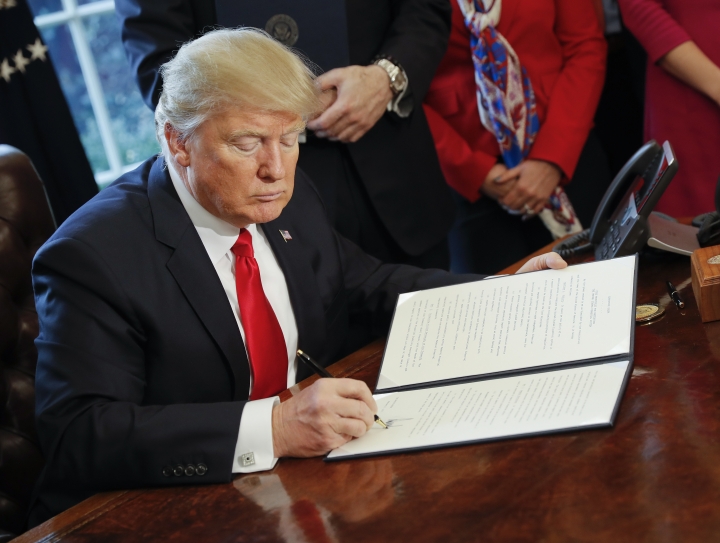
He spoke Friday after Trump signed an executive order directing the Treasury secretary to review the Dodd-Frank law. Trump has called the law a "disaster," pledging to dismantle it. He said this week, "We're going to be doing a big number on Dodd-Frank."
Frank said Trump's move contradicted his campaign promises.
"There could not be a greater contrast between the messages Donald Trump was saying to the average people about standing up to Wall Street ... and an acknowledgement that he's now going to give them their best wishes," he said. "There is this great inconsistency in what he promised and what he's doing. That's the fundamental problem."
Frank said he doesn't believe there are enough votes in Congress to repeal Dodd-Frank. "Since 2011, the House voted 30 times to repeal ("Obamacare"), but they never voted to repeal financial reform. The reason is it's popular with their constituents."
He's worried that Trump appointees won't use their authority to enforce financial rules, noting that several of Trump's choices for high-level government positions are from Wall Street.
Since Dodd-Frank took effect, the stock market has hit record highs, Frank noted, something he sees undermining Republican claims that the law is bad for business.
"They have not pointed to anything specific that they have documented that has caused any harm," he said.
More News

Paddy Power cuts 1,400 jobs and blames betting tax rises
The government increased taxes on online casino and sports betting in last year's Budget.

Investors in Anticipation Over Musk’s Next Big SpaceX Deal
Ahead of SpaceX’s quarterly earnings report, many on Wall Street are wondering whether Elon Musk will combine it with Tesla.

Bereaved families could face 'unjust' tax bill after civil service pension delays
The chairman of Parliament's Public Accounts Committee says families should not be taxed through no fault of their own.

Trump Announces $8 Billion Plan to Cover Farm Losses
Under the Harvest Fuel Relief program, the Agriculture Department will provide economic aid for farmers hurt by high diesel prices.

Jobless rate falls but small firms cut back hiring
Small firms cite labour costs as a key factor in scaling back hiring, the Office for National Statistics says.

£30 rise in payments for crisis-hit households
More money is made available through a resilience fund for hard-pressed households in Sheffield.

'I'm fed up of swiping': The singles choosing dating events over apps
The BBC hears from people who think dating events are better value for money than dating apps.

Chancellor rejects calls to raise Capital Gains Tax in Budget
Influential Labour figures had been pushing for equalising CGT and income tax, but critics have said this could drive wealthy people out of Britain.

Knicks Ticket Prices Are Soaring After Last Season’s Championship
Knicks tickets have never been cheap, but prices for the first game alone are soaring after last season’s championship — more than a trip to Paris.

How Do Airports Prepare for a Plane Crash? Go Inside JFK’s Disaster Drill.
U.S. airports are required to hold a full-scale disaster drill every three years. Go inside a simulated plane crash at Kennedy Airport last weekend.

Burnham vows end to 'rip-off parking charges' under new rules
The changes come after concerns that penalties issued by private providers are too harsh and leave motorists unfairly punished.

Revolut outage hits 'multiple services' as thousands of users report app issues
Some users of the British neobank reported being unable to make some payments or access funds in its app on Tuesday.