
European Central Bank vows backstop against market turmoil
Jun 15, 2022
The European Central Bank has vowed to come up with a new, unspecified market backstop that could be used to buffer some countries against bond market turmoil similar to what shook the 19-country eurozone during a debt crisis more than a decade ago
A European Central Bank poised to raise interest rates for the first time in 11 years vowed Wednesday to create an unspecified market backstop that could buffer member countries against financial turmoil like that seen during a debt crisis more than a decade ago.
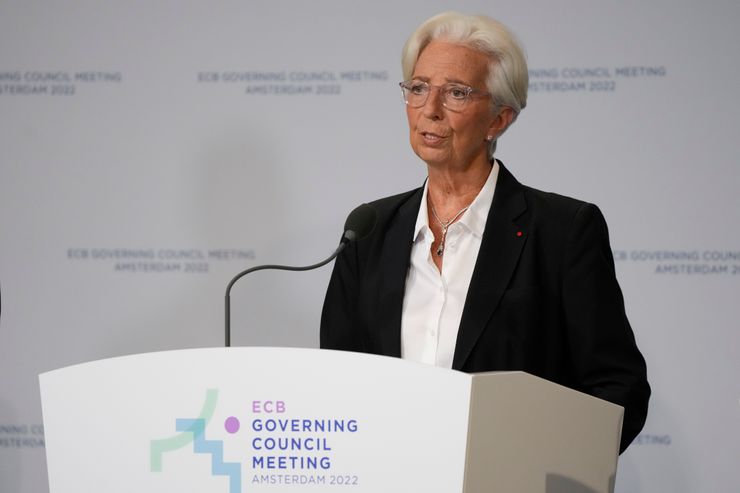
Pressed by a government bond selloff, the bank’s governing council called an unscheduled meeting to address worrisome market shifts following the bank's decision to hike rates in July and September.
ECB bond purchases and record low interest rates have kept borrowing costs low for businesses and governments. But those measures are coming to an end as the bank pivots to deal with record inflation of 8.1% in the 19 European Union countries using the euro currency.
The bank last week announced it will raise rates to cool rising prices but did not offer a specific measure to halt market turbulence caused by suddenly higher borrowing costs for more indebted EU countries, such as Italy and Spain.
Instead, the central bank simply said it would act if needed against “fragmentation,” or excessively high borrowing costs plaguing one part of the eurozone and not another. That is one complication of having one currency and central bank for 19 countries.
The unspecific pledge to act wasn’t enough to satisfy government bond markets, and the “spread,” or difference between what Italy pays for borrowing and what financially solid Germany pays, began to increase.
Those so-called spreads are a key fear index for the eurozone. Spreads widen when investors sell off Italian bonds, lowering their price and raising interest yields, which move opposite from price. Rising yields can reflect investor views that a country's bonds carry more risk of loss.
The ECB said it would speed development of “a new anti-fragmentation instrument” that could be reviewed for approval by the governing council. Its statement didn’t say what that instrument would be.
The bank also said it could use money it gets from maturing bonds it holds to make new purchases and fight excessive borrowing costs if individual countries face market pressure.
The ECB already has an emergency bond-market backstop that could allow it to step in and buy the debt of a troubled country. That tool helped calm the 2010-2012 debt crisis after the bank announced it as part of then-President Mario Draghi’s promise to do “whatever it takes” to keep the eurozone from breaking up.
But that program, which never actually had to be used, can come with tough conditions for reform and governments may be reluctant to turn to it.
Holger Schmieding, chief economist at Berenberg bank, said the “situation today is different from the euro crisis a little more than a decade ago” because countries have improved growth prospects and the ECB has the bond-market backstop in its back pocket if needed. Current conditions “should not present an imminent risk even for fiscally challenged Italy,” he said.
A top ECB official, Isabel Schnabel, tried to calm market concerns Tuesday, saying the bank “will not tolerate" unjustified market rate increases.
“Our commitment to the euro is our anti-fragmentation tool," she said in a speech at Paris’ Sorbonne University. "This commitment has no limits. And our track record of stepping in when needed backs up this commitment.”
Interest yields on Italy's 10-year government bonds have risen from around 1.2% at the start of the year to 4.1% on Wednesday. The ECB's pandemic support programs, including 1.7 trillion euros ($1.8 trillion) of bond purchases, helped keep government borrowing costs low across the eurozone. That program, however, came to an end in March, and markets are now looking at increases in interest rates from record low levels.
The ECB's surprise meeting comes the same day that the U.S. Federal Reserve is expected to announce its largest interest rate hike since 1994. Europe's bank has trailed the Fed and other central banks in raising rates to combat decades-high levels of inflation, including the Bank of England, which has hiked rates four times since December and will meet again Thursday.
But now the ECB has scheduled rate increases for July and September and indicated September’s increase might be a larger-than-usual half-percentage point.
More News

Netflix Hurries to Rewrite Its Narrative With Layoffs and a Sudden Firing
Despite strong revenues and profits, the streaming service cut 1,000 jobs and jettisoned its chief content officer. Drops in the stock price and viewer engagement are to blame.

M.L.B. Playoff Ads With Sydney Sweeney and Megan Fox Draw Backlash
Commercials with Sydney Sweeney promoting a gambling platform and Megan Fox endorsing male enhancement have rankled fans, and even athletes. Who is in charge?

Why Bad News in the Bond Market May Be Good News for Investors
In the contrarian logic of investing, rising interest rates have made bonds much more attractive, our columnist says.

U.S. Budget Deficit Nears $2 Trillion, a Reality Check for Trump’s Cost Cutting
Higher interest rates are inflating borrowing costs as the Trump administration spends on the Iran war and tariff refunds.

Indonesian Stocks Plunge as MSCI Threatens to Drop Market from Indexes
The potential downgrade by MSCI, an influential index provider, adds to a deepening crisis of investor confidence in the economic policies of President Prabowo Subianto.

Warsh Vows to Tame Inflation as A.I. Delivers ‘Shock’ to Economy
The Federal Reserve chairman stuck to his pledge to avoid providing guidance about the path forward for interest rates, but did nothing to convey an urgency to raise them later this month.

Watch: Did Tesla really just unveil a flying car?
Tesla CEO Elon Musk showcased the vehicle at a facility owned by his SpaceX company, which helped develop the model.

When Will the Fed Move on Rates?
Kevin Warsh, the central bank’s chairman, suggested he wouldn’t push to raise borrowing rates this month. But persistent inflation may force the Fed’s hand.

Banks expect to be hit with higher taxes in Budget
Senior banking executives have told the BBC they expect to be "on the menu" in the chancellor's Budget tax later this month.

Feel Like You’re Overpaying for Hotels? Blame Expedia, a New Lawsuit Says.
The booking giant is accused of breaking federal antitrust laws and forcing millions of customers to overspend on stays by as much as 30 percent.

Tesla Debuts 2026 Roadster ‘Flying’ Electric Sports Car
Elon Musk’s company and other automakers, like Jaguar and Bentley, are trying to sell very expensive electric cars to people who usually prefer gasoline-fueled luxury and performance.

Trump Hasn’t Lowered Drug Prices for These Voters
President Trump has been promoting his efforts to reduce drug prices, but many Americans have not seen relief from rising costs for prescriptions and insurance premiums.