
EXPLAINER: Why Saudi Arabia is upset, lashing out at Lebanon
Nov 2, 2021
A televised remark by a game show host-turned Cabinet minister in Lebanon about the war in Yemen has taken Lebanon's crisis with Saudi Arabia to new depths
BEIRUT (AP) — A televised remark by a game show host turned Cabinet minister in Lebanon about the war in Yemen has taken the country’s crisis with Saudi Arabia to new depths.
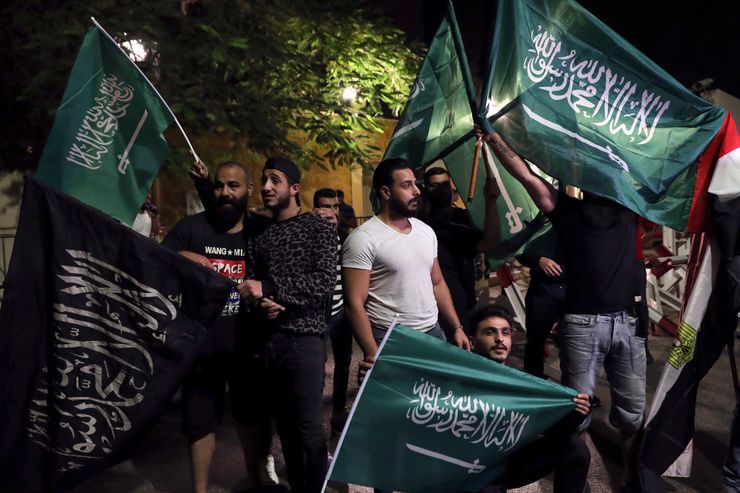
Anger over George Kordahi’s comments led to steps by Gulf Arab countries that further isolate Lebanon and threaten to split its new coalition government, tasked with halting the country’s economic meltdown.
Punitive measures from Saudi Arabia, once an important ally that poured millions of dollars into Lebanon, could cause more economic pain. The kingdom has banned all Lebanese imports, a major blow to a country whose main trading partners are in the Persian Gulf.
It is the latest escalation in the rivalry that has long played out in Lebanon between Saudi Arabia and Iran. Tensions have dragged on for years over the dominant role in Lebanon of the Iranian-backed militant Hezbollah group.
Now Saudi officials insist it is pointless to deal with the government in Beirut after so much drift toward Iran.
But what is really behind Saudi’s angry response, and what does it mean for the already embattled Lebanon?
WHAT WAS THE SPARK?
The immediate spark were comments by Kordahi, who had gained popularity in the Arab world for hosting “Who Wants to Be a Millionaire" on a Saudi-owned TV network.
During a mock parliament streamed online last week, Kordahi fielded questions from an audience of young people from the region. In one answer, he called the war in Yemen “absurd” and said the Iran-backed Houthi rebels have attacked no one and have the right to defend themselves.
The online program was recorded about a month before Kordahi was named information minister in the government of Prime Minister Najib Mikati, formed in September. Kordahi was named by a mainly Christian party allied to Hezbollah.
Saudi officials blasted his remarks as “offensive” and biased toward the Houthis. Since 2015, a Saudi-led coalition has been fighting the Houthis, who a year earlier took control of the capital, Sanaa, and northern parts of Yemen.
Most commentators have said they believe Kordahi’s comments were a pretext for the Saudis to vent their frustration at Iran’s influence in Lebanon.
WHAT DO THE SAUDIS WANT?
The Saudis know what they don’t want — growing Iranian influence in Lebanon — but they don’t know what to do about it, said Joseph Bahout, research director at the American University of Beirut.
Saudi Arabia has long been a close ally of politicians in Lebanon’s Sunni Muslim community, which chooses the prime minister under the country’s sectarian system. But the kingdom never forged the divided community into a strong political proxy the way the Shiite Hezbollah — with its powerful armed force — became Iran’s stalwart ally in Lebanon.
Particularly since the 2005 assassination of its most powerful ally, former Prime Minister Rafik Hariri, the kingdom lost its tools of influence.
Under Crown Prince Mohammed bin Salman — known for his assertive, some say brash, foreign policy — Saudi Arabia took sporadic action trying to impose its will but failed to develop a cohesive strategy or find new well-rooted allies. It could only watch as Hezbollah and its allies came to dominate most recent Lebanese governments.
Saudi Arabia’s most drastic move came in 2017, when it forced then-Prime Minister Saad Hariri to announce his resignation, citing Hezbollah’s domination, in a televised statement from a brief visit to the kingdom, where he was apparently held against his will.
The incident backfired. Hariri returned home and revoked his resignation, supported by Hezbollah and its allies. He lost Saudi backing.
Relations have been chilly since. Last spring, Saudi authorities banned imports of all Lebanese produce over allegations they were used for drug smuggling.
Most recently, Riyadh refused to back Mikati as prime minister because of his coalition with Hezbollah. The Saudis found themselves alone when Washington and Paris expressed support for Mikati, after Lebanon had been without a government for over a year.
Frustrated, the Saudis appear to have gone for a strong move over Kordahi’s comments. Saudi Arabia, as well as the United Arab Emirates, Kuwait and Bahrain, withdrew their ambassadors from Lebanon and expelled Lebanese envoys to the kingdom.
IMPACT ON LEBANON
The Saudi measures are a huge blow to Mikati’s new government.
The import ban means the loss of millions of dollars in desperately needed foreign currency. Any further escalation could undermine jobs of more than 350,000 Lebanese in Gulf Arab states who send home millions in remittances.
Mikati and other officials have appealed to Kordahi to resign from the Cabinet, but it's uncertain that would resolve the rift.
Hezbollah has stood firmly behind the minister, saying his resignation won’t resolve what they called “extortion” to force Lebanon to change its foreign policy.
It all portends more internal divisions in a government already paralyzed over the investigation into last year’s massive Beirut port explosion that killed more than 200 people. Hezbollah has demanded the chief investigating judge’s removal. A recent burst of street violence, the worst in years, raised the specter of social tensions ahead of crucial parliamentary elections in March that are expected to be a test for Hezbollah and its allies.
In a WhatsApp message to his Cabinet read on local TV stations, Mikati said the country is “at the edge of a precipice.”
He flew to Glasgow to seek French and U.S. mediation but his options are limited.
“We know they are upset. We know that they don’t want a government with Hezbollah as strong," Bahout said of the Saudis. “We know that they know that we can’t have a government without Hezbollah.”
“It is kind of a completely blocked and stalemated situation,” he added.
___
This story has been corrected to show that the Saudi-led coalition entered the war in Yemen in 2015, not 2014.
More News

M.L.B. Playoff Ads With Sydney Sweeney and Megan Fox Draw Backlash
Commercials with Sydney Sweeney promoting a gambling platform and Megan Fox endorsing male enhancement have rankled fans, and even athletes. Who is in charge?

Netflix Hurries to Rewrite Its Narrative With Layoffs and a Sudden Firing
Despite strong revenues and profits, the streaming service cut 1,000 jobs and jettisoned its chief content officer. Drops in the stock price and viewer engagement are to blame.

Why Bad News in the Bond Market May Be Good News for Investors
In the contrarian logic of investing, rising interest rates have made bonds much more attractive, our columnist says.

U.S. Budget Deficit Nears $2 Trillion, a Reality Check for Trump’s Cost Cutting
Higher interest rates are inflating borrowing costs as the Trump administration spends on the Iran war and tariff refunds.

Indonesian Stocks Plunge as MSCI Threatens to Drop Market from Indexes
The potential downgrade by MSCI, an influential index provider, adds to a deepening crisis of investor confidence in the economic policies of President Prabowo Subianto.

Warsh Vows to Tame Inflation as A.I. Delivers ‘Shock’ to Economy
The Federal Reserve chairman stuck to his pledge to avoid providing guidance about the path forward for interest rates, but did nothing to convey an urgency to raise them later this month.

Watch: Did Tesla really just unveil a flying car?
Tesla CEO Elon Musk showcased the vehicle at a facility owned by his SpaceX company, which helped develop the model.

When Will the Fed Move on Rates?
Kevin Warsh, the central bank’s chairman, suggested he wouldn’t push to raise borrowing rates this month. But persistent inflation may force the Fed’s hand.

Banks expect to be hit with higher taxes in Budget
Senior banking executives have told the BBC they expect to be "on the menu" in the chancellor's Budget tax later this month.

Feel Like You’re Overpaying for Hotels? Blame Expedia, a New Lawsuit Says.
The booking giant is accused of breaking federal antitrust laws and forcing millions of customers to overspend on stays by as much as 30 percent.

Tesla Debuts 2026 Roadster ‘Flying’ Electric Sports Car
Elon Musk’s company and other automakers, like Jaguar and Bentley, are trying to sell very expensive electric cars to people who usually prefer gasoline-fueled luxury and performance.

Trump Hasn’t Lowered Drug Prices for These Voters
President Trump has been promoting his efforts to reduce drug prices, but many Americans have not seen relief from rising costs for prescriptions and insurance premiums.