
Fed minutes: Officials back reducing bond holdings this year
May 24, 2017
Fed officials had favorable view of plan to start reducing Fed's bond holdings later this year
WASHINGTON — Federal Reserve officials signaled in discussions early this month that they would likely start reducing the Fed's huge portfolio of bond holdings later this year, a step that could cause borrowing rates to rise.
At the same time, the Fed appears to be on track to resume raising its key short-term interest rate when it next meets in mid-June.
The minutes of the Fed's May 2-3 meeting, released Wednesday, show that officials not only discussed beginning a reduction of bond holdings this year but also expressed approval for a plan on how the bond sales should proceed.
The Fed would set a cap on the size of maturing bonds to be sold each month and a schedule for gradually raising the cap. The goal would be to minimize the effect of the bond sales on loan rates paid by consumers and businesses. Typically, a sell-off of the Fed's bonds would gradually ripple through the economy and force up many borrowing rates.
The first signal from the Fed in April that it was considering a move to start reducing its $4.5 trillion portfolio this year had initially jolted investors.
In laying out a possible approach to reducing its bond holdings, the Fed appeared Wednesday to be trying to further prepare financial markets for the impending change. The minutes of this month's meeting indicated that the Fed may soon release updated details on how the bond reductions will be achieved.
After it met early this month, the Fed left its key policy rate unchanged after having raised it at its December and March meetings. Most economists and investors have said they think the Fed will raise rates twice more this year, with the next one occurring after the next policy meeting ends June 14. Nothing in the material the Fed released Wednesday suggested otherwise.
Economists suggested that the Fed's decision on when to raise rates again will depend heavily on how the job market fares. Some noted that since the Fed met early this month, the government reported that unemployment in April fell to a decade low of 4.4 percent, with a healthy 211,000 jobs added.
"Our money is on the unemployment rate as being the key variable driving policy forward," said Chris Rupkey, senior analyst at Bank of Tokyo-Mitsubishi. Rupkey noted that the jobless rate is already below the 4.7 percent level that the Fed considers as signaling full employment.
The Fed minutes said, "Most participants judged that if economic information came in about in line with their expectations, it would soon be appropriate for the committee to take another step" to raise rates.
The minutes did not spell out what officials meant by "soon." But the minutes made clear that Fed officials believe that a sharp slowdown in economic growth early this year was likely "transitory" and would be followed by stronger growth in coming months.
In discussing why the Fed thought it was appropriate to hold off on raising rates at its meeting early this month, the minutes said "members generally judged that it would be prudent to await additional evidence indicating that the recent slowdown in the pace of economic activity had been transitory before taking another step" to raise rates.
For seven years, the Fed left its key short-term rate at a record low near zero in an effort to support the economy's recovery from the 2007-2009 recession, the worst downturn since the 1930s.
The Fed raised rates for the first time in December 2015 and has followed with two more modest increases, in December last year and then in March. The Fed indicated in March that it still expected to boost rates twice more this year.
The discussion of the Fed's staff plan for reducing its bond holdings provided the most concrete information so far on how the central bank might proceed.
Paul Ashworth, chief U.S. economist at Capital Economics, estimated that about $30 billion in mortgage-backed securities and $33 billion in Treasurys will mature each month in 2018. He said the Fed might start with a cap of $20 billion in bonds that would be allowed to roll off its balance sheet, with amounts above that level continuing to be reinvested. Currently, all maturing securities are reinvested by the Fed.
"There are still plenty of questions to answer on balance sheet normalization — not least exactly how big the Fed wants its balance sheet to be in the long term," Ashworth said.
The Fed's $4.5 trillion balance sheet represents a five-fold increase from where it stood in the summer of 2008 before the financial crisis hit, sending the country into a deep recession. After the Fed had cut its short-term rate to near zero in December 2008, it turned to three rounds of bond purchases to try to exert downward pressure on long-term rates.
More News

Burnham vows end to 'rip-off parking charges' under new rules
Penalties are seen as too harsh on motorists who are penalised for parking on private land.

Job vacancies fall as small firms cut back on recruitment
Small firms cite labour costs as a key factor in scaling back hiring, the Office for National Statistics says.

Chancellor rejects calls to raise Capital Gains Tax in Budget
Influential Labour figures had been pushing for equalising CGT and income tax, but critics have said this could drive wealthy people out of Britain.

Food aid charity under pressure from fuel costs
FareShare South West says fuel costs are putting immense pressure on work helping thousands in need.

How is the US economy really doing under President Trump?
Ahead of the midterms Trump has boasted about the performance of the US economy. BBC Verify looks at inflation, jobs and economic growth in the country.
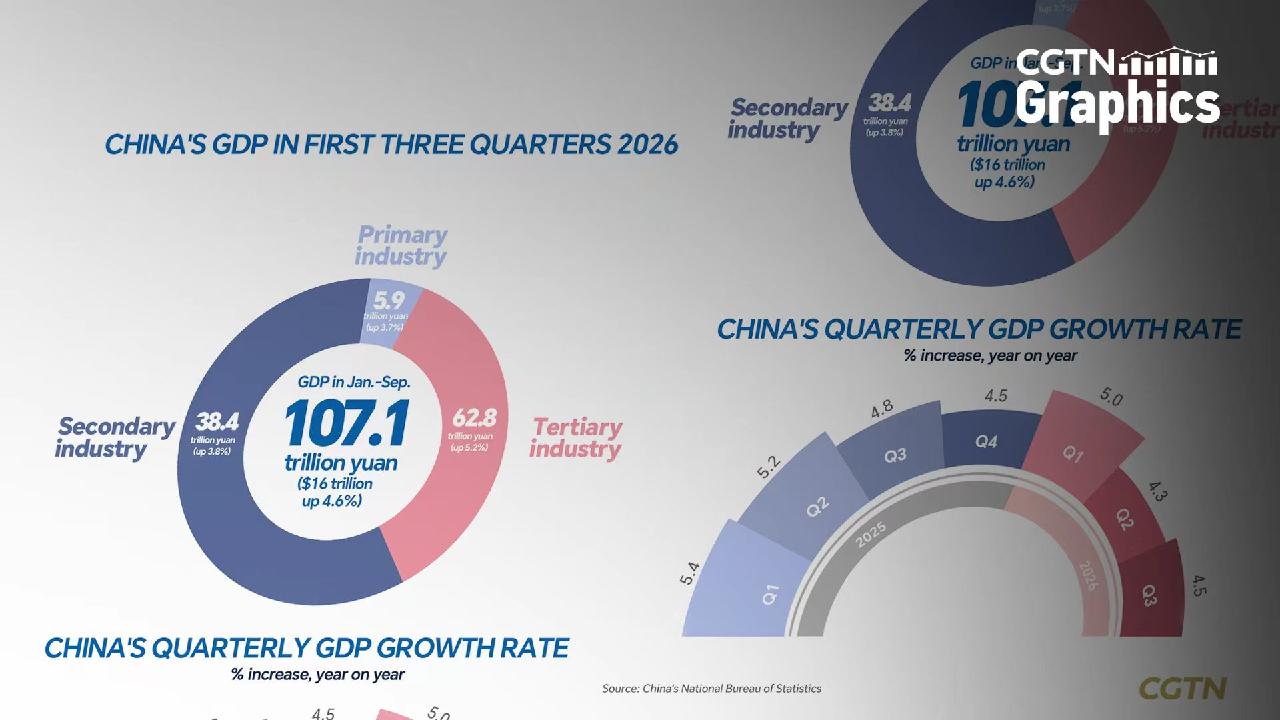
Graphics: China's economy picks up steam in Q3
Graphics: China's economy picks up steam in Q3

The VW Bus, Now Electrified, Keeps on Truckin’
A restored version of Volkswagen’s Flower Power-era Microbus, kitted out by Kindred Motorworks, is aiming for the affluent, while VW’s own E.V. is slow to get moving, much like its forebear.

'I'm fed up of swiping': Why singles now want to meet IRL
The BBC hears from people who think dating events are better value for money than dating apps.

‘A Ticking Time Bomb’: An Economic Crisis Looms in Indonesia
Once a model of economic stability, Indonesia now faces growing hardship at home as President Prabowo Subianto’s policies shake investor confidence.

Black Unemployment Hints at a Job Market in Worse Shape Than It Seems
The Black unemployment rate climbed a percentage point to 7 percent in September, almost double the rate for white workers.

Elon Musk Says He Will Give a SpaceX Share to ‘Every Kid in America’
Anthropic, an A.I. rival to SpaceX, earlier said it would form a “public benefit fund” and other tech moguls have contributed to savings accounts for children.

Christiane Amanpour Says She Is Leaving CNN After 43 Years
The chief international anchor, one of the most famous names in broadcast news, started as an assistant at the network in 1983.