
Fed's Bullard: Solid US economy can handle rising rates
Jul 11, 2022
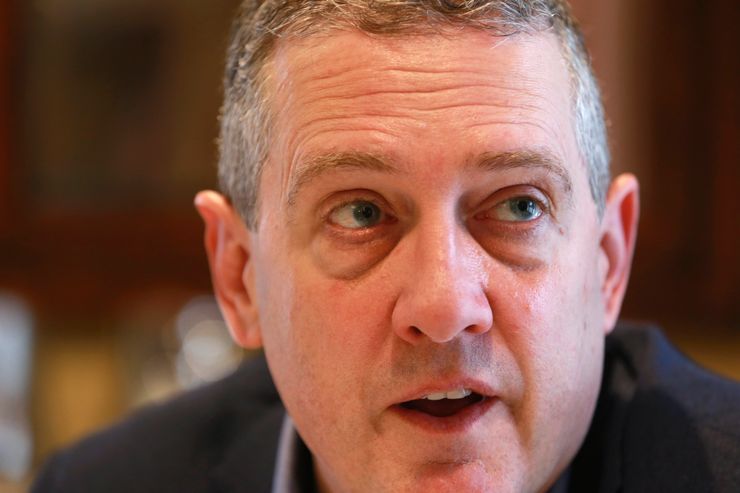
St. Louis Federal Reserve president James Bullard says last week’s jobs report points to a solid U.S. economy with little sign of a recession on the horizon and one that can withstand higher interest rates
WASHINGTON (AP) — The U.S. economy is healthy and shows little sign of an imminent recession, and can withstand higher interest rates, St. Louis Federal Reserve president James Bullard said Monday.
Financial markets are flashing signs that an economic downturn could arrive sometime next year, as Americans grapple with the highest inflation in four decades and the Federal Reserve pushes borrowing costs higher. But Bullard said in an interview with The Associated Press that the central bank wouldn't have to drive the economy into a recession or significantly raise unemployment to bring inflation down to its 2% target.
“Now we have lots of inflation, but the question is, can we get (inflation) back to 2% without disrupting the economy? I think we can," he said.
Bullard's optimism coincides with a rapid pace of interest rate increases by the Fed, intended to combat the highest U.S. inflation in 40 years.
Higher rates limit the ability of consumers and businesses to borrow and spend, which can cool growth and inflation. But they also carry the risk of tipping the economy into a downturn.
Consumer prices rose 8.6% in May compared with a year ago, and a government inflation report Wednesday could show that they've ticked higher.
Bullard also said he currently supports a 0.75 percentage point increase in the Fed's benchmark short-term interest rate at its next meeting later this month. Its rate is currently in a range of 1.5% to 1.75%, after a 0.75 percentage point hike at its June meeting, the largest since 1994.
Separately, Esther George, president of the Federal Reserve Bank of Kansas City, sounded a more cautionary note in a speech Monday, in which she suggested the Fed’s large rate hikes could prove disruptive.
“I’m certainly sympathetic to the view that interest rates need to increase rapidly, recognizing that current rates are out of sync with today’s economic landscape,” she said, addressing a labor conference in Lake Ozark, Missouri. “However ... policy changes transmit to the economy with a lag, and significant and abrupt changes can be unsettling to households and small businesses as they make necessary adjustments.”
George was the only Fed policymaker to dissent from the Fed’s June rate hike, out of concern that it was too large.
George noted after just four months of Fed rate increases, “there is growing discussion of recession risk, and some forecasts are predicting interest rate cuts as soon as next year.” Those concerns suggest the Fed is lifting interest rates “more quickly than the economy and markets can adjust,” she added.
The Fed typically moves rates in quarter-point increments, but Chair Jerome Powell has said the Fed wants to move “expeditiously” to a level of about 2.5% to 3%, which would neither stimulate nor restrain growth.
Raphael Bostic, president of the Federal Reserve Bank of Atlanta, said Monday that large rate increases are necessary because the Fed's rate is currently at a level that stimulates growth, even though an overheating economy has touched off inflation.
The Fed is still getting away from boosting the economy and moving toward a more neutral stance, Bostic said, "which is quite a different thing than formally restricting the economy.”
Bostic said he also supports a 0.75 percentage point rate increase later this month, as have other Fed officials such as Fed governor Christopher Waller.
“The tremendous momentum in the economy to me suggests” that the Fed could implement such an increase “and not see a lot of protracted damage to the broader economy,” Bostic said on CNBC on Friday.
Also on Friday, the government's jobs report showed employers added 372,000 jobs, a healthy increase, while the unemployment rate remained at 3.6% for the fourth consecutive month, slightly above the five-decade low reached just before the pandemic.
The robust figures contrast with signs of a softening economy, from falling home sales to declining factory production to slower consumer spending. The economy contracted in the January-March quarter and real-time data trackers, such as one maintained by the Atlanta Federal Reserve Bank, suggest it did so again in the April-June quarter.
Two quarters of shrinking output would meet one rule of thumb for a recession. But the official definition of a recession, set by the National Bureau of Economic Research, looks at a much broader range of data to determine whether a downturn has occurred.
Bullard said that other measures of the economy, such as a broad measure of workers' and business' incomes, suggest the economy may have expanded in the first six months of this year. Businesses and other employers also added 2.7 million jobs during that time, a robust total that reflects an optimistic outlook among businesses.
“It just doesn't seem like the U.S. economy has been in recession for the last two quarters,” Bullard said.
Bullard also disagreed that the economy needed several years of high unemployment to get inflation back under control, a view articulated several weeks ago by former Treasury Secretary Larry Summers.
Unlike the early 1980s, when sharp Fed interest rate increases pushed unemployment above 10%, the Fed has more credibility now as an inflation fighter, Bullard said. As a result, an inflationary psychology hasn't taken hold of most consumers, as it did then, and the central bank won't have to increase rates as much.
___
This story has been corrected to say that Esther George is president of the Kansas City Federal Reserve, not the Cleveland Fed.
More News

Why Bad News in the Bond Market May Be Good News for Investors
In the contrarian logic of investing, rising interest rates have made bonds much more attractive, our columnist says.

U.S. Budget Deficit Nears $2 Trillion, a Reality Check for Trump’s Cost Cutting
Higher interest rates are inflating borrowing costs as the Trump administration spends on the Iran war and tariff refunds.

Indonesian Stocks Plunge as MSCI Threatens to Drop Market from Indexes
The potential downgrade by MSCI, an influential index provider, adds to a deepening crisis of investor confidence in the economic policies of President Prabowo Subianto.

Warsh Vows to Tame Inflation as A.I. Delivers ‘Shock’ to Economy
The Federal Reserve chairman stuck to his pledge to avoid providing guidance about the path forward for interest rates, but did nothing to convey an urgency to raise them later this month.

Watch: Did Tesla really just unveil a flying car?
Tesla CEO Elon Musk showcased the vehicle at a facility owned by his SpaceX company, which helped develop the model.

When Will the Fed Move on Rates?
Kevin Warsh, the central bank’s chairman, suggested he wouldn’t push to raise borrowing rates this month. But persistent inflation may force the Fed’s hand.

Banks expect to be hit with higher taxes in Budget
Senior banking executives have told the BBC they expect to be "on the menu" in the chancellor's Budget tax later this month.

Feel Like You’re Overpaying for Hotels? Blame Expedia, a New Lawsuit Says.
The booking giant is accused of breaking federal antitrust laws and forcing millions of customers to overspend on stays by as much as 30 percent.

Tesla Debuts 2026 Roadster ‘Flying’ Electric Sports Car
Elon Musk’s company and other automakers, like Jaguar and Bentley, are trying to sell very expensive electric cars to people who usually prefer gasoline-fueled luxury and performance.

Trump Hasn’t Lowered Drug Prices for These Voters
President Trump has been promoting his efforts to reduce drug prices, but many Americans have not seen relief from rising costs for prescriptions and insurance premiums.

Fuel costs squeezing margins for some businesses
Diesel recently topped £2 per litre and there is concern that a duty freeze will not go far enough.

'TV and cheap booze' blamed for landlord quitting
Lincolnshire has lost 27% of its pubs and bars since 2009 and some are calling on the government to act against cheap supermarket booze.