
Global stocks rise, Wall Street expected to open higher
Feb 12, 2018
Global stock markets are up strongly and Wall Street is forecast to open higher after gains at the end of last week's turbulent trading
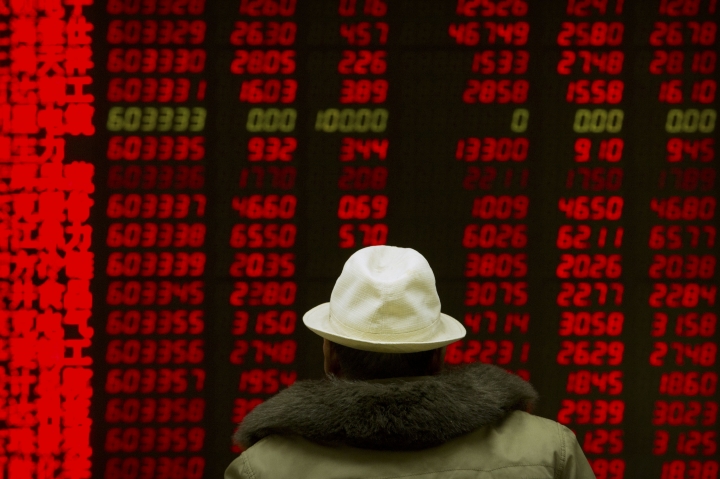
BEIJING — Global stock markets rose Monday and Wall Street was expected to open higher after gains late Friday ended a turbulent week with a more upbeat mood.
KEEPING SCORE: In Europe, Germany's DAX jumped 1.8 percent to 12,324 and France's CAC 40 advanced 1.4 percent to 5,152. London's FTSE 100 added 1.2 percent to 7,177. The future for the Dow Jones industrial average rose by an unusually large 1.1 percent and that for the Standard & Poor's 500 index gained 1 percent, suggesting a strong open.
ASIA'S DAY: The Shanghai Composite Index rose 0.8 percent to 3,154.13 and Hong Kong's Hang Seng spent most of the day in positive territory before losing 0.2 percent to close at 29,459.63. Japanese markets were closed for a holiday. Seoul's Kospi rose 0.9 percent to 2,385.38 while Sydney's S&P-ASX 200 shed 0.3 percent to 5,820.70. India's Sensex advanced 0.6 percent to 34,192.50 and benchmarks in Taiwan, Singapore and Bangkok also gained.
WALL STREET: A late rally reversed steep losses Friday and lifted the Dow Jones industrial average more than 300 points. The Dow gained 1.4 percent, the S&P 500 rose 1.5 percent and the Nasdaq composite added 1.4 percent. For the week, the three indexes finished down more than 5 percent. They're also now all in the red for the year.
ANALYST'S TAKE: "Higher volatility will likely persist for a little while," said Gaurav Saroliya of Oxford Economics in a report. "The threat to valuation multiples is unlikely to remain as high as it seemed last week. The current equity market turmoil is unlikely to dent continued strong global economic growth. We still see 2018 as the best post-financial crisis year."
U.S. BUDGET BATTLE: Legislators agreed on a $400 billion budget measure after conflicts over immigration and other issues led to the second temporary government shutdown in three weeks. The measure approved Friday increases military spending and provides $89 billion for disaster relief.
WEEK AHEAD: Investors will watch U.S. inflation and retail sales figures on Wednesday particularly closely. Inflation in particular will be of interest as it could affect expectations of more rate increases the Federal Reserve — fear of rate hikes had been one of the triggers of last week's stock market sell-off. Japan reports economic growth on Wednesday and the United States issues factory output data on Thursday.
ENERGY: Benchmark U.S. crude gained 98 cents to $60.18 per barrel in electronic trading on the New York Mercantile Exchange. The contract plunged $1.95 on Friday. Brent crude, used to price international oils, advanced 80 cents to $63.59 in London. It fell $1.98 the previous session.
CURRENCY: The dollar declined to 108.63 yen from Friday's 108.79 yen. The euro gained to $1.2269 from $1.2251.
More News

Trump Offers Putin Economic Relief in Hopes That Russia Will Return the Favor
The Trump administration is ignoring the will of Congress and waiving new Russia sanctions amid fears that high energy prices will cost Republicans in next month’s elections.

What Is Starshield, SpaceX’s Military-Grade Satellite Internet Service Ukraine Relies On?
For years, Ukraine’s armed forces have relied on satellite communication services developed by Elon Musk’s SpaceX. Recent restrictions have hampered its war effort.

Oklahoma Families Faced the Hottest Summer Ever and an Electricity Crisis
Record heat and a rising demand for electricity are closing in on Oklahoma families trying to keep the lights on and the AC running.

Gleaning group gives £1m of produce to food banks
Gleaning Cornwall warns that more funding is needed as costs rise sharply.

What is the Budget and what could be in it?
Chancellor John Healey will set out his plans for UK taxes on 28 October.

3 Charts That Explain the Economy as Voters Head to the Polls
Inflation is high, consumer spending is strong and seemingly everything depends on what happens with artificial intelligence.

United’s C.E.O. Says It Should Cost More Not to Sit in the Middle Seat
Scott Kirby of United Airlines said that “it’s expensive to fly airplanes” and that airfares may have further to rise.

Turning the tides: Could hidden sea power energise our coastal towns?
Engineer David Mummery has developed a tidal energy generator that he says can change lives for people living in coastal communities.

'I took a chance on the whisky industry and I haven't looked back'
Zoey Darnbrough had no idea there was a distillery near her home - now she has a top tourism role there.

Heating oil customers face tough winter
The government plans to regulate heating oil prices after increases.

There's a crackdown on sports piracy - but is it already out of control?
The sports industry's lucrative business model is being undermined by dodgy TV sticks and illegal streaming links, writes Theo Leggett.

How day of protests unfolded as disorder breaks out across France
Demonstrations across the country turned violent, with cars and buildings set alight and shops ransacked.