
Hottest commodity in Lebanon's economic chaos: The US dollar
Jul 8, 2020
Lebanon's financial meltdown has thrown its people into a frantic search for dollars as the local currency's value evaporates
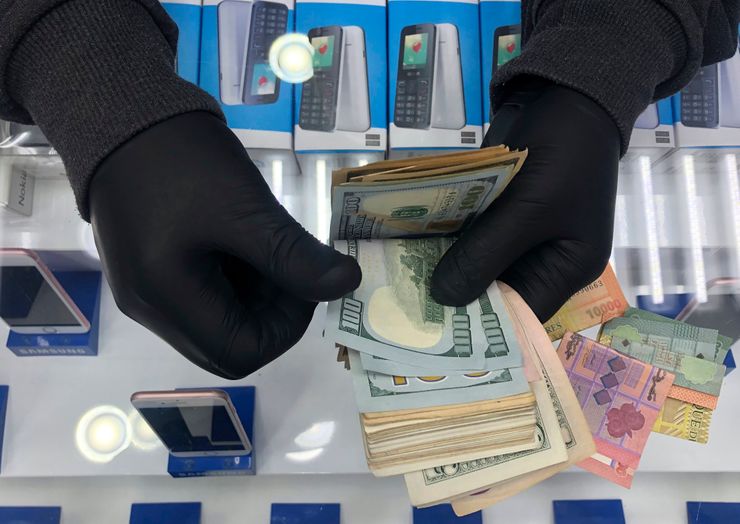
BEIRUT (AP) — The lines snaked around the block. Then they swelled to fill the whole street, before they turned into a raucous mob of men shoving to the front of the line. There at the exchange bureau, they could buy rationed dollars, the hottest commodity in Lebanon.
The small Mediterranean country’s financial meltdown has thrown Lebanese into a frantic search for dollars as their local currency's value evaporates. To get the precious hard currency, they must navigate labyrinthine regulations, exploiting any loopholes they can to rescue their earnings.
Every transaction, from doctor fees to store purchases to rent, is negotiated day by day, juggling the tumbling Lebanese pound and multiple, changing dollar exchange rates. Those who can are snapping up luxury goods or real estate, trying to use their dollars trapped in bank accounts frozen by the cash-strapped authorities.
The turmoil is deepening resentment of the political elite and the once flourishing banking system — and fueling desperation.
“They are going to crash us into a wall,” Chris Georgian, a 25-year-old student, said, trying to buy $600 at an exchange bureau to send for his university fees in Armenia.
Last week, a 61-year-old man apparently distraught over his economic situation shot and killed himself on a Beirut commercial street, one of multiple suicides during the crisis.
Despite survival skills honed by political tension and wars, nothing prepared Lebanese for having to line up to buy money.
During the 15-year civil war and Israel’s invasion and occupation of the south and Beirut, there may have been queues for water or bread, but Lebanon was always flush with dollars.
Since 1997, the local currency, the pound, was pegged at around 1,500 to the dollar, and Lebanese used the two interchangeably.
That stability was built on what experts say was essentially a Ponzi scheme that let banks and the elite profit while allowing Lebanese to live beyond their means.
Successive governments borrowed from private banks to finance massive public debt and pay for vital imports like fuel — but also luxury goods — eating into depositors’ dollar accounts. Most of those deposits were from Lebanese expats attracted by high interest rates.
It collapsed when remittances and direct foreign investments plunged in recent years.
In the ensuing liquidity crunch, the pound has lost nearly 85% of its value. Tens of thousands have fallen into poverty, wages are worth only a fraction of what they once were, and prices are skyrocketing — stripping Lebanon of its trademark joie de vivre and vibrancy.
Chain retailers have shut down, unable to import or price goods with the fluctuating rates. Some vendors have either closed or only take payment in dollars.
Dollar accounts have been frozen, and those trapped dollars have become “Monopoly money” with no value outside Lebanon, said Dan Azzi, a former banker and analyst. He coined a name for that currency, the “Lollar” or Lebanese dollar.
People began hoarding cash dollars, getting relatives living abroad to transfer dollars, which — unlike frozen local accounts — can be withdrawn from the bank.
Some sell gold for dollars. “We buy gold at the highest price $39-$55 and in cash,” reads one jeweler’s marketing telephone message.
The peg remains in place officially, even as the black market price of a dollar has spiraled to at least five times that. Meanwhile, authorities imposed rationing on exchange bureaus, limiting how many dollars a person can buy and setting a rate higher than the peg but lower than the black market.
That fanned the raucous lines. Some bought dollars only to sell them on the black market. New phone apps cropped up to keep track of multiple rates.
“Isn’t all this humiliating?” said Elie, a security guard keeping order at an exchange bureau. “When senior officials were making money, we were getting some of it. Now they aren’t anymore, so they deny it to us,” he said, declining to give his last name because of his job.
Many scramble for ways to use their trapped “Lollars,” fearing they could eventually lose them completely.
Lines formed outside luxury retailer Louis Vuitton because it was selling at a rate half the black market. Others use stuck dollars to settle bank loans, still valued at the official peg. Azzi estimates loans up to $15 billion have been paid already.
Ghassan Frem, a dentist, paid a friend’s loan of over $30,000 with his “Lollars.” She paid him the money in an account abroad. It is a win-win: He uses his “dead” dollars, and the friend settles her loan at a discount.
Meanwhile, Frem bought $950-worth of new air conditioners on his credit card. The trick is: He pays his credit card bill at the official rate with pounds he bought on the black market for far fewer dollars.
Many use this loophole, buying merchandise or doing renovations whether they need it or not, to rescue trapped dollars.
“Anyone who can get back at the banks is doing some good,” Frem said. “We do to them what they have done to us.”
On social media, some proposed organizing a peer-to-peer platform to avoid using banks.
Meanwhile, real estate transactions jumped more than 16% in the first quarter of 2020, according to the General Directorate of Land Registry. One of Lebanon’s largest real estate companies, Solidere, reported a profit for the first time since 2018.
For his dentist clinic, Frem negotiates purchasing supplies item by item, hour by hour. One Monday afternoon, he ordered a product and by the time it arrived the next day, the dollar price had gone up 20%. “The delivery guy got a text message with the new price when he arrived,” Frem said.
For Georgian, the student, his education is on the line.
A third-year psychology student in a Yerevan university, he returned to Lebanon because of coronavirus. With his parents’ dollars locked up, he has to chase dollars to finance his return.
At the exchange office, he asked the guard to walk him through the documents he needed. Under new rules to curb profiteering, you must prove you need rationed dollars to pay education fees, rent, medical fees or salaries for foreign workers. No one gets cash — the dollars you buy are sent directly to the destination.
Still, Georgian was relieved. His school fees are $600, and the cost for that at the exchange is about half what it would be on the black market, saving him enough to live for months in Yerevan.
“If the dollar keeps rising, I will never go back,” he said. “I will lose my education.”
Georgian questioned his parents’ decision to remain in Lebanon despite constant complaints of corruption.
“They said they didn’t think it will be this bad,” he said, shaking his head.
More News

The Reporter Who Exposed Elizabeth Holmes on Nathan Fielder’s Documentary
Ms. Holmes handed the makers of “You Can See Everything” — and the rest of the world — a microscope with which to observe and dissect her lies.

Corporate Tax Revenue Falls Even as Profits Soar Under Trump
The annual decline was about $70 billion. Companies are writing off billions in A.I. investments, taking advantage of tax cuts that President Trump signed into law.

Can Cereal Be Healthy? Big Companies Are Trying.
As more Americans turn away from the snap, crackle and sugar, the industry is trying to capitalize on our current obsession with wellness.

It’s Time to Shop Medicare, and This Year, It’s Extra Important
Be sure to read your mail this fall — big changes to prescription drug plans and Medicare Advantage provider networks are coming, and could cost you more.

Weak Links Start to Show in A.I. Borrowing
Debt trouble at CoreWeave, Oracle and SoftBank raises questions about whether there is broader trouble with the data center build-out.

Call for more food funding due to high living cost
Deputy Louise Doublet does not think the cost of living was considered in the ending of a trial.

Charity reflects on changing needs over 25 years
Help a Guernsey Child says it has provided in excess of £1.2m worth of essential support.

Nightclubs are disappearing - and it's affecting young people
One young person said with no nightlife in their town they cannot "let loose and mess around".

M.L.B. Playoff Ads With Sydney Sweeney and Megan Fox Draw Backlash
Commercials with Sydney Sweeney promoting a gambling platform and Megan Fox endorsing male enhancement have rankled fans, and even athletes. Who is in charge?

Netflix Hurries to Rewrite Its Narrative With Layoffs and a Sudden Firing
Despite strong revenues and profits, the streaming service cut 1,000 jobs and jettisoned its chief content officer. Drops in the stock price and viewer engagement are to blame.

Why Bad News in the Bond Market May Be Good News for Investors
In the contrarian logic of investing, rising interest rates have made bonds much more attractive, our columnist says.

U.S. Budget Deficit Nears $2 Trillion, a Reality Check for Trump’s Cost Cutting
Higher interest rates are inflating borrowing costs as the Trump administration spends on the Iran war and tariff refunds.