
Impoverished Lebanese, Syrians struggle to survive cold
Jan 19, 2022
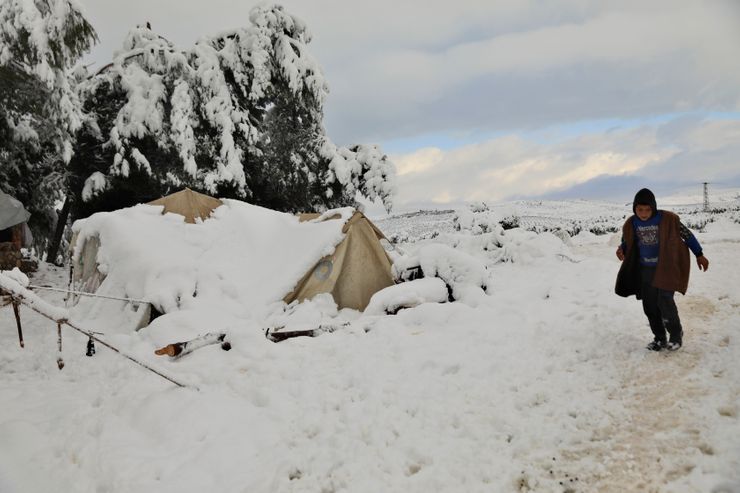
A snowstorm in the Middle East has left many Lebanese and Syrians scrambling to find ways to survive
BEIRUT (AP) — A snowstorm in the Middle East has left many Lebanese and Syrians scrambling to find ways to survive, burning old clothes, plastic and in some cases even sheep manure to keep warm as temperatures plummet and poverty soars.
The storm, dubbed “Hiba” in Lebanon, began Tuesday night and is expected to peak on Thursday. The small Mediterranean country’s massive economic collapse and currency crash has meant an increasing number of Lebanese families are not able to afford fuel to heat their homes this winter.
Hundreds of thousands of Syrian refugees in Lebanon and Jordan as well as others who were displaced by Syria’s war are sheltering in poorly heated tents relying mostly on layers of blankets to keep warm.
“The situation is very, very difficult,” said social activist Baseem Atrash, speaking from the snowcapped northeastern Lebanese town of Arsal near the Syrian border. Arsal is home to one of the largest Syrian refugee concentrations in Lebanon, with some 50,000 people, most of them living in flimsy tents.
Atrash said Syrian refugees, as well as some Lebanese who have fallen into poverty since the country's financial meltdown began in October 2019, lack diesel for heaters, while constant power cuts make electric heaters useless.
“They are burning anything to keep their heaters on from plastic to old clothes,” Atrash said. Earlier this month, a Syrian mother and her three children died in their sleep after inhaling toxic fumes from burning coal to heat their room in a village in southern Lebanon.
Lebanon, a country of 6 million people, is home to 1.5 million Syrians who fled the now decade-old civil war in their country. The United Nations estimates that 90% of Syrian refugee households live in extreme poverty. But as Lebanon grapples with an unprecedented economic crisis, the poverty has deepened for both Lebanese and Syrians. Sky-rocketing fuel prices coupled with a currency collapse has meant many essential commodities are now out of reach for the average Lebanese.
Nadim Attieh, a Lebanese residing at 750 meters above sea level, decided to donate some of his firewood to needy families after he heard of how cold it will get. Attieh used Twitter to spread the word of his in-kind donation: a ton of wood. It is enough for five or six families that would last them through the coldest three days ahead.
“I have stocked up on wood during summer and I have a good quantity. So why not share with people who are underprivileged?” Asked Attieh, himself looking for a job after losing his in a Gulf country a couple of years ago.
The cost of a ton of wood is now equivalent to five times the minimum wage, selling for 3 million Lebanese pounds ($120) while some 20 liters of diesel now goes for about 300,000 — nearly ten times what it cost three years ago.
In Syria’s northwestern province of Idlib, where many of the 3 million residents are displaced persons, Yassin al-Yassin was fortifying his tent with extra tarps and supports as the weather worsened.
Al-Yassin, who lives in the tent with his wife, two daughters and son, couldn’t afford wood or diesel for heating, so he'll be burning dried sheep manure that's been piled up since summer.
“All we have to protect us is tarp and blankets,” he said by telephone from the tent, surrounded by mountains near the Turkish border. He said only those receiving hard currency from relatives abroad can afford to buy diesel and wood for heating.
International aid group CARE International said temperatures are expected to drop in Jordan, Lebanon, and Syria to well below freezing, endangering the lives of millions already living in precarious circumstances.
“People can see their own breath when lying on their thin mattresses, you will see children walk around in flipflops and ripped shirts. Families are afraid that they will freeze to death,” said Jolien Veldwijk, CARE Syria Country Director.
___
Associated Press writer Sarah El Deeb in Beirut contributed reporting.
More News

M.L.B. Playoff Ads With Sydney Sweeney and Megan Fox Draw Backlash
Commercials with Sydney Sweeney promoting a gambling platform and Megan Fox endorsing male enhancement have rankled fans, and even athletes. Who is in charge?

Netflix Hurries to Rewrite Its Narrative With Layoffs and a Sudden Firing
Despite strong revenues and profits, the streaming service cut 1,000 jobs and jettisoned its chief content officer. Drops in the stock price and viewer engagement are to blame.

Why Bad News in the Bond Market May Be Good News for Investors
In the contrarian logic of investing, rising interest rates have made bonds much more attractive, our columnist says.

U.S. Budget Deficit Nears $2 Trillion, a Reality Check for Trump’s Cost Cutting
Higher interest rates are inflating borrowing costs as the Trump administration spends on the Iran war and tariff refunds.

Indonesian Stocks Plunge as MSCI Threatens to Drop Market from Indexes
The potential downgrade by MSCI, an influential index provider, adds to a deepening crisis of investor confidence in the economic policies of President Prabowo Subianto.

Warsh Vows to Tame Inflation as A.I. Delivers ‘Shock’ to Economy
The Federal Reserve chairman stuck to his pledge to avoid providing guidance about the path forward for interest rates, but did nothing to convey an urgency to raise them later this month.

Watch: Did Tesla really just unveil a flying car?
Tesla CEO Elon Musk showcased the vehicle at a facility owned by his SpaceX company, which helped develop the model.

When Will the Fed Move on Rates?
Kevin Warsh, the central bank’s chairman, suggested he wouldn’t push to raise borrowing rates this month. But persistent inflation may force the Fed’s hand.

Banks expect to be hit with higher taxes in Budget
Senior banking executives have told the BBC they expect to be "on the menu" in the chancellor's Budget tax later this month.

Feel Like You’re Overpaying for Hotels? Blame Expedia, a New Lawsuit Says.
The booking giant is accused of breaking federal antitrust laws and forcing millions of customers to overspend on stays by as much as 30 percent.

Tesla Debuts 2026 Roadster ‘Flying’ Electric Sports Car
Elon Musk’s company and other automakers, like Jaguar and Bentley, are trying to sell very expensive electric cars to people who usually prefer gasoline-fueled luxury and performance.

Trump Hasn’t Lowered Drug Prices for These Voters
President Trump has been promoting his efforts to reduce drug prices, but many Americans have not seen relief from rising costs for prescriptions and insurance premiums.