
Lebanon and Israel resume indirect talks on maritime border

May 4, 2021
Lebanon and Israel have resumed indirect talks with U.S. mediation over their disputed maritime border after nearly a six-month pause
NAQOURA, Lebanon (AP) — After a nearly six-month pause, Lebanon and Israel on Tuesday resumed indirect talks with U.S. mediation over their disputed maritime border.
The resumption comes after a new U.S. administration took over. Lebanon has sunk deeper into it economic and financial crisis that started in late 2019 — a culmination of decades of corruption and mismanagement by the political class.
The small Mediterranean country is eager to resolve the border dispute with Israel, paving the way for potential lucrative oil and gas deals.
Local media said the talks resumed at a U.N. post along the border known as Ras Naqoura, on the edge of the Lebanese border town of Naqoura. The Lebanese delegation will speak through U.N. and U.S. officials to the Israelis.
American Ambassador John Desrocher, who serves as the U.S. mediator, arrived in Beirut Monday night to take part in the talks.
The U.S. has been mediating the issue for about a decade, but only late last year was a breakthrough reached on an agreement for a framework for U.S.-mediated talks. The talks began in October but stopped few weeks later.
Israel and Lebanon have no diplomatic relations and are technically in a state of war. They each claim about 860 square kilometers (330 square miles) of the Mediterranean Sea as being within their own exclusive economic zones.
In the second round of talks, the Lebanese delegation — a mix of army officers and experts — offered a new map that pushes for an additional 1,430 square kilometers (550 square miles) for Lebanon.
Lebanon’s leadership is not united behind the army command’s decision regarding the extended area.
“There is weakness in the Lebanese stance and it is important for the Israelis to join the talks when Lebanon is in a weak position,” said Laury Haytayan, a Lebanese oil and gas expert.
Israel already has developed a natural gas industry elsewhere in its economic waters, producing enough gas for domestic consumption and to export to Egypt and Jordan.
Lebanon, which began offshore drilling earlier this year and hopes to start drilling for gas in the disputed area in the coming months, has divided its expanse of waters into 10 blocs, of which three are in the area under dispute with Israel.
Ras Naqoura already hosts monthly tripartite, indirect Israel-Lebanon meetings over violations along the land border.
Israel and Lebanon also held indirect negotiations in the 1990s, when Arab states and Israel worked on peace agreements. The Palestinians and Jordan signed agreements with Israel at the time but Lebanon and Syria did not.
More News

M.L.B. Playoff Ads With Sydney Sweeney and Megan Fox Draw Backlash
Commercials with Sydney Sweeney promoting a gambling platform and Megan Fox endorsing male enhancement have rankled fans, and even athletes. Who is in charge?

Netflix Hurries to Rewrite Its Narrative With Layoffs and a Sudden Firing
Despite strong revenues and profits, the streaming service cut 1,000 jobs and jettisoned its chief content officer. Drops in the stock price and viewer engagement are to blame.

Why Bad News in the Bond Market May Be Good News for Investors
In the contrarian logic of investing, rising interest rates have made bonds much more attractive, our columnist says.

U.S. Budget Deficit Nears $2 Trillion, a Reality Check for Trump’s Cost Cutting
Higher interest rates are inflating borrowing costs as the Trump administration spends on the Iran war and tariff refunds.

Indonesian Stocks Plunge as MSCI Threatens to Drop Market from Indexes
The potential downgrade by MSCI, an influential index provider, adds to a deepening crisis of investor confidence in the economic policies of President Prabowo Subianto.

Warsh Vows to Tame Inflation as A.I. Delivers ‘Shock’ to Economy
The Federal Reserve chairman stuck to his pledge to avoid providing guidance about the path forward for interest rates, but did nothing to convey an urgency to raise them later this month.
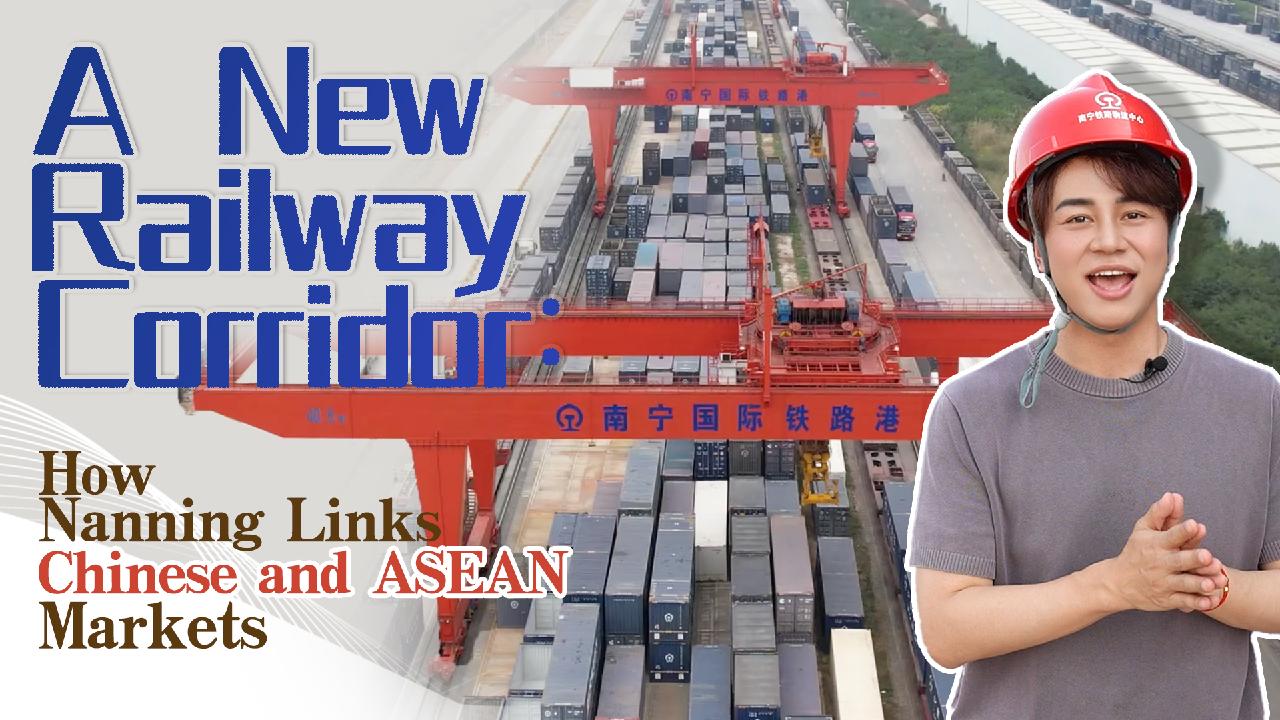
A new railway corridor: How Nanning links Chinese and ASEAN markets
A new railway corridor: How Nanning links Chinese and ASEAN markets

Watch: Did Tesla really just unveil a flying car?
Tesla CEO Elon Musk showcased the vehicle at a facility owned by his SpaceX company, which helped develop the model.

China and Europe are building new connections in aerospace
China and Europe are building new connections in aerospace – from skies to stars. On the one hand, their deep industrial partnership is scaling global civil aviation to new heights. On the other hand, scientific collaboration is opening new possibilities for space exploration and deepening our understanding of the Sun-Earth system.

BizTalk | Exclusive interview with Former PM of Bosnia and Herzegovina
In this episode of BizTalk, CGTN's Guan Xin speaks with Zlatko Lagumdzija, former prime minister of Bosnia and Herzegovina, about China's development and its role in global governance.

When Will the Fed Move on Rates?
Kevin Warsh, the central bank’s chairman, suggested he wouldn’t push to raise borrowing rates this month. But persistent inflation may force the Fed’s hand.

Banks expect to be hit with higher taxes in Budget
Senior banking executives have told the BBC they expect to be "on the menu" in the chancellor's Budget tax later this month.