
Media: UK Treasury chief out as prime minister plans U-turn
Oct 14, 2022
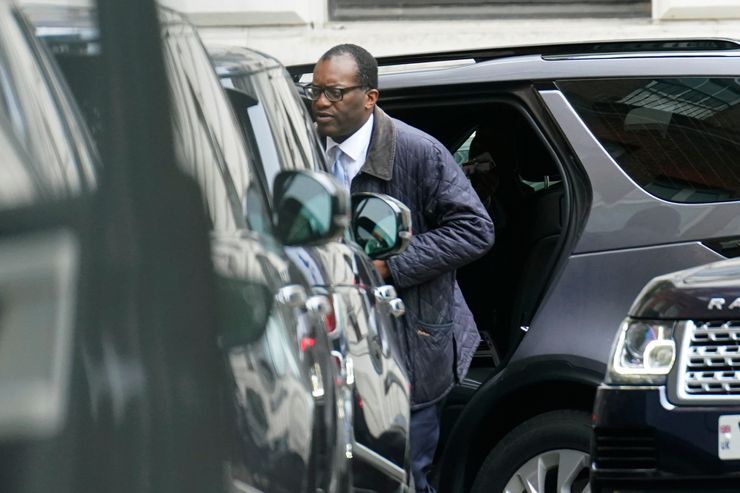
British media say Treasury chief Kwasi Kwarteng has left the government, ahead of an announcement by Prime Minister Liz Truss on changes to an economic package that sparked market turmoil
LONDON (AP) — Embattled British Prime Minister Liz Truss has parted ways with her Treasury chief ahead of a hastily arranged news conference on Friday as she struggled to calm markets and hang on to her job following the release of her controversial economic plan.
Sky News and the BBC reported that Kwasi Kwarteng was ousted, but it was unclear if he was fired or resigned.
It comes after a month in the job — and three weeks after he announced a tax-cutting “mini budget” that sent the pound plunging to record lows against the dollar.
On Thursday Kwarteng denied he was about to lose his job, saying “I’m not going anywhere.”
Truss is due to hold a news conference later Friday. She is under intense pressure to scrap some of the 43 billion pounds ($48 billion) in unfunded tax cuts that roiled financial markets and led the Bank of England to step in to prevent a wider economic crisis.
Senior members of the Conservative party were publicly advising the government to take action. The pound rose as much as 1.7% against the dollar on Thursday and bond markets stabilized amid expectations that Truss and Kwarteng, whose formal title is chancellor of the Exchequer, will revise their economic growth plan.
Truss, a free-market libertarian, came to power last month pledging to cut taxes to spur growth. But her ability to deliver on that commitment is now in doubt.
Analysts suggest the most likely change in her program would be to abandon a promise to halt her predecessor’s plan to increase corporation tax from 19% to 25%. That would reduce the bill for her program by about 18 billion pounds a year.
James Athey, the investment director at abrdn, said that it now seemed certain that the government “is about to U-turn on its decision not to U-turn on its profligate tax-cutting policies.″ The rumors are calming markets, he said.
“The risk now is that investors have forgotten that there are significantly more problems than just an ill-advised and ill-timed fiscal easing to deal with,″ he said. “Inflation is at multi-decade highs, government borrowing is huge as is the current account deficit. The housing market is likely to suffer a hammer blow from the jump in mortgage rates and the war in Ukraine rumbles on. We may well be through the worst of the volatility but I fear that the U.K. is nowhere near out of the woods.”
Conservative lawmakers are agonizing over whether to try to oust their second leader this year. Truss was elected last month to replace Boris Johnson, who was forced out in July. Some reports suggest senior Conservatives are plotting to replace Truss with a joint ticket of Rishi Sunak and Penny Mordaunt, her two closest rivals in the summer contest for leadership of the party, though it’s unclear how that could be achieved.
More News

U.S. Budget Deficit Nears $2 Trillion, a Reality Check for Trump’s Cost Cutting
Higher interest rates are inflating borrowing costs as the Trump administration spends on the Iran war and tariff refunds.

Indonesian Stocks Plunge as MSCI Threatens to Drop Market from Indexes
The potential downgrade by MSCI, an influential index provider, adds to a deepening crisis of investor confidence in the economic policies of President Prabowo Subianto.

Warsh Vows to Tame Inflation as A.I. Delivers ‘Shock’ to Economy
The Federal Reserve chairman stuck to his pledge to avoid providing guidance about the path forward for interest rates, but did nothing to convey an urgency to raise them later this month.

Watch: Did Tesla really just unveil a flying car?
Tesla CEO Elon Musk showcased the vehicle at a facility owned by his SpaceX company, which helped develop the model.

When Will the Fed Move on Rates?
Kevin Warsh, the central bank’s chairman, suggested he wouldn’t push to raise borrowing rates this month. But persistent inflation may force the Fed’s hand.

Banks expect to be hit with higher taxes in Budget
Senior banking executives have told the BBC they expect to be "on the menu" in the chancellor's Budget tax later this month.

Feel Like You’re Overpaying for Hotels? Blame Expedia, a New Lawsuit Says.
The booking giant is accused of breaking federal antitrust laws and forcing millions of customers to overspend on stays by as much as 30 percent.

Tesla Debuts 2026 Roadster ‘Flying’ Electric Sports Car
Elon Musk’s company and other automakers, like Jaguar and Bentley, are trying to sell very expensive electric cars to people who usually prefer gasoline-fueled luxury and performance.

Trump Hasn’t Lowered Drug Prices for These Voters
President Trump has been promoting his efforts to reduce drug prices, but many Americans have not seen relief from rising costs for prescriptions and insurance premiums.

Fuel costs squeezing margins for some businesses
Diesel recently topped £2 per litre and there is concern that a duty freeze will not go far enough.

Why Bad News in the Bond Market May Be Good News for Investors
In the contrarian logic of investing, rising interest rates have made bonds much more attractive, our columnist says.

'TV and cheap booze' blamed for landlord quitting
Lincolnshire has lost 27% of its pubs and bars since 2009 and some are calling on the government to act against cheap supermarket booze.