
Pakistan military chief seeks US help on release of IMF loan
Jul 30, 2022
Pakistani officials say the country's powerful army chief has contacted Washington, seeking U.S. help in securing an early release of a crucial $1.7 billion installment from the International Monetary Fund to Pakistan
ISLAMABAD (AP) — Pakistan’s powerful army chief has contacted Washington, seeking U.S. help in securing an early release of a crucial $1.7 billion installment from the International Monetary Fund to his country, struggling with a deepening economic crisis, Pakistani officials said Saturday.
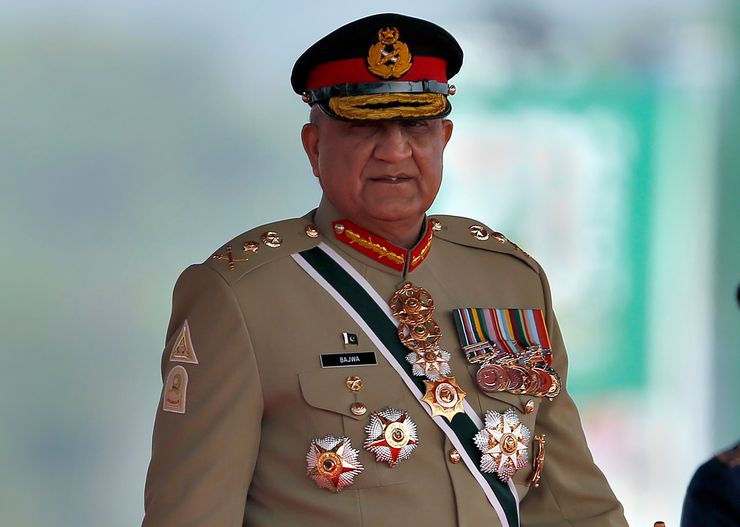
According to several government officials, Gen. Qamar Javed Bajwa discussed the issue with U.S. Deputy Secretary of State Wendy Sherman, appealing on Washington to use its influence with the IMF to help Pakistan.
The appeal was a rare reaching out by the army chief. Pakistan's relations with the United States have been troubled in recent years, mainly over the issue of neighboring Afghanistan, now run by the Taliban.
The relations remained especially tense under former Prime Minister Imran Khan, who was ousted in a no-confidence vote in Parliament in April. However, Pakistan’s military, which has directly ruled the country for more than half of its 75-year history, has closely worked with the U.S. and was an official ally in the war on terror against al-Qaida.
Pakistan's foreign ministry confirmed Friday that Bajwa and Sherman had talked.
“I understand (the) conversation has taken place, but at this stage, I am not in direct knowledge of the content of this discussion,” said ministry spokesman Asim Iftikhar.
The officials who spoke to The Associated Press on Saturday said the discussion focused on the IMF loan. They spoke on condition of anonymity because they were not authorized to talk to the media.
Pakistan and the IMF originally signed the bailout accord in 2019. But the release of a $1.7 billion tranche has been on hold since earlier this year, when the IMF expressed concern about Pakistan’s compliance with the deal's terms under Khan.
Khan's successor, Prime Minister Shahbaz Sharif, and his government reached a preliminary agreement with the IMF earlier this month to revive the bailout package. That agreement was subject to approval from the fund’s board of directors.
Pakistan had hoped for a quick revival of the bailout, but the IMF has so far not released the much-needed installment, which may have prompted Bajwa's call to Washington. It remained unclear what U.S. officials could do to speed up the process of the bailout.
There was no immediate comment from Washington on the phone call.
Bajwa also spoke by phone with the head of U.S Central Command in the Mideast, Gen. Michael Kurilla, on Friday, according to a military statement. It quoted Kurilla as saying he appreciates the role Pakistan plays in the region's stability and expressing hopes for further improvement in cooperation with Pakistan.
Pakistan desperately needs the IMF loan. Earlier in July, the fund said it would raise the value of the bailout from $6 billion to $7 billion, if approved by its executive board, usually considered a formality.
Sharif has repeatedly blamed the former prime minister's government, alleging that Khan — a former cricket star turned Islamist politician — had deliberately violated IMF’s conditions in order to remain popular among followers at home.
Analysts say the revival of the IMF bailout will help Pakistan and encourage other international financial institutions to engage with the South Asian country.
Sharif’s government has also been in contact with Washington over reviving the IMF bailout. Since his ouster, Khan has repeatedly alleged that his government was toppled under a U.S. plot, a charge Washington denies.
Since Khan's ouster, Pakistan’s currency has plummeted to an all-time low amid uncertainty about IMF assistance. The rupee slid a record low of about 240 against the dollar last weekend. Previously, the dollar sold for 225 rupees.
The steady decline in this Islamic nation’s currency has spread panic among its business community. Rising food prices and inflation has made Sharif's government, now in its four month in office, highly unpopular.
More News

Why Bad News in the Bond Market May Be Good News for Investors
In the contrarian logic of investing, rising interest rates have made bonds much more attractive, our columnist says.

U.S. Budget Deficit Nears $2 Trillion, a Reality Check for Trump’s Cost Cutting
Higher interest rates are inflating borrowing costs as the Trump administration spends on the Iran war and tariff refunds.

Indonesian Stocks Plunge as MSCI Threatens to Drop Market from Indexes
The potential downgrade by MSCI, an influential index provider, adds to a deepening crisis of investor confidence in the economic policies of President Prabowo Subianto.

Warsh Vows to Tame Inflation as A.I. Delivers ‘Shock’ to Economy
The Federal Reserve chairman stuck to his pledge to avoid providing guidance about the path forward for interest rates, but did nothing to convey an urgency to raise them later this month.

Watch: Did Tesla really just unveil a flying car?
Tesla CEO Elon Musk showcased the vehicle at a facility owned by his SpaceX company, which helped develop the model.

When Will the Fed Move on Rates?
Kevin Warsh, the central bank’s chairman, suggested he wouldn’t push to raise borrowing rates this month. But persistent inflation may force the Fed’s hand.

Banks expect to be hit with higher taxes in Budget
Senior banking executives have told the BBC they expect to be "on the menu" in the chancellor's Budget tax later this month.

Feel Like You’re Overpaying for Hotels? Blame Expedia, a New Lawsuit Says.
The booking giant is accused of breaking federal antitrust laws and forcing millions of customers to overspend on stays by as much as 30 percent.

Tesla Debuts 2026 Roadster ‘Flying’ Electric Sports Car
Elon Musk’s company and other automakers, like Jaguar and Bentley, are trying to sell very expensive electric cars to people who usually prefer gasoline-fueled luxury and performance.

Trump Hasn’t Lowered Drug Prices for These Voters
President Trump has been promoting his efforts to reduce drug prices, but many Americans have not seen relief from rising costs for prescriptions and insurance premiums.

Fuel costs squeezing margins for some businesses
Diesel recently topped £2 per litre and there is concern that a duty freeze will not go far enough.

'TV and cheap booze' blamed for landlord quitting
Lincolnshire has lost 27% of its pubs and bars since 2009 and some are calling on the government to act against cheap supermarket booze.