
4 finance ministers seek job as eurozone chief
Nov 30, 2017
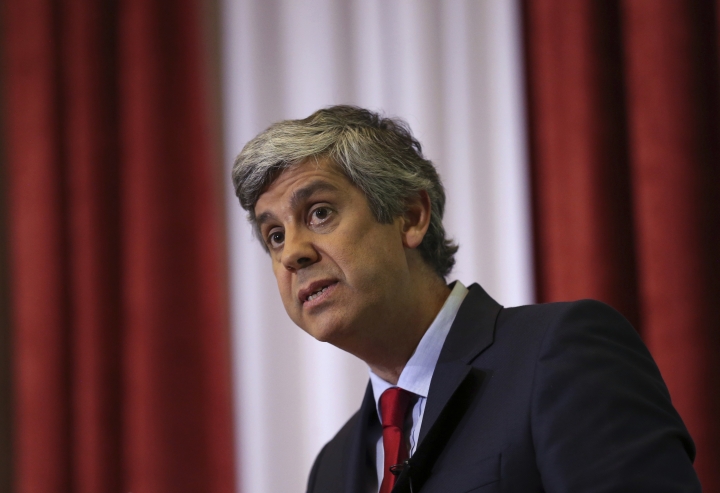
Portugal's finance minister Mario Centeno is seen as the frontrunner among 4 candidates to become head of the group of 19 countries which share the euro currency
BRUSSELS — The finance ministers from Portugal, Luxembourg, Slovakia and Latvia are in Monday's runoff to seek the presidency of the eurogroup, the informal group of finance chiefs of the 19 nations that use the euro.
The influential group needs a new head after socialist Jeroen Dijsselbloem was beaten in Dutch elections and was kept out of the new coalition government.
Now, Mario Centeno from Portugal, also a socialist, is considered a favorite.
The eurogroup chief chairs regular meetings between the eurozone finance ministers and is a high-profile public figure — leading, for example, the efforts to quell the eurozone's debt crisis in recent years.
Centeno took office in the Portuguese government that came to power in December 2015 and pointedly reversed numerous austerity policies the country was forced to adopt after needing a 78-billion-euro ($92 billion) bailout in 2011 to avoid bankruptcy.
Centeno blamed austerity for causing a three-year recession before he took office. Portugal's economy is now thriving again, with growth forecast to reach 2.3 percent this year.
The election of the new eurozone chief is already influenced by several outside factors. Since the Christian Democrats' European parliamentary group already has three top posts in the EU — with Council President Donald Tusk, Commission chief Jean-Claude Juncker and Parliament leader Antonio Tajani — they put in no candidates.
And the Luxembourg candidacy of Pierre Gramegna, a liberal, is expected to be burdened by the fact that the Grand Duchy of 600,000 already has a high-profile post through Juncker.
Peter Kazimir from Slovakia is a socialist with a similar economic outlook to Dijsselbloem — he also called for austerity and fiscal restraint during the financial crisis as Greece teetered on the cusp of bankruptcy.
Dana Reizniece-Ozola of Latvia is the only female candidate among them.
The eurogroup president is seen as a go-between and facilitator between the 19 nations which have often had starkly different views on the currency and the economic policies in their bloc.
During the financial crisis, Germany insisted that nations wanting bailout loans should implement painful budget austerity policies in return. Those views often overwhelmed calls for more public spending to stimulate growth and get the bloc's economies out of recession.
Over the past year, though, the economies in the eurozone have gone from strength to strength and the successor to Dijsselbloem will face different challenges.
Britain is set to leave the EU in 2019 and Brexit is expected to have an impact on the eurozone economy if handled badly.
___
Barry Hatton contributed from Lisbon
More News

Food aid charity under pressure from fuel costs
FareShare South West says fuel costs are putting immense pressure on work helping thousands in need.

How is the US economy really doing under President Trump?
Ahead of the midterms Trump has boasted about the performance of the US economy. BBC Verify looks at inflation, jobs and economic growth in the country.
Graphics: China's economy picks up steam in Q3
Graphics: China's economy picks up steam in Q3

Chancellor rejects calls to raise Capital Gains Tax in Budget
Influential Labour figures had been pushing for equalising CGT and income tax, but critics have said this could drive wealthy people out of Britain.

The VW Bus, Now Electrified, Keeps on Truckin’
A restored version of Volkswagen’s Flower Power-era Microbus, kitted out by Kindred Motorworks, is aiming for the affluent, while VW’s own E.V. is slow to get moving, much like its forebear.

'I'm fed up of swiping': Why singles now want to meet IRL
The BBC hears from people who think dating events are better value for money than dating apps.

‘A Ticking Time Bomb’: An Economic Crisis Looms in Indonesia
Once a model of economic stability, Indonesia now faces growing hardship at home as President Prabowo Subianto’s policies shake investor confidence.

Black Unemployment Hints at a Job Market in Worse Shape Than It Seems
The Black unemployment rate climbed a percentage point to 7 percent in September, almost double the rate for white workers.

Elon Musk Says He Will Give a SpaceX Share to ‘Every Kid in America’
Anthropic, an A.I. rival to SpaceX, earlier said it would form a “public benefit fund” and other tech moguls have contributed to savings accounts for children.

Christiane Amanpour Says She Is Leaving CNN After 43 Years
The chief international anchor, one of the most famous names in broadcast news, started as an assistant at the network in 1983.

Burnham vows end to 'rip-off parking charges' under new rules
Penalties are seen as too harsh on motorists who are penalised for parking on private land.

Ex-OpenAI worker accused of planting device had Saudi support, says court filing
The Saudi government did not immediately respond to BBC requests for comment.