
Puerto Rico bonds sink; White House says no debt bailout
Oct 4, 2017
President Donald Trump has shaken up Puerto Rico's bond market with talk of wiping out the U.S. territory's debt but his budget director dismisses the idea of a bailout for the hurricane-devastated island
WASHINGTON — President Donald Trump helped sink Puerto Ricans bond prices with talk of wiping out the U.S. territory's debt but his budget director dismissed the idea of a bailout Wednesday as the bankrupt island fights to recover from Hurricane Maria.
The federal government lacks the authority to simply do away with Puerto Rico's staggering $74 billion debt, much of which is tied up in a court-supervised restructuring process after the territory sought a form of bankruptcy protection last year.
"It likely that there will be significant debt reduction in that process. It is not something that the president can make happen," said Brian Setser, a former top Treasury Department official who worked on Puerto Rico's debt crisis.
The type of federal hurricane recovery aid that Puerto Rico receives could influence how the repayment process unfolds. However, no matter how the details shake out, creditors won't be paid anytime soon. Puerto Rico must first deal with hurricane clean-up and then try to plug a widening fiscal hole.
Puerto Rico's bonds, which have been falling since Hurricane Maria struck, took a sharp plunge Wednesday. One widely held benchmark general obligation bond was trading at 38 cents on the dollar, down from 46 cents a day earlier. Companies that insure billions of dollars of Puerto Rican debt also took a hit. Shares of MBIA, Assured Guaranty and Ambac Financial Group all tumbled on U.S. markets.
Trump told Fox News on Tuesday that federal officials would have to look at Puerto Rico's debt structure and "we're going to have to wipe that out." It was a jarring comment from the president, who has repeatedly reminded Puerto Rico about its debts to Wall Street while the island struggles with a disaster that Gov. Ricardo Rosello estimated could cost more than $90 billion.
"If you are a bondholder, you are surprised and you are no doubt wondering what he has in mind," Setser said.
Budget Director Mick Mulvaney sought to clarify Trump's remarks Wednesday. He said the administration was sending Congress a disaster aid package that includes money for Puerto Rico to deal with "rebuilding, repair, debris removal, getting the electric grid up, getting the water back running and so forth."
"We are not going to be offering a bailout for Puerto Rico or for its current bondholders," he told reporters.
Mired in an economic recession for more than a decade, Puerto Rico borrowed heavily to cover budget shortfalls. Its bonds were attractive to investors across the U.S. because they are are exempt from federal or state income tax to residents of all 50 states.
Puerto Rico's debt crisis has not rattled the wider market for municipal bonds. As the crisis dragged on, most broad municipal bond mutual funds sold their Puerto Rican debt. It's now owned mostly by hedge funds, which bought the debt at a discount in hopes of making a profit. Still, about a fifth of Puerto Rico's debt is held by individuals who bought bonds long considered safe because they were constitutionally protected.
Setser said the territory is likely to need significant federal aid beyond the disaster aid package just for short-term budget help.
With economic activity on the island paralyzed, sales and income tax collection is expected to all but vanish, along with fees to the public water and electricity utilities. That is forcing a recalculation of a 10-year spending plan approved earlier by a federal oversight board designed to help put Puerto Rico's finances in order.
The board sent a letter to Congressional leaders Tuesday pleading for "the maximum federal assistance to Puerto Rico," including grants and low-interest loans, saying the island will "face severe cash shortfalls from lower revenues, higher costs, and delayed or reduced cost-saving measures."
"Failure to provide the greatest amount of federal aid and the emergency liquidity program will be potentially ruinous," the letter said.
Setser said the oversight board is likely to approve revisions that would zero out Puerto Rico's debt service over at least the next year. Roughly a third of Puerto Rican tax revenue had been going to cover its debt. But even if it doesn't make debt payments, Puerto Rico will not be able to pay out salaries or pensions to essential government workers and provide basic services without federal aid.
Setser said federal aid could come in the form of a Treasury Department loan issued under so-called debtors-in-possession financing. That would give the Treasury priority over existing creditors in the repayment process.
"It's not a bailout. It's simply a reflection that Puerto Rico won't be collecting tax revenue for months," Setser said.
More News

Burnham vows end to 'rip-off parking charges' under new rules
Penalties are seen as too harsh on motorists who are penalised for parking on private land.

Job vacancies fall as small firms cut back on recruitment
Small firms cite labour costs as a key factor in scaling back hiring, the Office for National Statistics says.

Chancellor rejects calls to raise Capital Gains Tax in Budget
Influential Labour figures had been pushing for equalising CGT and income tax, but critics have said this could drive wealthy people out of Britain.

Food aid charity under pressure from fuel costs
FareShare South West says fuel costs are putting immense pressure on work helping thousands in need.

How is the US economy really doing under President Trump?
Ahead of the midterms Trump has boasted about the performance of the US economy. BBC Verify looks at inflation, jobs and economic growth in the country.
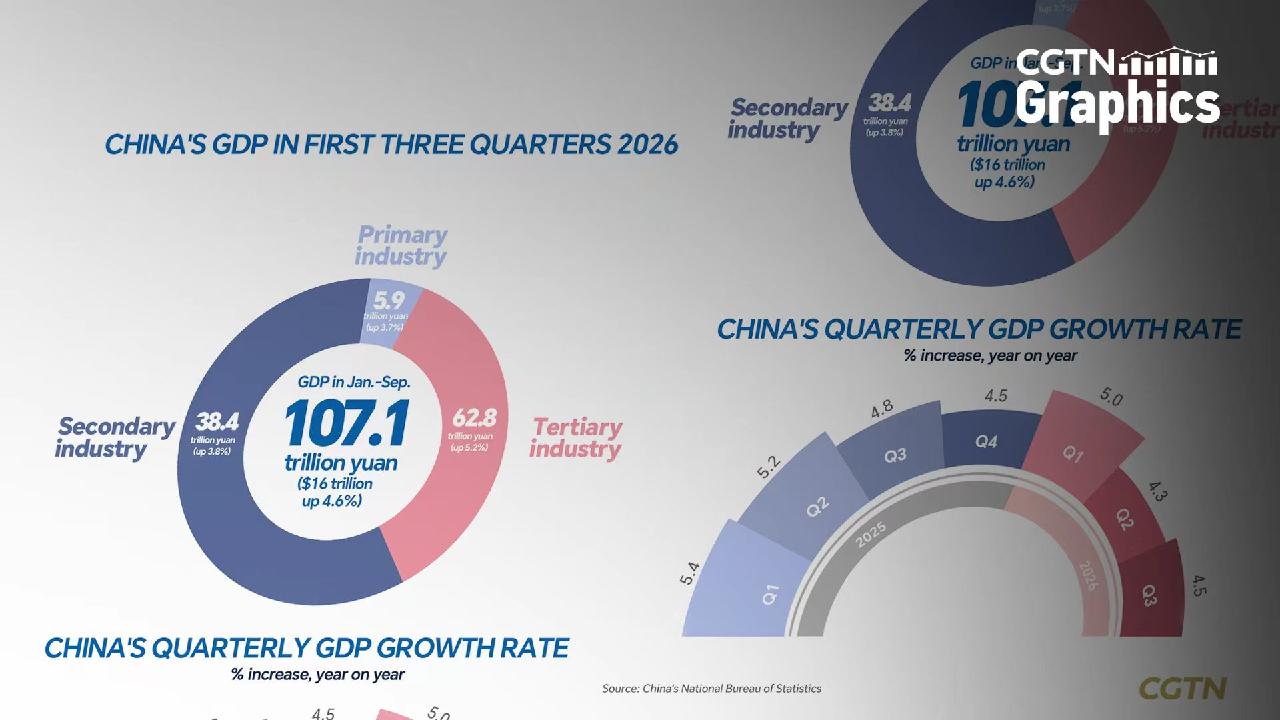
Graphics: China's economy picks up steam in Q3
Graphics: China's economy picks up steam in Q3

The VW Bus, Now Electrified, Keeps on Truckin’
A restored version of Volkswagen’s Flower Power-era Microbus, kitted out by Kindred Motorworks, is aiming for the affluent, while VW’s own E.V. is slow to get moving, much like its forebear.

'I'm fed up of swiping': Why singles now want to meet IRL
The BBC hears from people who think dating events are better value for money than dating apps.

‘A Ticking Time Bomb’: An Economic Crisis Looms in Indonesia
Once a model of economic stability, Indonesia now faces growing hardship at home as President Prabowo Subianto’s policies shake investor confidence.

Black Unemployment Hints at a Job Market in Worse Shape Than It Seems
The Black unemployment rate climbed a percentage point to 7 percent in September, almost double the rate for white workers.

Elon Musk Says He Will Give a SpaceX Share to ‘Every Kid in America’
Anthropic, an A.I. rival to SpaceX, earlier said it would form a “public benefit fund” and other tech moguls have contributed to savings accounts for children.

Christiane Amanpour Says She Is Leaving CNN After 43 Years
The chief international anchor, one of the most famous names in broadcast news, started as an assistant at the network in 1983.