
Sri Lanka leader proposes 25-year plan for crisis-hit nation
Aug 3, 2022
Sri Lanka’s new president says his government is preparing a national policy roadmap for the next 25 years that aims to cut public debt and turn the country into a competitive export economy as it seeks a way out of its worst economic disaster
COLOMBO, Sri Lanka (AP) — Sri Lanka's new president said Wednesday that his government is preparing a national policy roadmap for the next 25 years that aims to cut public debt and turn the country into a competitive export economy as it seeks a way out of its worst economic disaster.
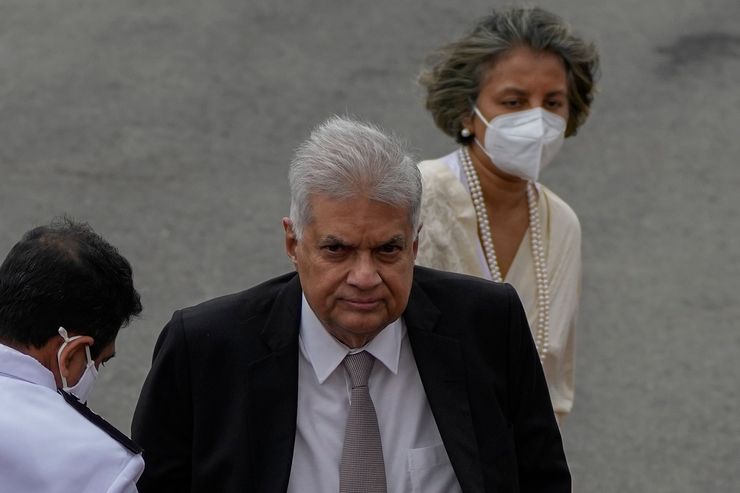
President Ranil Wickremesinghe in his speech to Parliament said Sri Lanka needs long-term solutions and a strong foundation to stop a recurrence of economic crises.
Massive public protests have blamed Wickremesinghe's ousted predecessor, Gotabaya Rajapakasa, and his powerful family for years of mismanagement and corruption that have bankrupt the nation and led to unprecedented shortages of essential imports like fuel, medicine and cooking gas. But many are still skeptical of Wickremesinghe and accuse him of trying to protect the former leader and his relatives.
Sri Lanka announced in April that it is suspending repayment of foreign loans. Its total foreign debt is $51 billion, of which it must pay $28 billion by 2027.
Wickremesinghe said his government had initiated negotiations with the International Monetary Fund on a four-year rescue plan and had commenced the finalization of a debt restructuring plan.
“We would submit this plan to the International Monetary Fund in the near future, and negotiate with the countries who provided loan assistance. Subsequently negotiations with private creditors would also begin to arrive at a consensus,” he said.
He said the government's aim is to create a surplus in the primary budget by the year 2025 and to bring down public debt, currently at 140% of GDP, to less than 100% by 2032.
“The economy should be modernized. Economic stability should be established and transformed into a competitive export economy. In this context, we are now preparing the necessary reports, plans, rules and regulations, laws and programs,” he said.
“If we build the country, the nation and the economy through the national economic policy, we would be able to become a fully developed country by the year 2048, when we celebrate the 100th anniversary of independence,” Wickremesinghe said.
Wickremesinghe was elected president last moth to complete the rest of Rajapaksa’s five-year term, which ends in 2024. Rajapaksa fled the country after protesters, furious over the economic hardships, stormed his official residence and occupied several key government buildings.
Wickremesinghe has since cracked down on protests and sought amity among political parties, saying only an all-party government can solve the country's problems.
“The expectation of all the citizens of the country at this juncture is for all their representatives in Parliament to work together in order to build the country,” he said.
More News

Why Bad News in the Bond Market May Be Good News for Investors
In the contrarian logic of investing, rising interest rates have made bonds much more attractive, our columnist says.

U.S. Budget Deficit Nears $2 Trillion, a Reality Check for Trump’s Cost Cutting
Higher interest rates are inflating borrowing costs as the Trump administration spends on the Iran war and tariff refunds.

Indonesian Stocks Plunge as MSCI Threatens to Drop Market from Indexes
The potential downgrade by MSCI, an influential index provider, adds to a deepening crisis of investor confidence in the economic policies of President Prabowo Subianto.

Warsh Vows to Tame Inflation as A.I. Delivers ‘Shock’ to Economy
The Federal Reserve chairman stuck to his pledge to avoid providing guidance about the path forward for interest rates, but did nothing to convey an urgency to raise them later this month.

Watch: Did Tesla really just unveil a flying car?
Tesla CEO Elon Musk showcased the vehicle at a facility owned by his SpaceX company, which helped develop the model.

When Will the Fed Move on Rates?
Kevin Warsh, the central bank’s chairman, suggested he wouldn’t push to raise borrowing rates this month. But persistent inflation may force the Fed’s hand.

Banks expect to be hit with higher taxes in Budget
Senior banking executives have told the BBC they expect to be "on the menu" in the chancellor's Budget tax later this month.

Feel Like You’re Overpaying for Hotels? Blame Expedia, a New Lawsuit Says.
The booking giant is accused of breaking federal antitrust laws and forcing millions of customers to overspend on stays by as much as 30 percent.

Tesla Debuts 2026 Roadster ‘Flying’ Electric Sports Car
Elon Musk’s company and other automakers, like Jaguar and Bentley, are trying to sell very expensive electric cars to people who usually prefer gasoline-fueled luxury and performance.

Trump Hasn’t Lowered Drug Prices for These Voters
President Trump has been promoting his efforts to reduce drug prices, but many Americans have not seen relief from rising costs for prescriptions and insurance premiums.

Fuel costs squeezing margins for some businesses
Diesel recently topped £2 per litre and there is concern that a duty freeze will not go far enough.

'TV and cheap booze' blamed for landlord quitting
Lincolnshire has lost 27% of its pubs and bars since 2009 and some are calling on the government to act against cheap supermarket booze.