
Sri Lanka president will not resign despite growing protests
Apr 6, 2022
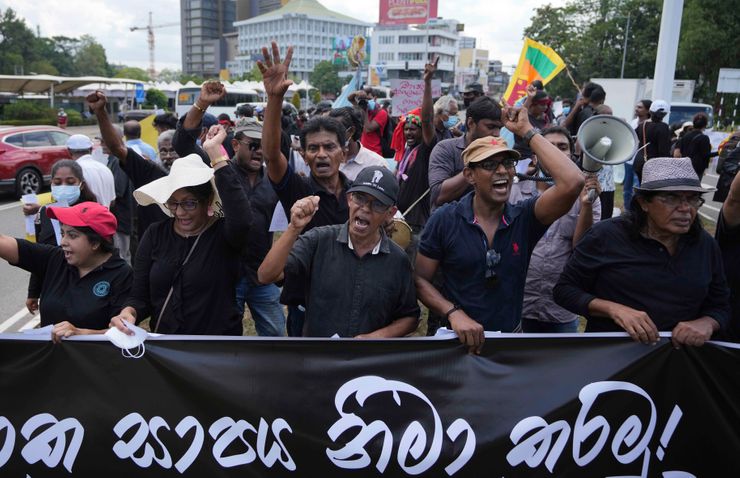
A government minister says Sri Lanka’s president will not step down and instead will face the political and economic crisis that has sparked large protests demanding his resignation
COLOMBO, Sri Lanka (AP) — Sri Lanka's president will not step down and instead will face the country's political and economic crisis, a key government minister said Wednesday despite continuing large protests that are demanding his resignation.
Sri Lanka has endured months of shortages of fuel and other essentials, and the protests over the economic troubles have spread nationwide and expanded to criticism of President Gotabaya Rajapaksa and his politically powerful family.
Rajapaksa has resisted the calls for him to resign even after members of his own coalition made them this week, with governing party lawmakers saying an interim government should replace his and failing to do so would make them responsible for violence.
Rajapaksa “will not resign. We will face this. We have the strength to face this. We are not afraid," Minister of Highways Johnston Fernando told Parliament on Wednesday.
Hours earlier, Rajapaksa revoked the state of emergency that he had declared last week after crowds of protesters demonstrated near his home in the capital, Colombo. The widely criticized emergency declaration gave him sweeping authority to act to protect public security, including suspending any laws, authorizing detentions and seizing property.
TV and social media images from Monday showed protesters storming into the offices and houses of governing party lawmakers and vandalizing some premises. Lawmakers urged the Parliament speaker to ensure their safety, and Fernando said they were prepared.
“We are ready to face them if anyone comes to attack us,” Fernando said in Parliament.
Rajapaksa earlier proposed a unity government be formed to handle the crisis, but the main opposition party rejected it. His Cabinet resigned Sunday night, and on Tuesday, nearly 40 governing coalition lawmakers said they would no longer vote according to coalition instructions, significantly weakening the government.
The president and his older brother, Prime Minister Mahinda Rajapaksa, continue to hold power, despite their politically powerful family being the focus of public ire. Five other family members are lawmakers, including Finance Minister Basil Rajapaksa, Irrigation Minister Chamal Rajapaksa and a nephew, Sports Minister Namal Rajapaksa.
The family's immense political clout grew in part from Mahinda Rajapaksa being credited when he was president earlier for ending Sri Lanka's 25-year civil war with the defeat of Tamil Tiger rebels in 2009.
There are now fears the family's control over key state functions has weakened independent institutions and left the government unable to address the crisis.
The government estimates the COVID-19 pandemic has cost Sri Lanka's economy $14 billion in the last two years. Protesters also allege fiscal mismanagement — Sri Lanka has immense foreign debt after borrowing heavily for infrastructure and other projects that don’t earn money. Its foreign debt repayment obligations are around $7 billion for this year alone.
The debts and dwindling foreign reserves leave it unable to pay for imported goods.
For several months, Sri Lankans have endured long lines to buy fuel, foods and medicines, most of which comes from abroad and is paid for in hard currency. The fuel shortage, along with lower hydropower capacity in dry weather, has caused rolling power cuts lasting hours each day.
Rajapaksa last month said his government was in talks with the International Monetary Fund and turned to China and India for loans while he appealed to people to limit the use of fuel and electricity.
More News

Netflix Hurries to Rewrite Its Narrative With Layoffs and a Sudden Firing
Despite strong revenues and profits, the streaming service cut 1,000 jobs and jettisoned its chief content officer. Drops in the stock price and viewer engagement are to blame.

M.L.B. Playoff Ads With Sydney Sweeney and Megan Fox Draw Backlash
Commercials with Sydney Sweeney promoting a gambling platform and Megan Fox endorsing male enhancement have rankled fans, and even athletes. Who is in charge?

Why Bad News in the Bond Market May Be Good News for Investors
In the contrarian logic of investing, rising interest rates have made bonds much more attractive, our columnist says.

U.S. Budget Deficit Nears $2 Trillion, a Reality Check for Trump’s Cost Cutting
Higher interest rates are inflating borrowing costs as the Trump administration spends on the Iran war and tariff refunds.

Indonesian Stocks Plunge as MSCI Threatens to Drop Market from Indexes
The potential downgrade by MSCI, an influential index provider, adds to a deepening crisis of investor confidence in the economic policies of President Prabowo Subianto.

Warsh Vows to Tame Inflation as A.I. Delivers ‘Shock’ to Economy
The Federal Reserve chairman stuck to his pledge to avoid providing guidance about the path forward for interest rates, but did nothing to convey an urgency to raise them later this month.

Watch: Did Tesla really just unveil a flying car?
Tesla CEO Elon Musk showcased the vehicle at a facility owned by his SpaceX company, which helped develop the model.

When Will the Fed Move on Rates?
Kevin Warsh, the central bank’s chairman, suggested he wouldn’t push to raise borrowing rates this month. But persistent inflation may force the Fed’s hand.

Banks expect to be hit with higher taxes in Budget
Senior banking executives have told the BBC they expect to be "on the menu" in the chancellor's Budget tax later this month.

Feel Like You’re Overpaying for Hotels? Blame Expedia, a New Lawsuit Says.
The booking giant is accused of breaking federal antitrust laws and forcing millions of customers to overspend on stays by as much as 30 percent.

Tesla Debuts 2026 Roadster ‘Flying’ Electric Sports Car
Elon Musk’s company and other automakers, like Jaguar and Bentley, are trying to sell very expensive electric cars to people who usually prefer gasoline-fueled luxury and performance.

Trump Hasn’t Lowered Drug Prices for These Voters
President Trump has been promoting his efforts to reduce drug prices, but many Americans have not seen relief from rising costs for prescriptions and insurance premiums.