
Sri Lanka urged to drop terror charges for 2 protest leaders
Nov 17, 2022
The Sri Lankan government is being urged to drop charges against two protest leaders detained for more than three months following the anti-government demonstrations that engulfed the island nation earlier this year
COLOMBO, Sri Lanka (AP) — The Sri Lankan government is being urged to drop charges against two protest leaders detained for more than three months following the anti-government demonstrations that engulfed the island nation earlier this year.
Amnesty International also renewed its call for Sri Lanka to repeal the harsh, civil war-era Prevention of Terrorism Act under which the two protest leaders are being held.
Wasantha Mudalige and Galwewa Siridhamma, both university student leaders, were arrested in August and have been detained for more than 90 days under the PTA.
Thyagi Ruwanpathirana, Amnesty International’s South Asia regional researcher, urged the government to drop the “baseless terror charges” against the two leaders and also not to extend their detention.
Mudalige and Siridhamma, who is also a Buddhist monk, were actively involved in this year’s anti-government protests and their arrests drew wide condemnation from opposition lawmakers and rights groups who say the duo have been detained without legal basis.
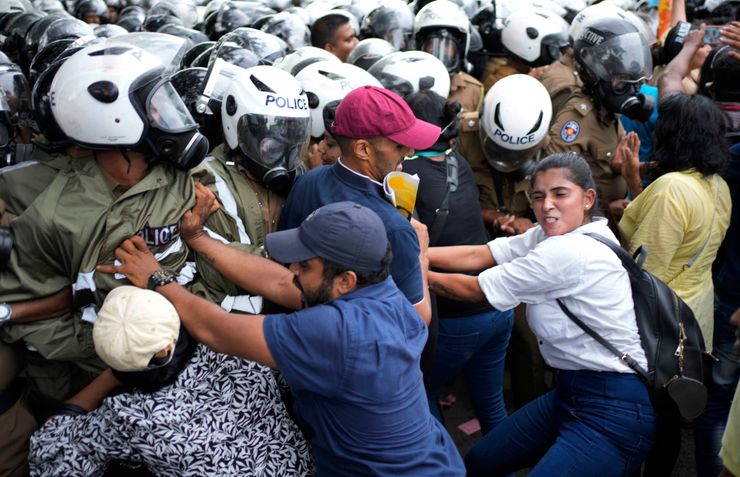
In recent weeks, opposition groups and rights activists have been staging frequent protests to demand the release of two leaders and end to a government crackdown on anti-government demonstrations over economic hardships.
“The continued targeted persecution of student leaders in Sri Lanka has a chilling effect on civil society and the right to protest,” Ruwanpathirana said in a statement released late Wednesday.
There was no immediate comment from the government to the Amensy’s statement.
For years, opposition lawmakers and trade union and civil rights activists have been urging the government to abolish the PTA.
It was amended in March, but opponents called the reforms cosmetic and said the law still allows the detention of suspects without warrants and the use of confessions obtained through torture. They say the law, introduced during Sri Lanka’s civil war in 1979, has been widely abused, causing a large number of innocent people to spend years in prison without trial.
Sri Lankans protested for months earlier this year over the economic crisis, which has led to severe shortages of many essential imported items such as medicines, fuel and cooking gas. Thousands stormed the president’s residence in July, forcing then President Gotabaya Rajapaksa to flee and later resign.
The protesters also occupied other key government buildings, including the offices of the president and prime minister.
The country’s new president, Ranil Wickremesinghe, cracked down on opposition, ousting the protesters from the government buildings.
Dozens of protest leaders and activists have been arrested, with some later released.
Rights groups say the military has sought to curtail protests through intimidation, surveillance and arbitrary arrests since Wickremesinghe took office in July.
Dozens of protest leaders and activists have been arrested, with some later released.
Rights groups say the military has sought to curtail protests through intimidation, surveillance and arbitrary arrests since Wickremesinghe took office in July.
The months of protests earlier this year dismantled the powerful Rajapaksa family’s grip on politics. Before Rajapaksa resigned, his older brother stepped down as prime minister and three other family members quit their Cabinet positions.
Wickremesinghe was elected by Parliament to complete Rajapaksa’s term, which ends in 2024. He is unpopular because he is supported by lawmakers who are still backed by the Rajapaksa family, which ruled Sri Lanka for most of the past two decades. Many accuse Wickremesinghe of protecting the Rajapaksas, who are widely blamed for corruption and misrule that led to the crisis.
Sri Lanka is effectively bankrupt and has suspended repayment of nearly $7 billion in foreign debt due this year pending the outcome of talks with the International Monetary Fund on an economic rescue package. The country’s total foreign debt exceeds $51 billion, of which $28 billion has to be repaid by 2027.
More News

Warsh Vows to Tame Inflation as A.I. Delivers ‘Shock’ to Economy
The Federal Reserve chairman stuck to his pledge to avoid providing guidance about the path forward for interest rates, but did nothing to convey an urgency to raise them later this month.

Indonesian Stocks Plunge as MSCI Threatens to Drop Market from Indexes
The potential downgrade by MSCI, an influential index provider, adds to a deepening crisis of investor confidence in the economic policies of Indonesian President Prabowo Subianto.

Watch: Did Tesla really just unveil a flying car?
Tesla CEO Elon Musk showcased the vehicle at a facility owned by his SpaceX company, which helped develop the model.

When Will the Fed Move on Rates?
Kevin Warsh, the central bank’s chairman, suggested he wouldn’t push to raise borrowing rates this month. But persistent inflation may force the Fed’s hand.

Banks expect to be hit with higher taxes in Budget
Senior banking executives have told the BBC they expect to be "on the menu" in the chancellor's Budget tax later this month.

Feel Like You’re Overpaying for Hotels? Blame Expedia, a New Lawsuit Says.
The booking giant is accused of breaking federal antitrust laws and forcing millions of customers to overspend on stays by as much as 30 percent.

Tesla Debuts 2026 Roadster, an EV Sports Car at Least $200,000
Elon Musk’s company and other automakers, like Jaguar and Bentley, are trying to sell very expensive electric cars to people who usually prefer gasoline-fueled luxury and performance.

Trump Hasn’t Lowered Drug Prices for These Voters
President Trump has been promoting his efforts to reduce drug prices, but many Americans have not seen relief from rising costs for prescriptions and insurance premiums.

Fuel costs squeezing margins for some businesses
Diesel recently topped £2 per litre and there is concern that a duty freeze will not go far enough.

Why Bad News in the Bond Market May Be Good News for Investors
In the contrarian logic of investing, rising interest rates have made bonds much more attractive, our columnist says.

'TV and cheap booze' blamed for landlord quitting
Lincolnshire has lost 27% of its pubs and bars since 2009 and some are calling on the government to act against cheap supermarket booze.

Ship attack reports near Hormuz reach record high as oil exports slow
BBC Verify analysis of data from a UK maritime agency shows 12 vessels were struck in a week.