
UK central bank raises rates for first time in a decade
Nov 2, 2017
The Bank of England is poised to raise its main interest rate for the first time in a decade to keep a lid on a rise inflation caused by Brexit
LONDON — The Bank of England has raised interest rates for the first time in a decade to contain an increase in inflation stoked by the Brexit vote in what is otherwise a moment of high uncertainty for the economy.
In a statement Thursday, the bank said it had increased its benchmark rate, which affects the cost of loans and savings rates in the wider economy, to 0.50 percent from the record low of 0.25 percent.
The hike, which had been widely anticipated in the markets, is the first since July 2007, when world credit markets started to freeze up in what would prove to be the prelude to the global financial crisis.
However, the impact on households and companies will likely be modest, as many home-owners are on fixed-rate loans and the cost of borrowing remains very low by historical standards.
Minutes of the meeting showed that seven members of the nine-strong Monetary Policy Committee judged it "appropriate to tighten modestly the stance of monetary policy" to return inflation "sustainably to target." Despite the increase, they argued that "monetary policy continues to provide significant support to jobs and activity in the current exceptional circumstances" and that future increases should be gradual and "limited."
Rate-setters were faced with a dilemma. Though inflation is a full percentage point above the target of 2 percent and unemployment stands at its lowest level since the mid-1970s, the British economy has come off the boil. It is the slowest among its peers in the Group of Seven industrialized democracies and businesses and households are becoming more cautious amid uncertainty over Britain's future relations with the other 27 EU nations.
Though Britain is officially due to leave the EU in March 2019, there is mounting pressure on the government to provide businesses with some clarity on the future following Brexit day. Many financial firms, for example, have threatened to start implementing contingency plans to set up operations in Europe or move staff and activities in the early months of next year if there is no progress in the Brexit talks.
The committee agreed there were "considerable risks" to the outlook related to Brexit and said "resolution" of that uncertainty "would prompt a reassessment."
For now, the committee opted to look past those concerns by taking back the rate cut they pushed through in the aftermath of the Brexit vote to support the economy through the uncertainty and market turmoil of the time.
Above-target inflation lay at the heart of their vote. According to the bank's quarterly projections, also published Thursday, annual inflation is set to rise to 3.2 percent in October. Anything more than a percentage point above target will require Bank of England Governor Mark Carney to write an explanatory letter to Treasury chief Philip Hammond.
Those new forecasts see inflation falling toward the target, to 2.1 percent, over three years if the key interest rate rises, as expected by investors, to 1 percent. Without any further hike, the bank forecast that inflation would be around half a percentage point higher.
Inflation has been boosted in the past year by the pound's 15 percent fall since the Brexit vote in June last year, which raised the cost of imported goods like food and energy. That impact is a one-off and is likely to fade in coming months.
But some at the central bank believe that a strong labor marker in Britain could help keep inflation higher, with wages are predicted to pick up to around 3 percent.
For two of the rate-setters, Jon Cunliffe and Dave Ramsden, there was insufficient evidence that domestic factors like wage increases would be as strong as anticipated, and that's why they voted to keep rates on hold.
Though the rate rise may not amount to much, it has symbolic value.
"For a whole generation of U.K. households now entering adulthood, it's a small but important reminder that interest rates can move in an upward direction, even if only slowly," said Lucy O'Carroll, chief economist at Aberdeen Standard Investments.
Lenders are set to tweak their flexible mortgage rates to take account for the increase in the base rate. However, with more and more people taking out longer-term fixed-rate mortgages, the impact on household spending is not expected to be substantial.
While the rate hike may stretch some household budgets, it will be welcome to savers, who have seen returns sharply diminished in the era of super-low interest rates. Nationwide Building Society, one of the country's biggest financial institutions, said it will pass on the full quarter-point rise to savers.
More News

Food aid charity under pressure from fuel costs
FareShare South West says fuel costs are putting immense pressure on work helping thousands in need.

How is the US economy really doing under President Trump?
Ahead of the midterms Trump has boasted about the performance of the US economy. BBC Verify looks at inflation, jobs and economic growth in the country.
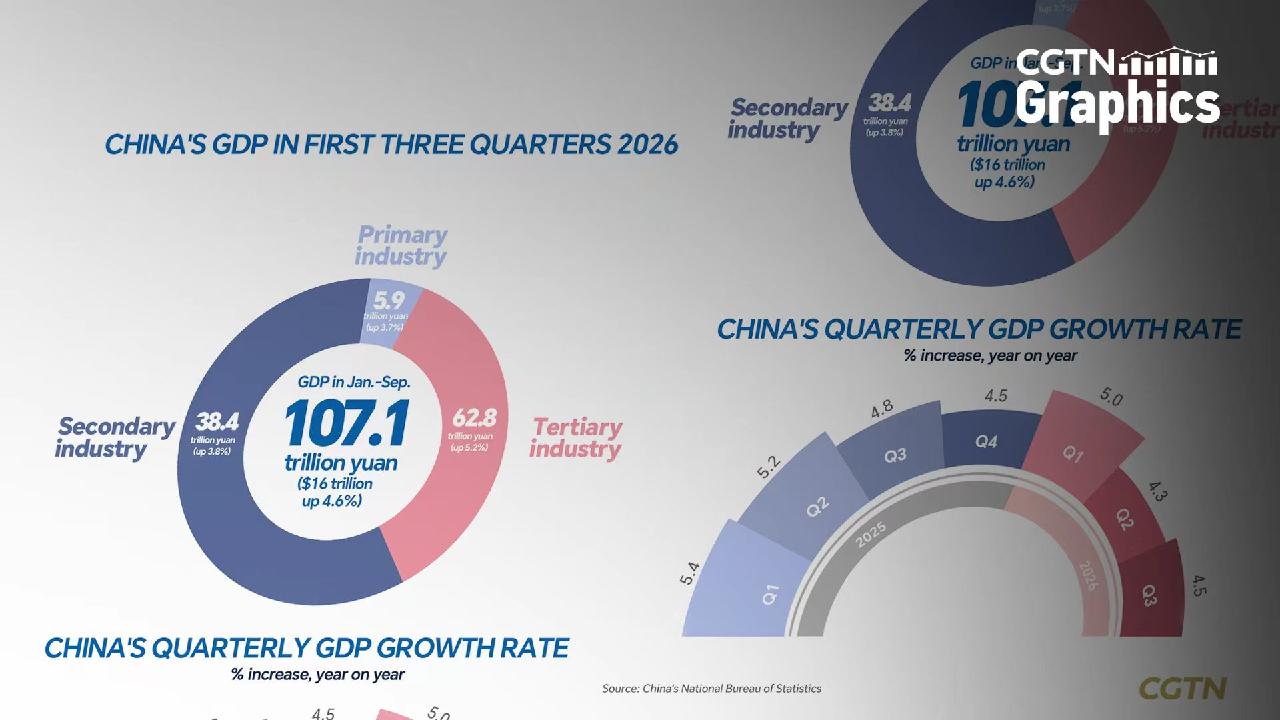
Graphics: China's economy picks up steam in Q3
Graphics: China's economy picks up steam in Q3

Chancellor rejects calls to raise Capital Gains Tax in Budget
Influential Labour figures had been pushing for equalising CGT and income tax, but critics have said this could drive wealthy people out of Britain.

The VW Bus, Now Electrified, Keeps on Truckin’
A restored version of Volkswagen’s Flower Power-era Microbus, kitted out by Kindred Motorworks, is aiming for the affluent, while VW’s own E.V. is slow to get moving, much like its forebear.

'I'm fed up of swiping': Why singles now want to meet IRL
The BBC hears from people who think dating events are better value for money than dating apps.

‘A Ticking Time Bomb’: An Economic Crisis Looms in Indonesia
Once a model of economic stability, Indonesia now faces growing hardship at home as President Prabowo Subianto’s policies shake investor confidence.

Black Unemployment Hints at a Job Market in Worse Shape Than It Seems
The Black unemployment rate climbed a percentage point to 7 percent in September, almost double the rate for white workers.

Elon Musk Says He Will Give a SpaceX Share to ‘Every Kid in America’
Anthropic, an A.I. rival to SpaceX, earlier said it would form a “public benefit fund” and other tech moguls have contributed to savings accounts for children.

Christiane Amanpour Says She Is Leaving CNN After 43 Years
The chief international anchor, one of the most famous names in broadcast news, started as an assistant at the network in 1983.

Burnham vows end to 'rip-off parking charges' under new rules
Penalties are seen as too harsh on motorists who are penalised for parking on private land.

Ex-OpenAI worker accused of planting device had Saudi support, says court filing
The Saudi government did not immediately respond to BBC requests for comment.