
US households owe record amount, topping pre-recession peak
May 17, 2017
US household debts reach record high, topping pre-recession peak, New York Fed says
WASHINGTON — U.S. household debt reached a record high in the first three months of this year, topping the previous peak reached in 2008, when the financial crisis plunged the economy into a deep recession.
Americans have stepped up borrowing over the past three years, yet the nature of what Americans owe has changed since the Great Recession. Student and auto loans make up a larger proportion of household debt, while mortgages — the epicenter of the financial crisis — and credit card debt remain below pre-recession levels. Those changes suggest households are still cautious about taking on debt to fuel day-to-day consumption.
The Federal Reserve Bank of New York said Wednesday that household debt, which also includes home equity lines of credit, stood at $12.73 trillion in the first quarter. That's above the $12.68 trillion outstanding in the fall of 2008, the previous record. The figure isn't adjusted for inflation or population size.
Even with debt levels back to record heights, analysts note that household borrowing appears more sustainable now than it did nearly a decade ago. Interest rates are lower, and lenders are much more focused on credit-worthy borrowers.
"This record debt level is neither a reason to celebrate nor a cause for alarm," Donghoon Lee, research officer at the New York Fed said. "The debt and its borrowers look quite different today."
Measured as a percentage of the overall U.S. economy, household debt is still smaller than in 2008. It is equivalent to 67 percent of the economy now, compared with 85 percent nine years ago.
Americans also appear to be better able to handle the loans they've taken out. The percentage of all household debt that is seriously delinquent — meaning payments are 90 days or more overdue — is 3.4 percent. That's down from the post-recession peak of 8.7 percent in early 2010.
Just 203,000 Americans declared bankruptcy in the first three months of this year, the lowest in the 18 years that the New York Fed has tracked the data.
Still, there were some areas of concern. Auto loans have ballooned 44 percent to $1.17 trillion since the last peak in household debt nine years ago. And a greater percentage of those loans have fallen 90 days or more overdue: 3.8 percent now, up from 3.3 percent two years ago. Still, that's down from a recent peak of 5.3 percent in late 2010.
Student loans are also a potential trouble spot: They topped $1.3 trillion in the first quarter, soaring by 120 percent since 2008. Nearly 11 percent of that debt is 90 days overdue or more. The Fed estimates that the true figure could be double that amount, because many borrowers are able to defer loan payments while they continue their studies or if they are unemployed.
Danny Shepelow and his girlfriend reflect the new credit profile of many Americans, particularly younger ones. They are both in their early 30s.
The couple rents an apartment in Atlanta and pays off their credit cards every month. They have thought about buying a home but are holding off, despite earning a combined income of about $130,000.
They are also carrying more than $175,000 in student loan debt between them, requiring $1,100 in monthly payments.
Shepelow, who works in digital marketing, says he is skeptical about the value of a home as an investment. The home he grew up in fell sharply in value during the 2008-2009 financial crisis.
"I saw my parents sitting on a house they couldn't sell, and when they did, getting three-fourths what it was worth a year earlier," he said.
Overall, more debt is now held by older and more credit-worthy Americans, which should make defaults less likely. Older households generally have higher incomes and wealth than younger ones.
Americans aged 60 and older hold 22.5 percent of all loans, up from 16 percent in 2008, the New York Fed said in a separate presentation in April.
The shift has been particularly dramatic in the case of mortgages, which have become much harder to obtain for Americans with lower credit scores. Loans to "subprime" borrowers, or those with lower credit scores, fueled much of the housing bubble.
Nearly 61 percent of new mortgages in the first quarter went to borrowers with credit scores of 760 or higher, according to the New York Fed's report. That's up from just 36 percent in 2008. Only about a third of Americans have a score that high.
Homeownership rates have fallen from a peak of 69 percent in 2005, during the housing bubble, to 63.6 percent now. That's kept total mortgage debt below pre-recession levels: There was $8.6 trillion outstanding in the first quarter compared with $9.3 trillion in 2008. Credit card balances are also lower than nine years ago, the Fed said.
More News

Burnham vows end to 'rip-off parking charges' under new rules
Penalties are seen as too harsh on motorists who are penalised for parking on private land.

Job vacancies fall as small firms cut back on recruitment
Small firms cite labour costs as a key factor in scaling back hiring, the Office for National Statistics says.

Chancellor rejects calls to raise Capital Gains Tax in Budget
Influential Labour figures had been pushing for equalising CGT and income tax, but critics have said this could drive wealthy people out of Britain.

Food aid charity under pressure from fuel costs
FareShare South West says fuel costs are putting immense pressure on work helping thousands in need.

How is the US economy really doing under President Trump?
Ahead of the midterms Trump has boasted about the performance of the US economy. BBC Verify looks at inflation, jobs and economic growth in the country.
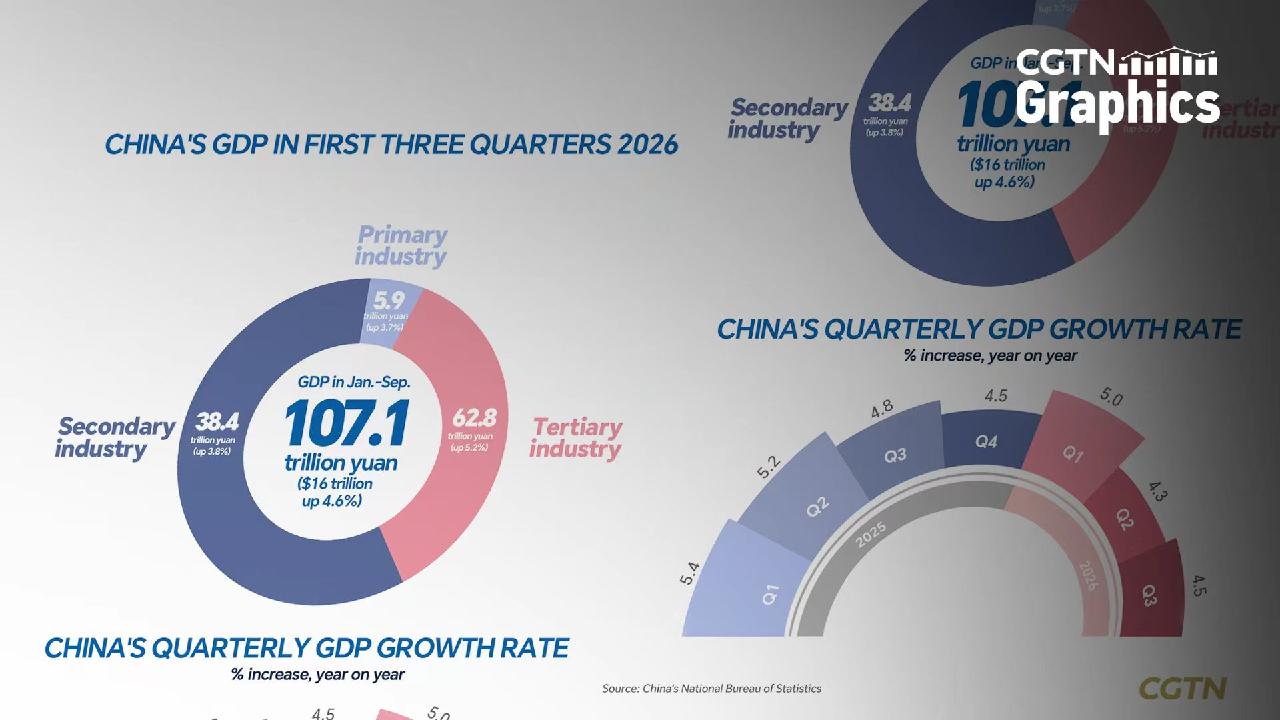
Graphics: China's economy picks up steam in Q3
Graphics: China's economy picks up steam in Q3

The VW Bus, Now Electrified, Keeps on Truckin’
A restored version of Volkswagen’s Flower Power-era Microbus, kitted out by Kindred Motorworks, is aiming for the affluent, while VW’s own E.V. is slow to get moving, much like its forebear.

'I'm fed up of swiping': Why singles now want to meet IRL
The BBC hears from people who think dating events are better value for money than dating apps.

‘A Ticking Time Bomb’: An Economic Crisis Looms in Indonesia
Once a model of economic stability, Indonesia now faces growing hardship at home as President Prabowo Subianto’s policies shake investor confidence.

Black Unemployment Hints at a Job Market in Worse Shape Than It Seems
The Black unemployment rate climbed a percentage point to 7 percent in September, almost double the rate for white workers.

Elon Musk Says He Will Give a SpaceX Share to ‘Every Kid in America’
Anthropic, an A.I. rival to SpaceX, earlier said it would form a “public benefit fund” and other tech moguls have contributed to savings accounts for children.

Christiane Amanpour Says She Is Leaving CNN After 43 Years
The chief international anchor, one of the most famous names in broadcast news, started as an assistant at the network in 1983.