
Venezuela debuts new banknotes amid soaring inflation
Jan 16, 2017
Venezuelans stand in long ATM lines to take out new, larger-denominated bills that President Nicolas Maduro hopes will help stabilize the crisis-wracked economy
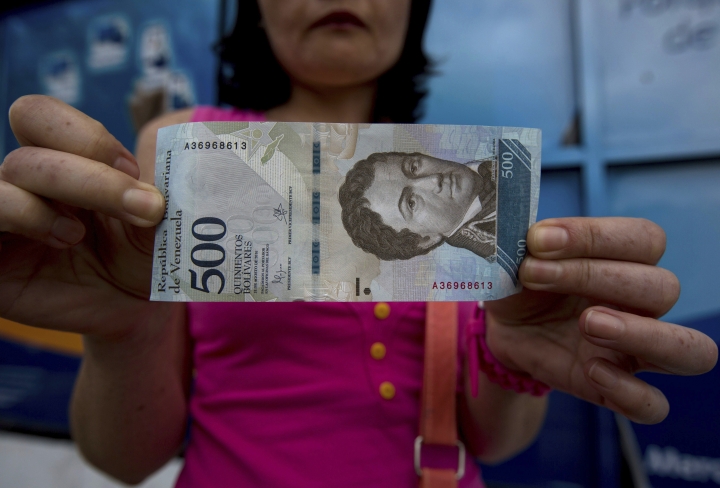
CARACAS, Venezuela — Venezuelans stood in long ATM lines Monday to take out new, larger-denominated bills that President Nicolas Maduro hopes will help stabilize the crisis-wracked economy.
Maduro last month said he was scrapping circulation of the most used bill, the 100-bolivar note, and replacing it with new bills ranging from 500 to 20,000 bolivars.
Residents in Caracas expressed shock at seeing bills with so many zeros — a sign of how worthless the bolivar has become amid triple-digit inflation and a collapse in foreign exchange reserves that has led to severe food shortages.
"I never thought I'd have such a big bill in my hands," Milena Molina, a 35-year-old sales clerk, said as she inspected crisp, new 500-bolivar notes she had just withdrawn. "But with the inflation we're suffering, the notes we had weren't worth anything and you always had to go around with huge packages of bills."
Monday's rollout of the first batch of imported notes came weeks later than the government had originally promised. Maduro last month ordered the 100-bolivar note to be withdrawn from use well before the replacement bills were ready, leading to widespread chaos as Venezuelans rushed to spend the bills before they were taken out of circulation.
With cash running out, looting and protests were widespread and Maduro had to backtrack. On Sunday, he extended for the third time, until Feb. 20, the deadline for the 100-bolivar note to remain legal tender.
While the new denominations should make cash transactions easier the relief may be short-lived: the 20,000-bolivar note is worth less than $6 on the widely used black market, where Venezuelans turn when they can't purchase dollars at the tightly controlled official rate. With inflation forecast by the International Monetary Fund to hit four digits this year, few economists expect the currency to rebound any time soon.
Seeking to combat the black market, the government on Monday inaugurated four currency exchange houses near the border with Colombia where Venezuelans will be able to purchase Colombian pesos at a favorable exchange rate of 4 pesos per bolivar. The bolivar currently is worth just a quarter of that amount at exchange houses over the border in Colombia.
Gov. Jose Vielma Mora of Tachira state said the Venezuelan central bank has at its disposal a large amount of pesos to meet what is expected to be strong demand for hard currency. All the same, purchases will be capped at between $200 and $300 and it was hard to find anyone Monday who had managed to buy pesos.
Opponents of Maduro said that in trying to set an exchange rate for pesos, authorities are paving the way for corruption, saying only certain individuals and companies close to the government will be able to purchase them at the official rate.
___
Associated Press writer Luz Dary Depablos in San Cristobal, Venezuela, contributed to this report.
More News

Paddy Power cuts 1,400 jobs and blames betting tax rises
The government increased taxes on online casino and sports betting in last year's Budget.

Investors in Anticipation Over Musk’s Next Big SpaceX Deal
Ahead of SpaceX’s quarterly earnings report, many on Wall Street are wondering whether Elon Musk will combine it with Tesla.

Bereaved families could face 'unjust' tax bill after civil service pension delays
The chairman of Parliament's Public Accounts Committee says families should not be taxed through no fault of their own.

Trump Announces $8 Billion Plan to Cover Farm Losses
Under the Harvest Fuel Relief program, the Agriculture Department will provide economic aid for farmers hurt by high diesel prices.

Jobless rate falls but small firms cut back hiring
Small firms cite labour costs as a key factor in scaling back hiring, the Office for National Statistics says.

£30 rise in payments for crisis-hit households
More money is made available through a resilience fund for hard-pressed households in Sheffield.

'I'm fed up of swiping': The singles choosing dating events over apps
The BBC hears from people who think dating events are better value for money than dating apps.

Chancellor rejects calls to raise Capital Gains Tax in Budget
Influential Labour figures had been pushing for equalising CGT and income tax, but critics have said this could drive wealthy people out of Britain.

Knicks Ticket Prices Are Soaring After Last Season’s Championship
Knicks tickets have never been cheap, but prices for the first game alone are soaring after last season’s championship — more than a trip to Paris.

How Do Airports Prepare for a Plane Crash? Go Inside JFK’s Disaster Drill.
U.S. airports are required to hold a full-scale disaster drill every three years. Go inside a simulated plane crash at Kennedy Airport last weekend.

Burnham vows end to 'rip-off parking charges' under new rules
The changes come after concerns that penalties issued by private providers are too harsh and leave motorists unfairly punished.

Revolut outage hits 'multiple services' as thousands of users report app issues
Some users of the British neobank reported being unable to make some payments or access funds in its app on Tuesday.