
Women step up, fill the gaps in Burkina Faso's virus fight
Nov 25, 2021
In the West African country of Burkina Faso, many feel the government has let them down during the pandemic
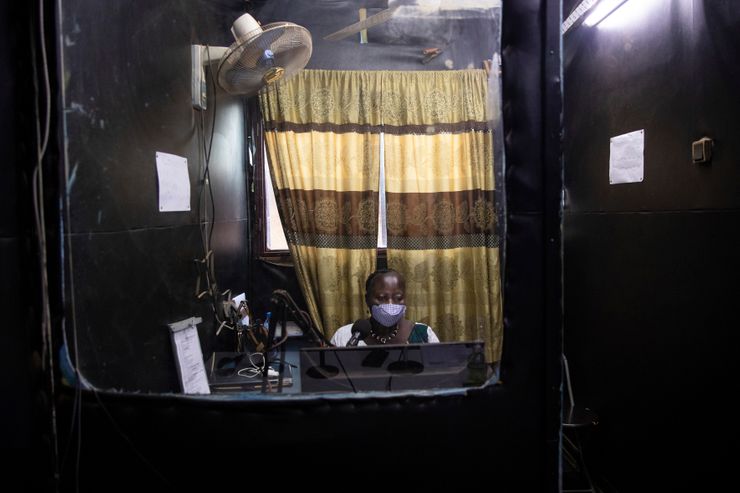
KAYA, Burkina Faso (AP) — Mariama Sawadogo sits in a small studio, translating notes from French to the local language of Moore and scribbling talking points in the margins. Transmission, prevention, vaccination — Sawadogo hits these topics in her bimonthly radio show on Zama FM, interviewing doctors and nurses about COVID-19 and testing callers on their knowledge.
Many guests and listeners in Burkina Faso call her “aunty” as she gently guides them to the answers and awards prizes such as soap and washing buckets.
Sawadogo’s voice has become a familiar sound for nearly a million people in her town of Kaya and beyond, northeast of the capital in this West African country, where many feel the government has let them down. Hungry for information about the virus, mothers huddle together outside to tune in to Sawadogo's show, sharing rare mobile phones while their children play nearby.
Tests, vaccines and public messaging often miss many of the country’s 20 million residents, despite a $200 million budget for virus response efforts. In a region where women are responsible for family work and community relationships, they’ve stepped up to provide a collective authoritative voice, make and deliver supplies, and find ways to support their families through the economic crisis.
___
This story is part of a yearlong series on how the pandemic is impacting women in Africa, most acutely in the least developed countries. AP’s series is funded by the European Journalism Centre’s European Development Journalism Grants program, which is supported by the Bill & Melinda Gates Foundation. AP is responsible for all content.
___
“They didn’t help us,” Mamounata Ouedraogo said of officials. “If we expected to get our information from them, we would never have any.”
Ouedraogo and Sawadogo live in Kaya, a haven in the conflict-plagued country, where tens of thousands of displaced people have sought shelter as violence that spilled over from neighboring Mali in 2015 escalates. Ouedraogo listens to all of Sawadogo’s shows and said she’d know little about the virus without them.
Norbert Ramde, head of Burkina Faso’s doctors' association, said diseases like malaria are higher priorities — and beyond disease, jihadis are the biggest threat.
“Do you want us to take all the resources to combat COVID-19 and forget about this?” he said. “We have to invest in that, too.”
Burkina Faso was hard-hit when the pandemic struck last March, recording some of Africa’s highest infection numbers and death rates. Officials implemented curfews, sealed the landlocked country’s borders, and closed mosques, churches, schools and markets. Residents protested; after a few weeks, most restrictions were lifted.
“The priority for the government is to convince the population, not to take some measures which will be very aggressive,” said Dr. Brice Bicaba, the government epidemiologist leading Burkina Faso’s coronavirus response.
Part of the millions for virus response went toward flyers, radio and TV messaging, and other community engagement measures, according to Bicaba and budget documents. But many health professionals and citizens said efforts aren’t reaching all the people they need to; in Kaya, locals said they'd have preferred door-to-door visits over one public meeting in December. And messages weren’t always translated into local languages — most people don't regularly speak the official language, French.
Even in the capital, Ouagadougou, which is 60 miles (85 kilometers) from Kaya, messaging hasn’t been widespread, with COVID-19 billboards and signs scarce.
There, Zenabou Coulibaly Zongo spends her own money making soap and buying hand sanitizer for mosques, markets and health centers. At the start of the pandemic, Zongo, now 63, was hospitalized with bronchial pneumonia. She paid for oxygen treatments at a private clinic, watching others die.
“It was a wake-up call," she said. "I envisioned coronavirus spreading like it did in Europe.”
Now, Zongo delivers her soaps and instructs people about COVID-19. Recently at a mosque, some people told her they didn’t know vaccines were free until she provided the information.
Many inside and outside Burkina Faso don't trust virus data provided by the government — 15,514 cases and 265 deaths — noting a lack of testing and a health system the U.N. has called among the world’s weakest.
Amid a chaotic atmosphere — with the military struggling to stem violence and an ultimatum from the opposition to the president — misinformation has flourished. Sawadogo’s radio presence is a leading voice to fight it. She hears from listeners who say the pandemic was created to mislead Black people and that vaccines will sterilize them.
But the mother of three boys is accustomed to naysayers and skeptics. In 2007, she left her first husband despite a cultural aversion to divorce. She went to night school and became an accountant.
Her internship was at Radio Zama. Her bosses sensed a strong radio presence after she recorded some ads. In 2016, she started hosting shows. When the station got European Union funding for the virus show, she was a natural choice.
“You’re on Zama FM. How are you doing?” Sawadogo greets callers. She speaks to guests and listeners like family.
“People will call me personally and say, ‘Our family didn’t believe in the disease, but since they have been listening, they now believe,’” Sawadogo said.
Burkina Faso also struggles with vaccination. Despite being part of COVAX, the U.N.-backed program to provide shots to developing nations, the nation was one of the world's last to receive shots. By October's end, about 284,000 people — less than 1.5% of the population — were fully vaccinated, according to World Health Organization figures.
Vaccine hesitancy runs so deep that even radio host Sawadogo has yet to receive a jab. She worries about links between the shots and rare blood clots in women, widely publicized during a fumbled rollout of the AstraZeneca vaccine in Europe.
Soap-maker Zongo also isn't vaccinated, insisting she first wants to finish medication for a recent accident. Both women are part of a gender gap that experts fear means African women are the world's least vaccinated population.
But Zongo and Sawadogo say they’ll eventually be vaccinated and continue spreading messages about COVID-19 and advocate for women.
“A woman — whether she’s European, or American, or South American, whoever she is — I see her as a phoenix," Zongo said. "No matter how hard you’re hit, you must be able to get back on your feet, always able to get back on your feet, like the phoenix that rises again from the ashes.”
More News

M.L.B. Playoff Ads With Sydney Sweeney and Megan Fox Draw Backlash
Commercials with Sydney Sweeney promoting a gambling platform and Megan Fox endorsing male enhancement have rankled fans, and even athletes. Who is in charge?

Netflix Hurries to Rewrite Its Narrative With Layoffs and a Sudden Firing
Despite strong revenues and profits, the streaming service cut 1,000 jobs and jettisoned its chief content officer. Drops in the stock price and viewer engagement are to blame.

Why Bad News in the Bond Market May Be Good News for Investors
In the contrarian logic of investing, rising interest rates have made bonds much more attractive, our columnist says.

U.S. Budget Deficit Nears $2 Trillion, a Reality Check for Trump’s Cost Cutting
Higher interest rates are inflating borrowing costs as the Trump administration spends on the Iran war and tariff refunds.

Indonesian Stocks Plunge as MSCI Threatens to Drop Market from Indexes
The potential downgrade by MSCI, an influential index provider, adds to a deepening crisis of investor confidence in the economic policies of President Prabowo Subianto.

Warsh Vows to Tame Inflation as A.I. Delivers ‘Shock’ to Economy
The Federal Reserve chairman stuck to his pledge to avoid providing guidance about the path forward for interest rates, but did nothing to convey an urgency to raise them later this month.

Watch: Did Tesla really just unveil a flying car?
Tesla CEO Elon Musk showcased the vehicle at a facility owned by his SpaceX company, which helped develop the model.

When Will the Fed Move on Rates?
Kevin Warsh, the central bank’s chairman, suggested he wouldn’t push to raise borrowing rates this month. But persistent inflation may force the Fed’s hand.

Banks expect to be hit with higher taxes in Budget
Senior banking executives have told the BBC they expect to be "on the menu" in the chancellor's Budget tax later this month.

Feel Like You’re Overpaying for Hotels? Blame Expedia, a New Lawsuit Says.
The booking giant is accused of breaking federal antitrust laws and forcing millions of customers to overspend on stays by as much as 30 percent.

Tesla Debuts 2026 Roadster ‘Flying’ Electric Sports Car
Elon Musk’s company and other automakers, like Jaguar and Bentley, are trying to sell very expensive electric cars to people who usually prefer gasoline-fueled luxury and performance.

Trump Hasn’t Lowered Drug Prices for These Voters
President Trump has been promoting his efforts to reduce drug prices, but many Americans have not seen relief from rising costs for prescriptions and insurance premiums.