
Yellen says Fed watching slowdown in inflation
Jul 12, 2017
Yellen to Congress: Recent inflation slowdown could lead Fed to rethink pace of rate hikes
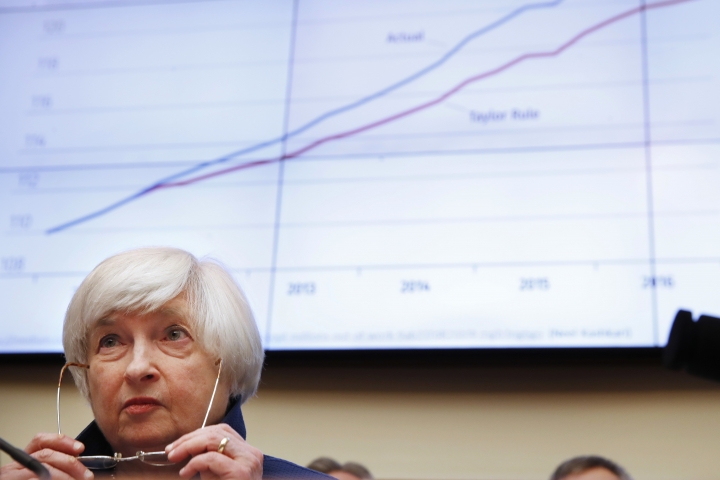
WASHINGTON — Federal Reserve Chair Janet Yellen raised the possibility Wednesday that the Fed would consider slowing the pace of its interest rate increases if inflation remained persistently below its target level.
For the moment, Yellen signaled no change in policy, indicating that the three rate hikes since December will likely be followed by one more hike this year. She also said the Fed wants to begin gradually trimming its massive $4.5 trillion in bond holdings later this year, a move that will also put upward pressure on interest rates.
But Wall Street investors took heart from her slightly more cautious view of a recent puzzling slowdown in inflation, believing it could signal that the Fed that might be willing to put further rate hikes on pause.
"Monetary policy is not on a pre-set course," Yellen told lawmakers on the House Financial Services Committee. "We're watching it very closely and stand ready to adjust our policy if it appears that the inflation undershoot will be persistent."
The Fed's key policy rate, the federal funds rate, currently stands in a range of 1 percent to 1.25 percent. The last three increases occurred in December, March and June. Many analysts believe the Fed will raise rates one more time this year, either in September or December.
Yellen's appearance took on a bit of a valedictory tone, given that her current four-year term as chair will end in early February before the next round of congressional hearings. At one point, she acknowledged that her appearance Wednesday before the House panel and on Thursday before the Senate Finance Committee could be her last time to present the Fed's semiannual Monetary Policy Report to Congress.
Yellen, the first woman to head the Fed in the central bank's 100 year history, was asked several times if she would accept another term if President Donald Trump offered it. She didn't provide a direct answer.
"I am very focused on trying to achieve our congressionally mandated objectives and I really haven't had to give further thought at this point" to the question of serving a second term, Yellen told Rep. Carolyn Maloney, D-New York.
In her testimony, Yellen took note of a number of encouraging factors, including strong job gains and rising household wealth that she said should fuel economic growth over the next two years.
Yellen repeated the message she has been sending all year that the U.S. economy no longer needs the extraordinary support the central bank began providing in 2008 in the wake of a severe financial crisis and the deepest recession since the 1930s.
Since the depths of the recession, unemployment is now down to 4.4 percent, near a 16-year low. And while the economy started the year with a sluggish growth rate of just 1.4 percent, it has regained momentum in recent months, helped by strong job gains, a revival of business investment and a strengthening of overseas economies.
But Yellen cautioned that "considerable uncertainty always attends the economic outlook." Those include whether inflation will indeed pick up, as well as questions about how much of President Donald Trump's economic program will make it through Congress. She noted that while the global economy appears stronger, "a number of our trading partners continue to confront economic challenges."
At times during the hearing, Yellen sparred with her Republican critics who have criticized the Fed's easy credit policies and its efforts to tighten bank regulations in the wake of the 2008 financial crisis.
On Monday, Trump nominated Randal Quarles, a former top Treasury official in two previous GOP administrations, to take the job as vice chairman at the Fed for bank supervision, marking the administration's first effort to reshape Fed policies.
Including the post Quarles would fill, the Fed has three vacancies on the seven-member board. All of Trump's nominations will require Senate approval.
During last year's presidential campaign, Trump was critical of the central bank for its low-rate policies, which he said were helping Democrats, and for its efforts to enact tougher regulations on banks in response to the financial crisis.
The Fed slashed its key policy rate to a record low near zero in December 2008 to combat the worst economic downturn since the 1930s — and kept it there for seven years.
At its June meeting, the Fed signaled that it expected to begin shrinking its $4.5 trillion balance sheet later this year, a step that could push up longer-term rates for such items as home mortgages.
In her testimony, Yellen repeated the Fed's plans to increase the level of bonds that will be sold off each month at a gradual rate to give markets time to adjust. At its June meeting, the Fed announced that it planned to begin reducing its holdings by $10 billion per month and Yellen said Wednesday that she still hoped that effort could begin "relatively soon."
The Fed's holdings have surged five-fold since 2008, ballooning in size as the Fed bought Treasury and mortgage bonds as a way to put downward pressure on long-term interest rates.
More News

Burnham vows end to 'rip-off parking charges' under new rules
Penalties are seen as too harsh on motorists who are penalised for parking on private land.

Job vacancies fall as small firms cut back on recruitment
Small firms cite labour costs as a key factor in scaling back hiring, the Office for National Statistics says.

Chancellor rejects calls to raise Capital Gains Tax in Budget
Influential Labour figures had been pushing for equalising CGT and income tax, but critics have said this could drive wealthy people out of Britain.

Food aid charity under pressure from fuel costs
FareShare South West says fuel costs are putting immense pressure on work helping thousands in need.

How is the US economy really doing under President Trump?
Ahead of the midterms Trump has boasted about the performance of the US economy. BBC Verify looks at inflation, jobs and economic growth in the country.
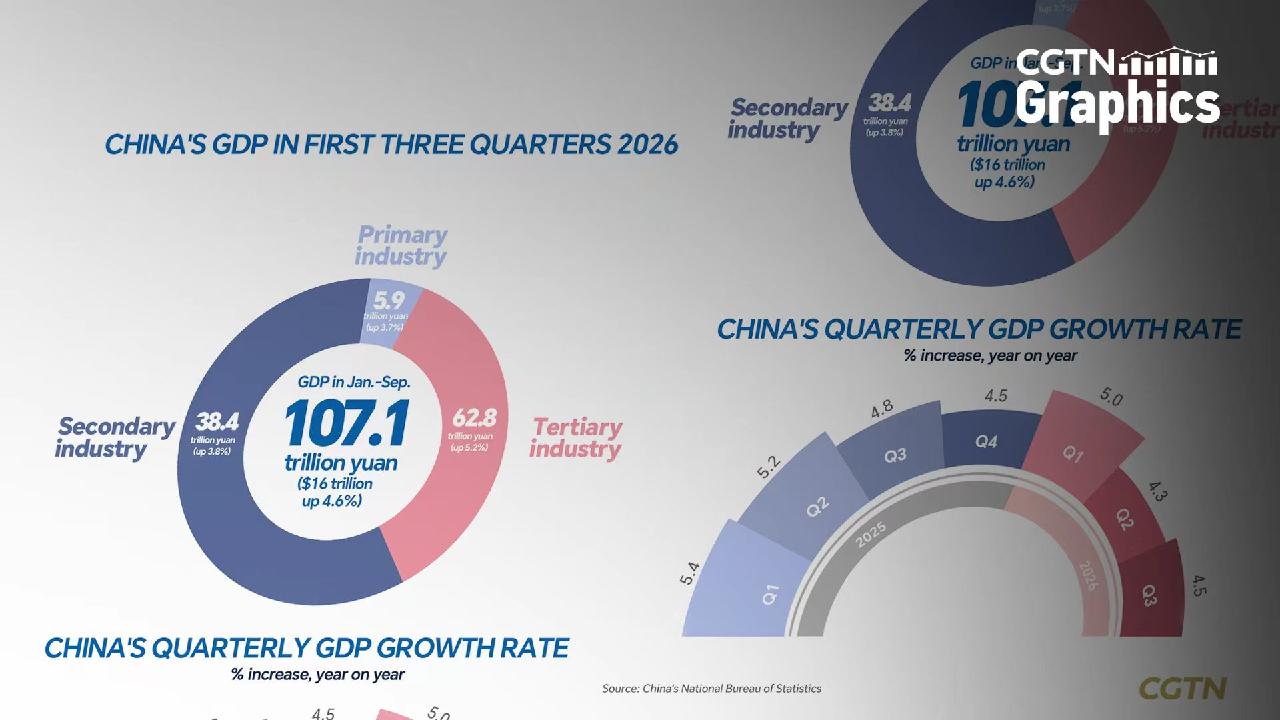
Graphics: China's economy picks up steam in Q3
Graphics: China's economy picks up steam in Q3

The VW Bus, Now Electrified, Keeps on Truckin’
A restored version of Volkswagen’s Flower Power-era Microbus, kitted out by Kindred Motorworks, is aiming for the affluent, while VW’s own E.V. is slow to get moving, much like its forebear.

'I'm fed up of swiping': Why singles now want to meet IRL
The BBC hears from people who think dating events are better value for money than dating apps.

‘A Ticking Time Bomb’: An Economic Crisis Looms in Indonesia
Once a model of economic stability, Indonesia now faces growing hardship at home as President Prabowo Subianto’s policies shake investor confidence.

Black Unemployment Hints at a Job Market in Worse Shape Than It Seems
The Black unemployment rate climbed a percentage point to 7 percent in September, almost double the rate for white workers.

Elon Musk Says He Will Give a SpaceX Share to ‘Every Kid in America’
Anthropic, an A.I. rival to SpaceX, earlier said it would form a “public benefit fund” and other tech moguls have contributed to savings accounts for children.

Christiane Amanpour Says She Is Leaving CNN After 43 Years
The chief international anchor, one of the most famous names in broadcast news, started as an assistant at the network in 1983.